Shivraj Singh Chouhan Plants Sapling in Delhi, Urges Public to Join
Synopsis
Union Agriculture Minister Shivraj Singh Chouhan planted a sapling in New Delhi on June 2, 2026, continuing his daily tree-plantation resolve. He urged citizens to join the 'Shiv Vriksh Mitra' initiative via a missed call and help protect India's environment under the #OnePlantADay campaign.
Key Takeaways
Shivraj Singh Chouhan planted a sapling in New Delhi on June 2, 2026 as part of a stated daily plantation resolve.
He urged the public to plant trees and contribute to environmental protection and 'the prosperity of the earth.' Citizens can become a 'Shiv Vriksh Mitra' by giving a missed call to 8929629475 .
The campaign is promoted under the hashtag #OnePlantADay on social media.
The initiative aligns with India's long-standing Van Mahotsav tradition and commitments under the National Mission for a Green India .
The monsoon season beginning in June represents the most effective window for large-scale plantation efforts.
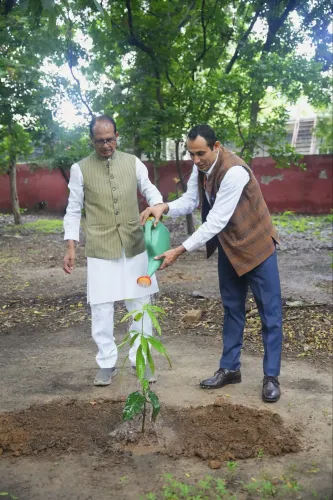
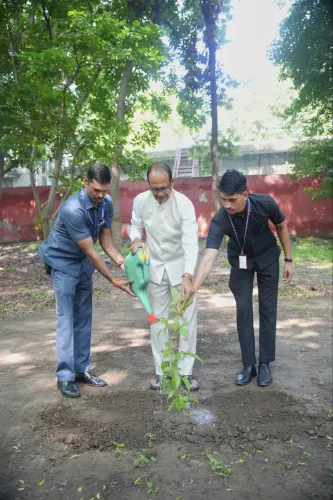
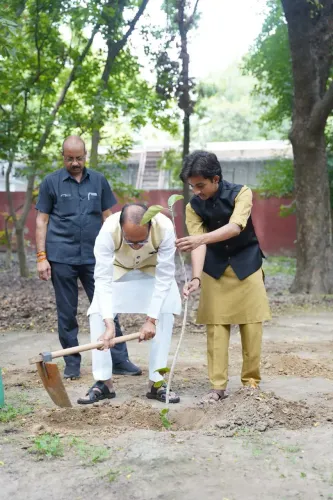
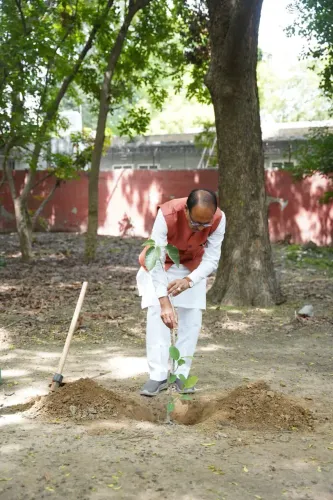
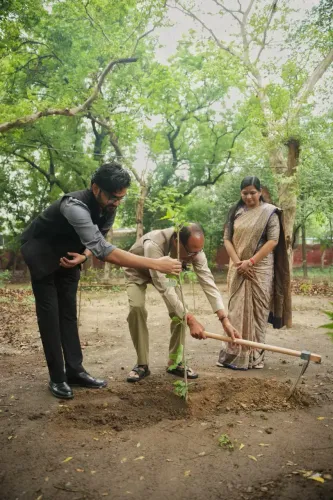
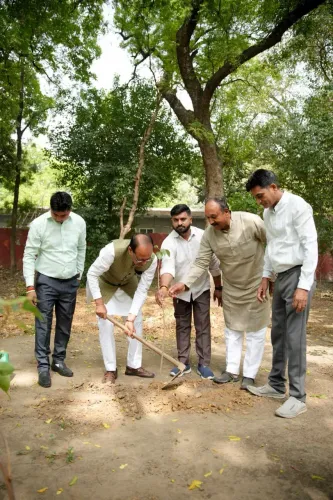
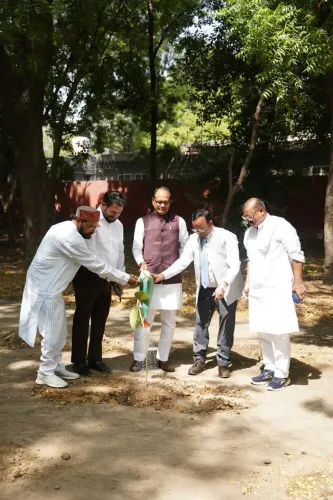
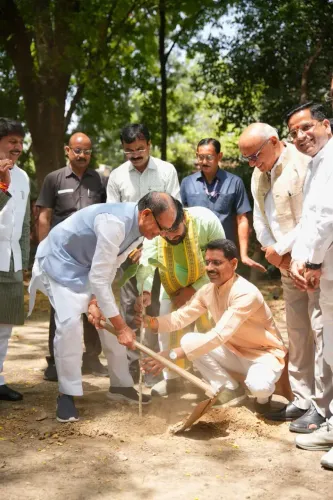
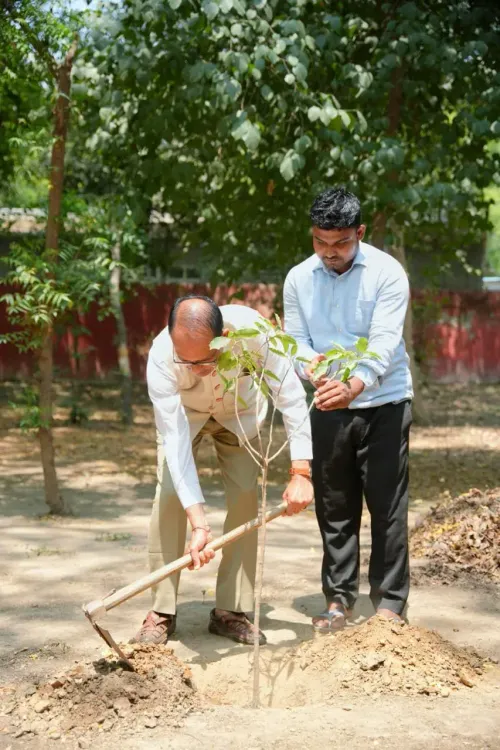
Union Agriculture Minister Shivraj Singh Chouhan on Tuesday, June 2, 2026, planted a sapling in New Delhi as part of his stated daily tree-plantation resolve, urging citizens across India to contribute to environmental protection by planting as many trees as possible.
Context
Posting on X under the hashtag #OnePlantADay, Chouhan wrote: 'प्रतिदिन पौधरोपण के संकल्प के क्रम में आज नई दिल्ली में पौधा रोपा' ('In continuation of my resolve to plant a sapling every day, I planted one in New Delhi today'). He called on followers to plant trees and contribute to 'the prosperity of the earth and the protection of the environment.' The post also invited citizens to become a 'Shiv Vriksh Mitra' (Friend of Trees) by giving a missed call to 8929629475.
The appeal closed with the line: 'Let us together take a resolve to save nature' — framing individual plantation as a collective ecological duty.
Policy Backdrop
India has run Van Mahotsav, an annual afforestation festival, since 1950, making tree-plantation one of the country's oldest environmental traditions. More recently, successive governments have embedded plantation drives within the National Mission for a Green India and broader commitments under the Paris Agreement, targeting expanded forest and tree cover across the country.
Chouhan's own track record on this front dates to his four terms as Chief Minister of Madhya Pradesh, where plantation campaigns were regularly linked to farming and watershed development programmes. His current portfolio — Agriculture and Farmers Welfare, and Rural Development — places ecological security at the intersection of agrarian livelihoods, lending political weight to such public appeals.
Stakeholders and Impact
The immediate call to action targets the general public, with the missed-call mechanism designed to lower the barrier for rural and semi-urban citizens who may not have easy access to digital sign-up forms. Rural communities, which depend directly on forest cover for water retention, soil health, and micro-climate regulation, stand to benefit most from sustained grassroots plantation.
Leaders from agriculture and rural development portfolios have historically used such campaigns to reinforce the link between tree cover and farm productivity — a message that resonates particularly in rain-fed agrarian states ahead of the monsoon season.
What's Next
With the southwest monsoon typically advancing over Kerala by early June and reaching central India by late June, the coming weeks represent the most ecologically effective window for large-scale plantation. Observers will watch whether the 'Shiv Vriksh Mitra' initiative scales into a formal campaign with verifiable targets, and whether it is linked to existing frameworks such as state forest department drives or the Green India Mission.
If the missed-call drive gains traction, it could serve as a low-cost mobilisation model for future environment outreach by the Agriculture Ministry — particularly in states with significant degraded land earmarked for afforestation under national targets.
Point of View
Amplified through a mass missed-call mechanism, reflects a wider BJP pattern of converting personal symbolic acts into citizen-mobilisation campaigns — a format he refined across four terms in Madhya Pradesh. By tethering the 'Shiv Vriksh Mitra' brand to his personal identity rather than to a ministry scheme, he keeps the initiative politically visible while the Agriculture Ministry's formal programmes run in parallel. The monsoon timing is deliberate: June plantation drives generate maximum ecological return and maximum media visibility simultaneously. Whether the campaign translates into measurable tree-cover gains will depend on whether it is eventually integrated with state forest department monitoring and national afforestation targets.
NationPress
18 Oct 2026
Frequently Asked Questions
What is the 'Shiv Vriksh Mitra' initiative by Shivraj Singh Chouhan?
'Shiv Vriksh Mitra' (Friend of Trees) is a citizen outreach initiative promoted by Union Agriculture Minister Shivraj Singh Chouhan, in which people can enrol by giving a missed call to 8929629475 and pledge to plant trees.
What is the #OnePlantADay campaign in India?
#OnePlantADay is a social media campaign under which Shivraj Singh Chouhan has committed to planting at least one sapling every day and is encouraging citizens to do the same as part of a broader environmental protection effort.
Why is June a good time for tree plantation in India?
June marks the onset of the southwest monsoon across much of India, providing the soil moisture and rainfall that give newly planted saplings the best chance of survival, making it the most ecologically effective planting window of the year.
What is Van Mahotsav and how does it relate to this campaign?
Van Mahotsav is India's annual tree-planting festival, observed since 1950 to promote afforestation. Chouhan's daily plantation drive and public appeal are part of the same long tradition of government-led and citizen-led efforts to increase India's forest and tree cover.
What is Shivraj Singh Chouhan's current role in the central government?
Shivraj Singh Chouhan is the Union Minister of Agriculture and Farmers Welfare and Rural Development in the Government of India, and is a senior BJP leader who previously served four terms as Chief Minister of Madhya Pradesh.