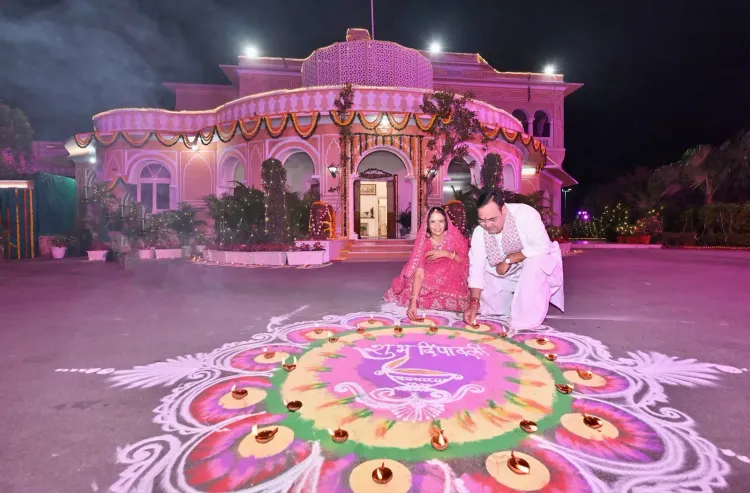
CM Bhajan Lal Sharma lights Diwali lamps at CM residence
Synopsis
Rajasthan Chief Minister Bhajan Lal Sharma lit Diwali lamps with his family at the CM residence on 8 November 2026, invoking a Sanskrit shloka and wishing all state residents prosperity, peace, and good health on the festival of lights.
Key Takeaways
Bhajan Lal Sharma , Rajasthan Chief Minister since December 2023 , performed the Diwali lamp-lighting ceremony with his family at the CM residence in Jaipur on 8 November 2026 .
He opened his post with the Sanskrit shloka 'Shubham karoti kalyanam' — a traditional verse saluting the diya as a bringer of health, wealth, and the destroyer of ill-will.
His message called for the festival's light to remove 'darkness and negativity' from the lives of all Rajasthan residents.
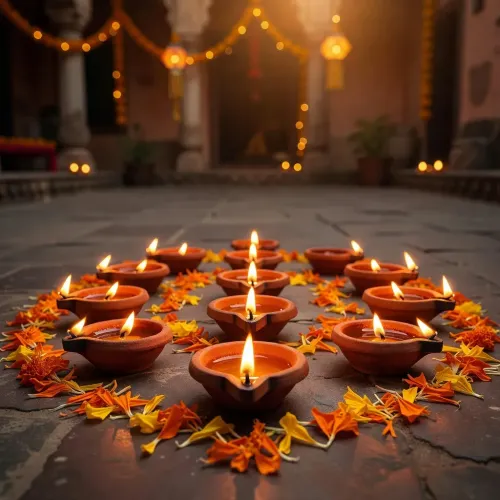
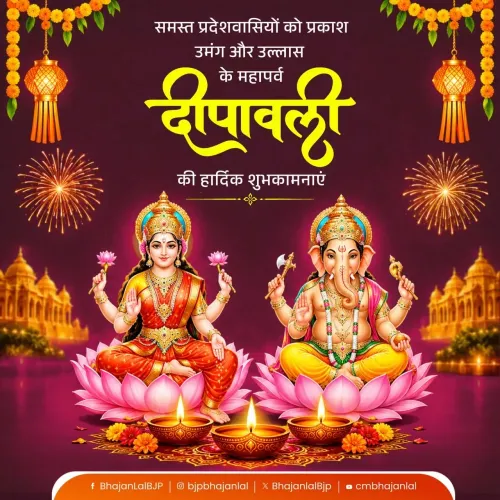
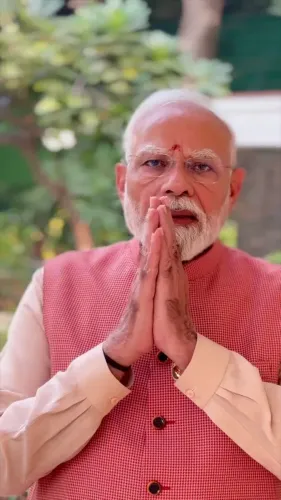
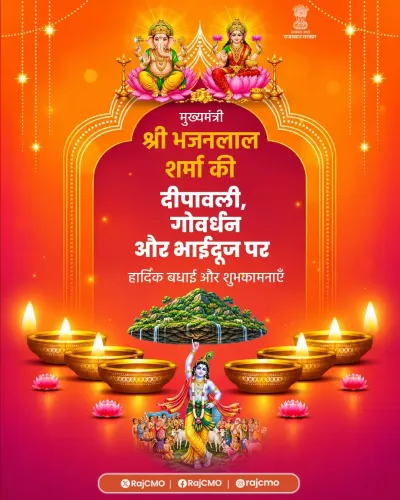
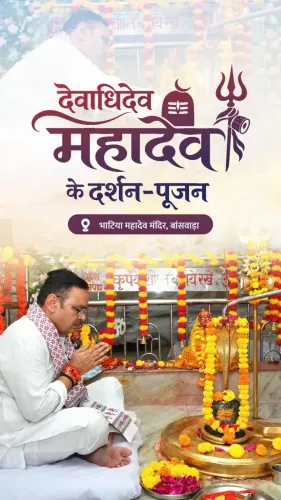
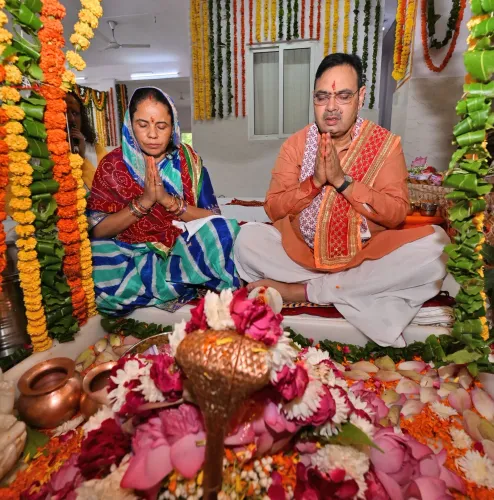
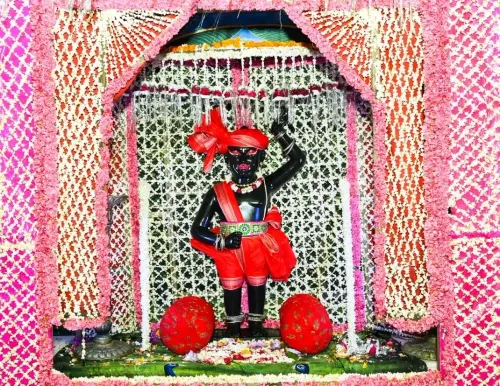
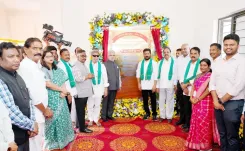
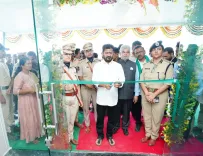
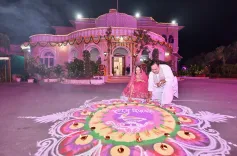
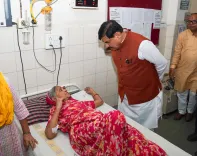
The post was accompanied by four images of the lamp-lighting occasion at the Chief Minister's residence.
The gesture reflects a wider tradition of Indian elected leaders using major festivals for public cultural outreach across party lines.
Rows of flickering diyas at the Chief Minister's residence in Jaipur marked Diwali this year as Rajasthan Chief Minister Bhajan Lal Sharma performed the lamp-lighting ceremony with his family on Sunday, 8 November 2026.
Sharma shared the moment on X alongside the Sanskrit shloka: 'Shubham karoti kalyanam, arogyam dhanasampadaa. Shatrubuddhi vinashaaya, deepajyotir namostu te' — a verse that salutes the flame of the lamp as a destroyer of ill-will and a bringer of well-being, prosperity, and health.
In his message, the Chief Minister said the 'auspicious light of these lamps' should drive away 'darkness and negativity' from the lives of every resident of the state, and spread happiness, peace, good health, and prosperity. 'My heartfelt Diwali greetings to all the people of the state,' he wrote.
Diwali's significance — and the Sanskrit verse Sharma invoked
Deepavali, the Hindu festival of lights, is observed each year with the lighting of earthen lamps to symbolise the triumph of light over darkness. The shloka Sharma cited is among the most widely recited at the moment of lamp-lighting across Indian households, attributing transformative power to the diya's flame — from warding off enemies of the mind to drawing in material and spiritual abundance.
Sharma, who took charge as Rajasthan Chief Minister in December 2023, framed his greeting in the language of collective well-being rather than political messaging, directing the sentiment outward toward the state's residents.
Routine outreach — but rooted in a living tradition
Diwali greetings from elected leaders are a fixture of Indian political culture, observed across party lines and state boundaries. What gives such posts texture is the specificity: the choice of scripture, the family setting, the photographic record of a Chief Minister sitting cross-legged before a row of lamps in a public residence that belongs, symbolically, to the people of the state.
Rajasthan, with a population of roughly 80 million, sees large-scale public Diwali celebrations across its cities and towns. As the state's first family lit their lamps at the CM residence, the gesture carried the unspoken weight of that shared observance.
When a Chief Minister invokes a Sanskrit verse about the destruction of 'enemy-intellect' and the gift of health and wealth — not in a policy speech, but beside a diya on festival night — it is a reminder that in Indian public life, the ceremonial and the political are rarely fully separate flames.
Point of View
And Sharma's Diwali post fits that pattern. What is worth noting is his choice to anchor the message in a Sanskrit shloka rather than a policy highlight — signalling a cultural register that resonates with the BJP's broader emphasis on Hindu civilisational identity. For a government that is barely three years old and heading toward its midterm phase, projecting a Chief Minister embedded in family and tradition carries soft political value. The festival moment, in short, is never purely ceremonial.
NationPress
8 Nov 2026
Frequently Asked Questions
Who is Bhajan Lal Sharma?
Bhajan Lal Sharma is the Chief Minister of Rajasthan and a BJP leader who assumed office in December 2023 . He is the first CM from his background to lead the state under the BJP's post-election government.
What did CM Bhajan Lal Sharma post for Diwali 2026?
On 8 November 2026 , Sharma posted on X sharing that he had lit Diwali lamps with his family at the CM residence in Jaipur. He included the Sanskrit shloka 'Shubham karoti kalyanam' and wished all Rajasthan residents happiness, peace, health, and prosperity.
What does the Sanskrit shloka 'Shubham karoti kalyanam' mean?
The shloka translates as: 'May this lamp-flame bring auspiciousness, well-being, good health, and wealth; may it destroy the intellect of enemies — I bow to the light of the lamp.' It is one of the most commonly recited verses during Diwali lamp-lighting across Indian households.
Where did Bhajan Lal Sharma celebrate Diwali?
Sharma celebrated Diwali at the Chief Minister's residence in Jaipur, Rajasthan , lighting lamps alongside his family.
When is Diwali 2026?
Based on CM Sharma's post, Diwali in 2026 was observed on or around 8 November 2026 .