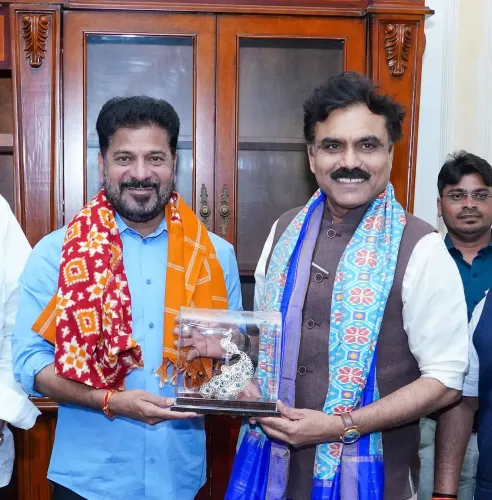
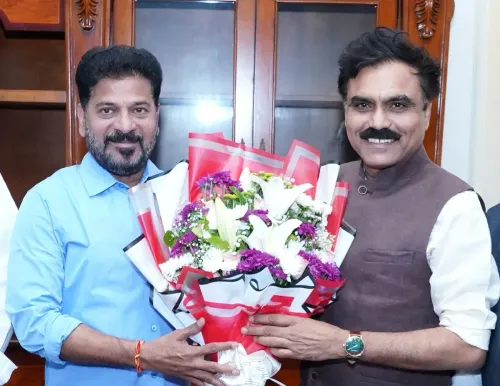
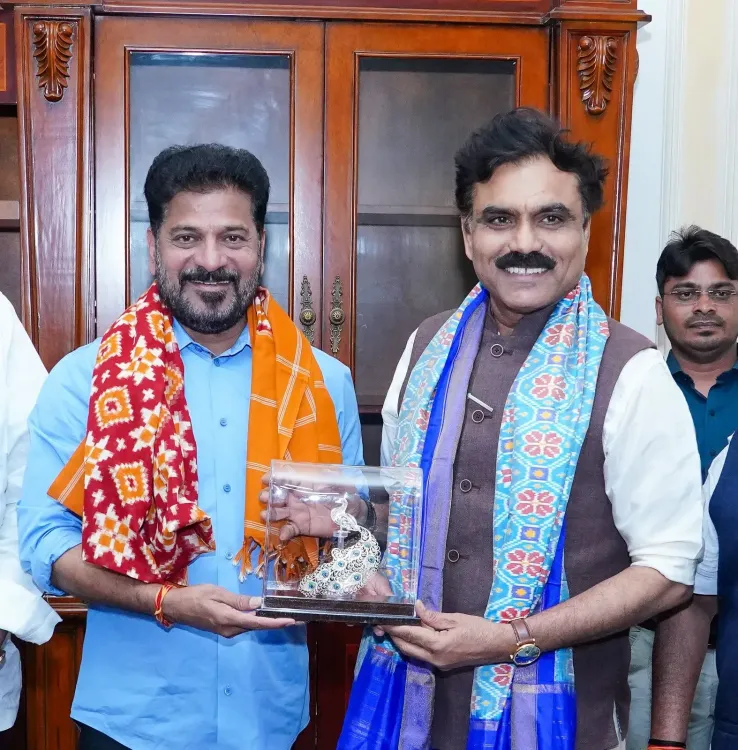
CM Revanth Reddy meets National SC Commission chief on welfare
Synopsis
Telangana Chief Minister A. Revanth Reddy held a constructive meeting with National SC Commission Chairperson Kishor Makwana on 13 July 2026, briefing him on the state's SC sub-categorisation drive, education and employment expansion, and constitutional rights protection measures.
Key Takeaways
Telangana Chief Minister A.
Revanth Reddy met National SC Commission Chairperson Kishor Makwana on 13 July 2026 for a courtesy call that turned into a substantive policy discussion.
The CM briefed the Commission on the state's measures for SC welfare, education, and employment expansion .
SC sub-categorisation implementation in Telangana — following the 2024 Supreme Court ruling — was a specific agenda item discussed.
The National Commission for Scheduled Castes , established under Article 338 of the Constitution, holds a monitoring and recommendatory role over state-level SC welfare delivery.
A formal follow-up visit or recommendations from the Commission to Telangana could be the next significant development from this engagement.
Telangana Chief Minister A. Revanth Reddy met with National Commission for Scheduled Castes Chairperson Kishor Makwana on Monday, 13 July 2026, for a courtesy call that expanded into a substantive discussion on Scheduled Caste welfare, social justice, and empowerment in the state.
Context
Posting on X in Telugu, CM Revanth Reddy described the meeting as 'constructive' (నిర్మాణాత్మకంగా చర్చించాను — 'I discussed constructively'), covering several key issues related to SC welfare, social justice, and empowerment. He said he briefed Makwana on steps the state government is taking for the comprehensive development, education, and employment expansion of Scheduled Castes in Telangana.
The Chief Minister also specifically highlighted the state's implementation of SC sub-categorisation, protection of constitutional rights, and measures being taken in the direction of achieving social justice.
Policy Backdrop
The National Commission for Scheduled Castes is a constitutional body established under Article 338 of the Indian Constitution, mandated to monitor safeguards for Scheduled Castes and investigate rights violations. State governments regularly engage the Commission to align local welfare programmes with constitutional mandates on reservation and social justice.
Telangana's push on SC sub-categorisation follows a landmark 2024 Supreme Court judgment that permitted states to create sub-groups within Scheduled Castes for more targeted distribution of reservation benefits. Several states have since initiated similar exercises, and Telangana's Congress government has positioned SC welfare as a central policy priority since coming to power.
Stakeholders and Impact
The primary beneficiaries of the policies discussed are Scheduled Caste communities across Telangana, particularly students and job aspirants who stand to gain from expanded education and employment opportunities. Sub-categorisation, if implemented effectively, could direct a larger share of reservation benefits to the most marginalised sub-groups within the SC category.
The Commission's engagement with the state government also signals a monitoring role — the body can make formal recommendations and flag gaps in implementation, adding a layer of constitutional accountability to state-level welfare delivery.
What's Next
Observers will watch for any formal recommendations or a follow-up field visit by the National SC Commission to Telangana following this meeting. The state's next budget allocations and any legislative steps on SC sub-categorisation will be key indicators of how the commitments outlined in Monday's discussion translate into policy action.
The meeting reinforces Telangana's intent to position itself as a model for constitutionally grounded SC welfare, even as the broader national debate on sub-categorisation continues to evolve across states.
Point of View
The interaction places Telangana among the states most visibly advancing that judgment's implementation. For the Commission, such state-level engagements are central to its monitoring mandate under Article 338, and any formal follow-up could carry weight in shaping national benchmarks. The broader arc here is one of competitive federalism on social justice, where states are increasingly seeking to differentiate themselves on SC policy delivery.
NationPress
14 Jul 2026
Frequently Asked Questions
Why did the National SC Commission chief meet Telangana CM Revanth Reddy?
National Commission for Scheduled Castes Chairperson Kishor Makwana paid a courtesy call on Telangana Chief Minister A. Revanth Reddy on 13 July 2026, during which both held a constructive discussion on SC welfare, social justice, empowerment, and the state's sub-categorisation efforts.
What is SC sub-categorisation and why is Telangana implementing it?
SC sub-categorisation involves dividing the Scheduled Caste reservation pool into sub-groups so that the most marginalised communities receive a more targeted share of benefits. Telangana initiated this process following a 2024 Supreme Court judgment that permitted states to sub-classify Scheduled Castes within the reservation framework.
What is the National Commission for Scheduled Castes?
The National Commission for Scheduled Castes is a constitutional body established under Article 338 of the Indian Constitution. It is tasked with monitoring safeguards for Scheduled Castes, investigating rights violations, and making recommendations to the central and state governments.
What did CM Revanth Reddy tell the SC Commission about Telangana's welfare measures?
CM Revanth Reddy briefed Chairperson Kishor Makwana on the state government's steps for comprehensive SC development, including expansion of education and employment opportunities, implementation of SC sub-categorisation, and protection of constitutional rights.
What happens after the National SC Commission meets a state government?
After such meetings, the Commission may issue formal recommendations, flag implementation gaps, or conduct follow-up field visits to assess ground-level delivery of SC welfare programmes, adding a layer of constitutional accountability to state-level action.