Trump Declares US 'Guardian of Hormuz Strait,' Reinstates Iranian Blockade
Synopsis
President Trump on 13 July 2026 reinstated what he calls 'The Iranian Blockade,' barring Iranian ships and customers from the Strait of Hormuz, and declared the United States 'The Guardian of the Hormuz Strait' — a major escalation in Washington's maximum pressure campaign against Tehran with direct implications for global oil markets and Indian energy security.
Key Takeaways
President Trump announced the reinstatement of 'The Iranian Blockade' on 13 July 2026 , targeting Iranian vessels and customers at the Strait of Hormuz .
The United States has declared itself 'The Guardian of the Hormuz Strait,' a title with no prior formal precedent in US policy.
The Strait of Hormuz carries roughly one-fifth of global oil trade, making any restriction there a potential trigger for energy-price volatility worldwide.
India and China , as major Gulf oil importers, face direct energy-security exposure if the blockade disrupts shipping lanes.
The move extends Trump's first-term 'maximum pressure' strategy, which included withdrawal from the JCPOA in 2018 and sweeping Iranian oil sanctions.
Whether the blockade will be enforced unilaterally by US naval forces or through a coalition remains unclear from the White House statement.
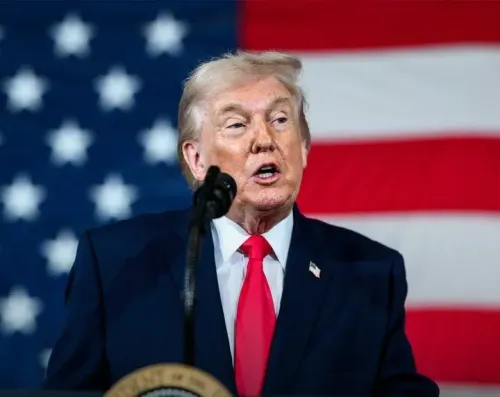
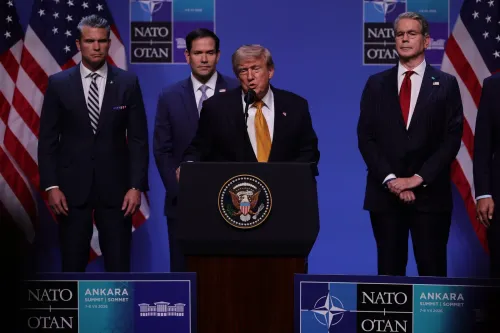
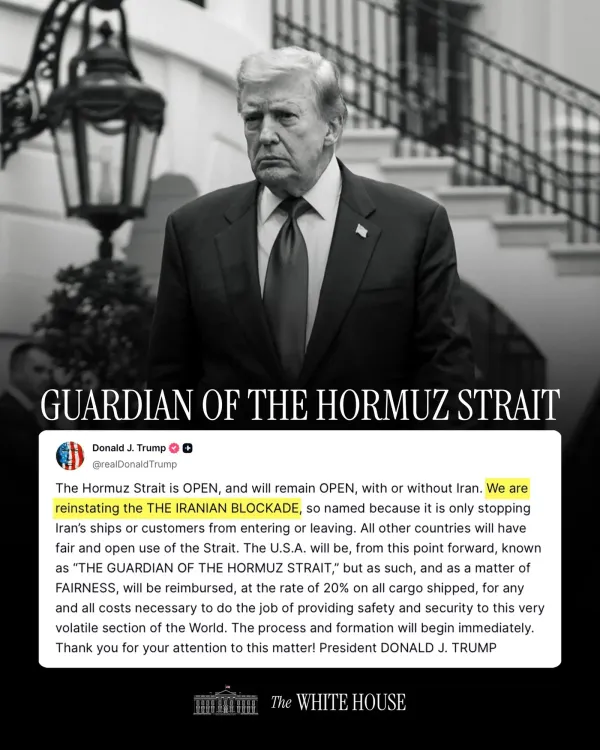
The White House announced on Monday, 13 July 2026 that President Donald J. Trump is reinstating what he has termed 'The Iranian Blockade' — a maritime restriction targeting Iranian ships and customers transiting the Strait of Hormuz — and declared that the United States will henceforth be known as 'The Guardian of the Hormuz Strait.'
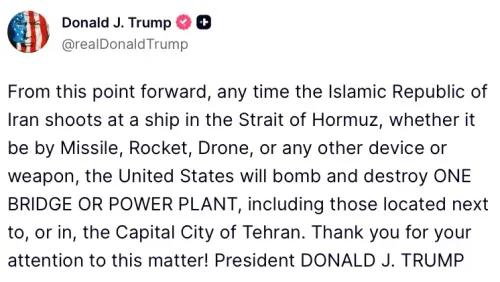
In his statement quoted by the White House, President Trump said: 'We are reinstating the Iranian Blockade, so named because it is only stopping Iran's ships or customers from entering or leaving... The U.S.A. will be, from this point forward, known as "THE GUARDIAN OF THE HORMUZ STRAIT."' The declaration marks a significant escalation in Washington's unilateral pressure campaign against Tehran.
Context
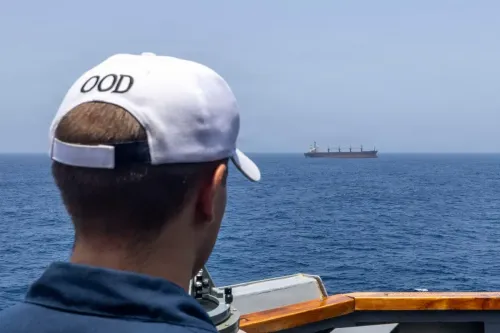
The Strait of Hormuz is one of the world's most strategically critical waterways, connecting the Persian Gulf and the Gulf of Oman. Historically, roughly one-fifth of global oil trade has transited through this narrow chokepoint, making it of acute importance to major energy importers including India and China.
Iran has periodically threatened to close the strait in response to US sanctions and military pressure, prompting the US Navy's Fifth Fleet — headquartered in Bahrain — to maintain a persistent presence in the region. Freedom-of-navigation operations have been a recurring feature of US Central Command's posture in the Gulf since at least 2019.
Policy Backdrop
During Trump's first term, the United States withdrew from the Joint Comprehensive Plan of Action (JCPOA) in 2018 and reimposed sweeping sanctions targeting Iranian oil exports as part of a 'maximum pressure' strategy. That campaign sought to reduce Iran's petroleum revenues to near zero and force a renegotiation of its nuclear and regional activities.
The current declaration appears to formalise a naval enforcement dimension to that sanctions architecture — specifically restricting vessels linked to Iran or its oil customers from using the strait. The White House has not, in this statement, indicated whether the measure is being implemented through a multilateral coalition or solely through US naval assets.
Stakeholders and Impact
The immediate commercial impact falls on Iranian oil exports and any third-country tankers that carry Iranian crude or refined products. Countries that have continued to purchase Iranian oil — including China — could find their supply chains disrupted or subject to secondary sanctions risk.
For India, which imports a significant share of its crude from the Gulf region and routes much of it through the Strait of Hormuz, any escalation in the waterway carries direct energy-security implications. Gulf Cooperation Council states, whose own exports transit the same chokepoint, will be watching closely for any spillover effect on non-Iranian shipping.
What's Next
Tehran's response to the announcement — including any statements from the Islamic Revolutionary Guard Corps Navy, which controls Iranian naval assets in the Gulf — will be a key indicator of how quickly the situation escalates. Analysts will also monitor whether US Fifth Fleet deployments are adjusted and whether Washington seeks to build a coalition of allied navies to enforce the blockade.
Major oil importers, including India and China, are expected to weigh in diplomatically, given their substantial exposure to Gulf energy flows. Any sustained restriction on Iranian-linked shipping through the strait could move global crude prices and prompt emergency consultations among oil-importing nations.
Point of View
Moving well beyond freedom-of-navigation operations into explicit blockade language. It extends the maximum pressure playbook from economic sanctions into a naval enforcement posture, raising the stakes for any country — including US partners like India — that sources energy from the Gulf. For New Delhi, the announcement is a sharp reminder of how quickly US-Iran tensions can translate into energy-security risk, potentially complicating India's carefully managed multi-alignment strategy. The absence of a multilateral framework in the White House statement suggests Washington is prepared to act alone, which historically has tested allied solidarity and invited Iranian counter-escalation.
NationPress
12 Oct 2026
Frequently Asked Questions
What is the Iranian Blockade announced by Trump?
The 'Iranian Blockade,' as named by President Trump in his 13 July 2026 statement, is a US maritime restriction that bars Iranian ships and customers of Iranian oil from entering or leaving through the Strait of Hormuz . It is distinct from a full naval blockade of the strait and is described as targeting only Iran-linked vessels and trade.
What is the Strait of Hormuz and why does it matter to India?
The Strait of Hormuz is a narrow waterway between the Persian Gulf and the Gulf of Oman through which roughly one-fifth of the world's oil trade passes. India imports a large share of its crude oil from Gulf producers, most of which is shipped through this chokepoint, making any disruption there a direct energy-security concern for New Delhi.
Has the US ever called itself Guardian of the Strait of Hormuz before?
No prior formal US policy or declaration has used the title 'Guardian of the Hormuz Strait.' While the US Navy's Fifth Fleet has maintained a continuous presence in the region and conducted freedom-of-navigation operations, President Trump's 13 July 2026 statement appears to be the first time a US administration has publicly claimed that designation.
How does this relate to Trump's earlier Iran policy?
During his first term, Trump withdrew the United States from the JCPOA nuclear deal in 2018 and reimposed sweeping sanctions on Iranian oil exports under a 'maximum pressure' strategy. The new blockade declaration extends that pressure into the naval domain, adding an enforcement layer at the Strait of Hormuz itself.
What could Iran do in response to the Hormuz blockade?
Iran has historically threatened to close the Strait of Hormuz in response to US pressure, and its Islamic Revolutionary Guard Corps Navy controls key assets in the Persian Gulf . Possible responses range from rhetorical condemnation to harassment of commercial shipping or military posturing near the strait, though specific Iranian reactions to this announcement are not yet confirmed.