Trump: No Hormuz Tolls for 60-Day Ceasefire, US Retains Override
Synopsis
President Donald J. Trump has announced no tolls will apply in the Strait of Hormuz during a 60-day ceasefire period, and none thereafter unless imposed by the United States. The declaration reasserts American authority over the world's most critical oil-shipping chokepoint and carries significant implications for global energy markets.
Key Takeaways
President Trump declared no tolls in the Strait of Hormuz for a 60-day ceasefire period .
After the ceasefire expires, tolls may only be imposed by and for the United States of America , per Trump's statement.
The Strait of Hormuz carries roughly 20 percent of global petroleum liquids, making it the world's most critical oil-shipping chokepoint.
India , a major crude oil importer from the Persian Gulf, has a direct energy-security stake in unobstructed Hormuz transit.
The US maintains its Fifth Fleet in the region to enforce freedom of navigation, a posture that dates back through multiple administrations.
Follow-on guidance from the US State and Defense Departments and potential IMO engagement are the immediate next steps to watch.
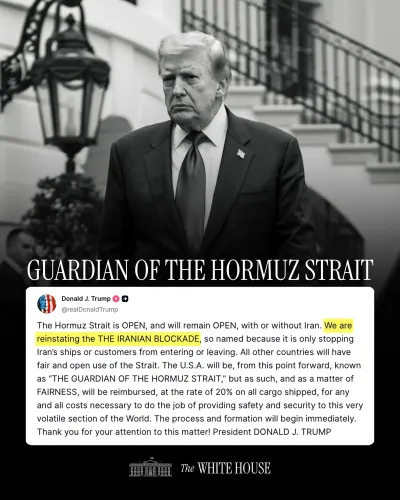
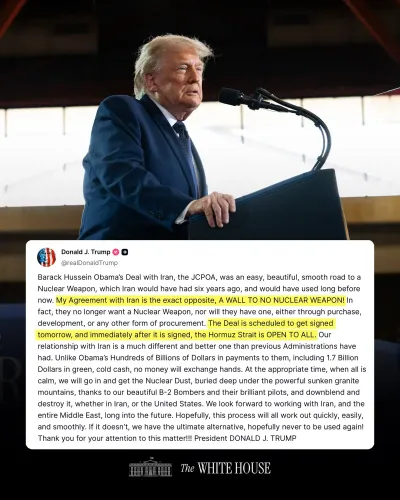
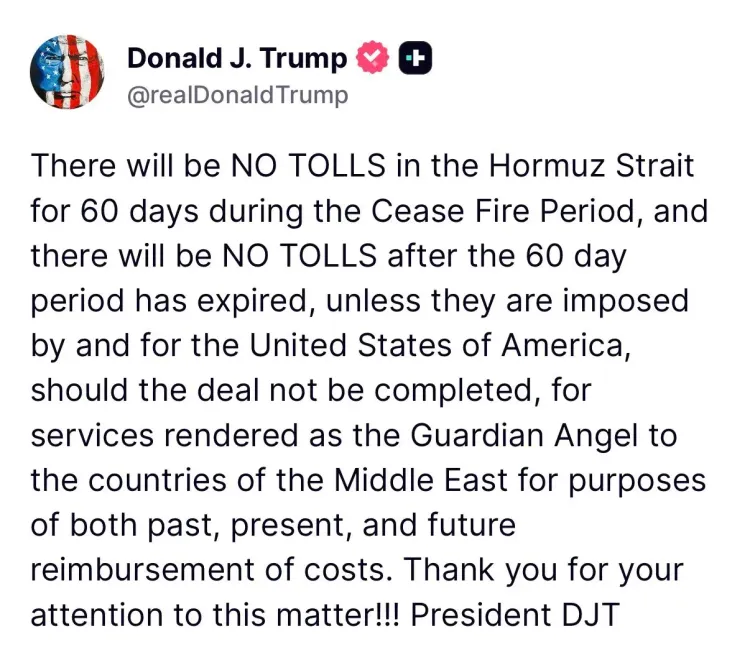
The White House on Sunday, June 21, 2026, announced that President Donald J. Trump has declared there will be no tolls in the Strait of Hormuz for a 60-day ceasefire period, and that no tolls will be imposed after the period expires unless levied by and for the United States of America.
In his statement, President Trump said: 'There will be NO TOLLS in the Hormuz Strait for 60 days during the Cease Fire Period, and there will be NO TOLLS after the 60 day period has expired, unless they are imposed by and for the United States of America.'
Context
The Strait of Hormuz is one of the world's most critical maritime chokepoints, with roughly 20 percent of global petroleum liquids transiting the narrow waterway that links the Persian Gulf to the Gulf of Oman. Any disruption to shipping through the Strait has immediate consequences for global oil prices and energy supply chains, including those serving India, one of the world's largest crude importers.
Iran, which sits on the northern shore of the Strait, has periodically threatened to restrict or close the waterway during periods of heightened military or sanctions pressure. The United States maintains its Fifth Fleet and carrier strike groups in the region specifically to enforce freedom of navigation under international law.
Policy Backdrop
US policy has long held that the Strait of Hormuz is a global commons whose security is underwritten by American naval presence, not by coastal-state tolls or closures. As far back as 2019, the Trump administration surged additional naval and air assets to the Gulf following Iranian threats to close the Strait and attacks on commercial shipping.
The current declaration follows that established pattern of pairing regional de-escalation agreements with explicit American guarantees of open maritime transit. By reserving the right to impose tolls exclusively 'by and for the United States,' the statement also signals that Washington intends to retain unilateral authority over the terms of access once any ceasefire arrangement concludes.
Stakeholders and Impact
The announcement carries direct implications for tanker operators, Gulf littoral states, and major oil-importing nations. India sources a significant share of its crude oil from the Persian Gulf, making unobstructed Hormuz transit a matter of energy security. Any regime of tolls — even one imposed by a third party — would raise freight costs and ultimately feed into domestic fuel prices.
Gulf producers, including members of OPEC+, also depend on the Strait for the bulk of their export volumes. The US assertion of toll authority, even as a contingency, introduces a new dimension into longstanding debates about freedom of navigation and the rights of coastal states under international maritime law.
What's Next
Analysts will be watching for follow-on guidance from the US Departments of State and Defense on how the ceasefire terms will be enforced and what triggers could activate the US toll provision. The International Maritime Organization and major shipping associations are also expected to seek clarification on how the arrangement interacts with existing conventions on freedom of the seas.
Congressional scrutiny of funding and legal authority for any expanded Hormuz patrol mandate is also anticipated. For energy markets globally, the durability of the 60-day window and the credibility of the US guarantee will be the central variables to track in the weeks ahead.
Point of View
Washington is effectively asserting a supervisory role over the world's most consequential energy corridor that goes beyond conventional freedom-of-navigation guarantees. For India and other Asian importers, the announcement offers short-term relief but introduces a longer-term ambiguity: what happens when the 60-day window closes and US domestic politics shape the toll calculus? The move fits a broader pattern in Trump-era foreign policy of converting multilateral security arrangements into bilateral leverage instruments, potentially complicating India's traditionally non-aligned approach to Gulf diplomacy.
NationPress
19 Sept 2026
Frequently Asked Questions
What did Trump say about tolls in the Strait of Hormuz?
President Trump announced there will be no tolls in the Strait of Hormuz for a 60-day ceasefire period, and no tolls after that period unless imposed by and for the United States of America.
Why is the Strait of Hormuz important for India?
India imports a large share of its crude oil from Persian Gulf producers, and virtually all of those shipments pass through the Strait of Hormuz. Any tolls or disruptions to transit directly affect India's energy costs and fuel prices.
What is the Strait of Hormuz ceasefire about?
The White House statement refers to a ceasefire period of 60 days during which no tolls will apply in the Strait of Hormuz. Specific details about the parties to the ceasefire or its terms beyond the toll provision have not been publicly detailed in this announcement.
Can the US legally impose tolls on the Strait of Hormuz?
The Strait of Hormuz is an international waterway governed by the UN Convention on the Law of the Sea, which guarantees transit passage rights. Trump's claim of US toll authority is a significant legal and diplomatic assertion that is expected to draw scrutiny from the International Maritime Organization and coastal states.
How much of the world's oil passes through the Strait of Hormuz?
Roughly 20 percent of global petroleum liquids — including crude oil and refined products — transit the Strait of Hormuz, making it the single most important oil-shipping chokepoint in the world.