Trump Says Hormuz Strait Opens After Deal Signing Tomorrow
Synopsis
President Donald J. Trump announced on June 13, 2026 that a deal is set to be signed the following day, after which the Strait of Hormuz — through which one-fifth of global oil flows — will be declared open to all. The announcement has major implications for global energy markets and Indian crude imports.
Key Takeaways
Trump announced on June 13, 2026 that a deal will be signed on June 14, 2026 .
Trump declared the Strait of Hormuz will be 'open to all' immediately after the deal is signed.
The Strait of Hormuz carries roughly one-fifth of the world's daily oil consumption.
The United States withdrew from the JCPOA in May 2018 , escalating tensions over Hormuz navigation rights.
The specific signatories and full terms of the deal have not yet been officially disclosed.
India , a major Gulf crude importer, stands to benefit significantly from a stable and open Hormuz passage.
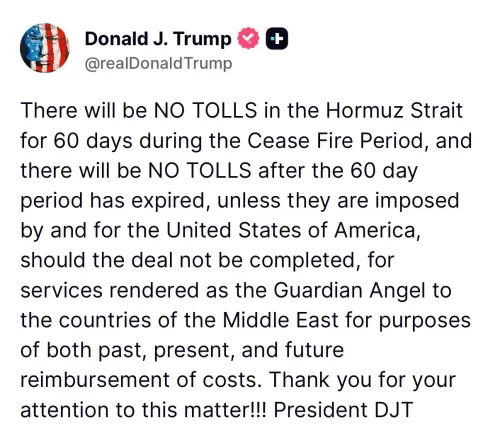
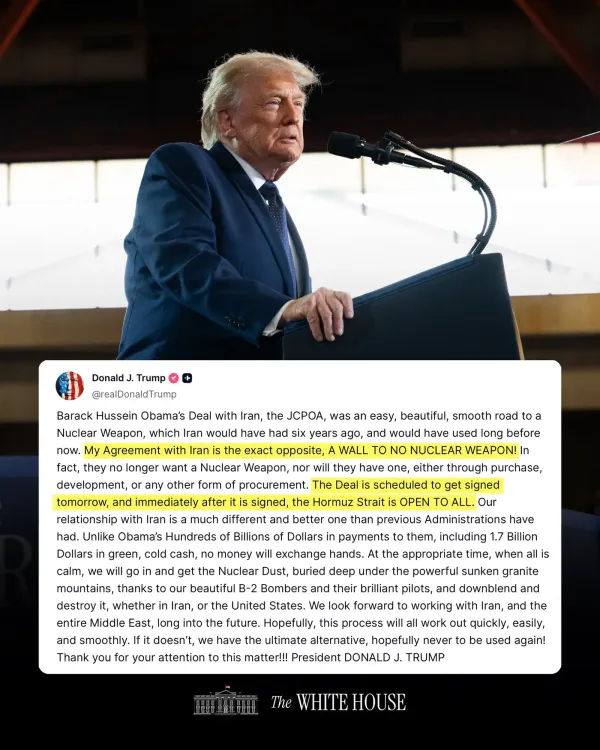
Washington DC, June 13, 2026 — The White House announced on Saturday, June 13, 2026, that President Donald J. Trump has confirmed a deal is scheduled to be signed the following day, after which the Strait of Hormuz will be 'open to all.' The announcement, made via the official White House account on X, carries significant implications for global energy markets and maritime security.
In his own words, President Trump stated: 'The Deal is scheduled to get signed tomorrow, and immediately after it is signed, the Hormuz Strait is OPEN TO ALL.' The declaration points to an imminent diplomatic agreement with direct consequences for one of the world's most critical oil shipping lanes.
Context
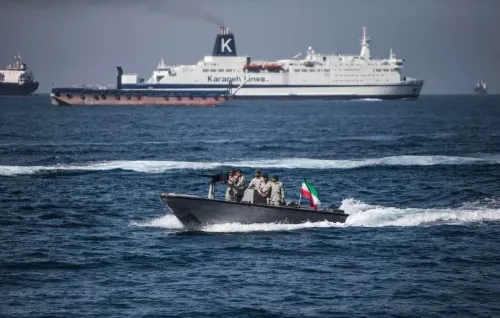
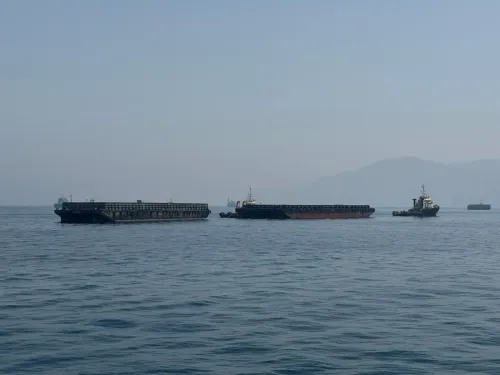
The Strait of Hormuz is a narrow waterway situated between Iran and Oman through which approximately one-fifth of global oil consumption passes daily. It has long been regarded as the world's single most important oil chokepoint. Any disruption to navigation through the strait sends immediate shockwaves through global energy prices, affecting oil importers worldwide — including India, one of the largest buyers of Gulf crude.
Iran, which borders the strait on its northern edge, has periodically threatened to close or restrict passage in response to international sanctions and regional disputes. The threat of closure has historically been used as a pressure lever against Western nations and their allies.
Policy Backdrop
In May 2018, the United States withdrew from the Joint Comprehensive Plan of Action (JCPOA), re-imposing sweeping sanctions aimed at curtailing Iranian oil exports. Those sanctions significantly heightened tensions over freedom of navigation through the strait, prompting the US Navy to maintain a robust presence in the Persian Gulf to assert maritime security guarantees.
Successive American administrations have alternated between maximum-pressure sanctions and attempts at negotiated maritime-security understandings involving littoral states in the region. President Trump's first term was defined by the 'maximum pressure' approach toward Tehran; this latest announcement suggests a pivot toward a negotiated resolution that would formally reopen the waterway to international shipping.
Stakeholders and Impact
The stakes of any Hormuz agreement are enormous for global commerce. Gulf states including Saudi Arabia, the UAE, and Kuwait rely on the strait to export their oil to world markets. International shipping companies, OPEC+ members, and energy-importing nations — particularly those in Asia — stand to gain the most from a stable, open waterway.
For India, which imports roughly 85 per cent of its crude oil needs and sources a significant share from the Gulf region, an open and secure Strait of Hormuz is critical to energy security and to keeping fuel prices stable for its 140 crore citizens. Any prolonged closure or threat of closure directly feeds into domestic inflation and the country's current account dynamics.
What's Next
The specific identity, signatories, and full contents of the referenced deal have not yet been officially disclosed. The signing is expected on Sunday, June 14, 2026, and follow-on announcements regarding implementation mechanisms and participating nations are anticipated shortly after. Reactions from OPEC+ members, international maritime authorities, and regional governments will be closely watched in the hours following the signing.
If the agreement holds, it could mark a significant shift in the geopolitics of the Persian Gulf and reshape the framework of US-Iran relations that has defined Middle Eastern diplomacy for nearly a decade. The broader implications for global oil prices and India's energy import bill will become clearer once the deal's terms are made public.
Point of View
Tying a specific deal deadline directly to the opening of the world's most critical oil chokepoint. If the agreement holds, it would mark a decisive break from the maximum-pressure sanctions era that his own first administration inaugurated in 2018. The move also reframes US engagement in the Gulf away from military deterrence and toward deal-making — a signature Trump foreign-policy style. For energy-dependent economies like India, the outcome of June 14 will be watched as closely as any OPEC+ decision.
NationPress
19 Sept 2026
Frequently Asked Questions
What is the deal Trump mentioned that will open the Strait of Hormuz?
President Trump announced on June 13, 2026 that a deal is scheduled to be signed the following day, after which the Strait of Hormuz will be open to all. The specific identity, signatories, and full terms of the deal have not been officially disclosed yet.
Why is the Strait of Hormuz important for India?
The Strait of Hormuz is the passage through which roughly one-fifth of global oil flows. India imports approximately 85 per cent of its crude oil needs and sources a large share from Gulf nations, making an open and secure Hormuz strait critical to India's energy security and domestic fuel prices.
Can Iran close the Strait of Hormuz?
Iran, which borders the strait to the north, has periodically threatened to close or restrict navigation in response to international sanctions and regional disputes. The US Navy has maintained a presence in the Persian Gulf to assert freedom of navigation and deter any such closure.
What was the JCPOA and how does it relate to the Hormuz Strait?
The Joint Comprehensive Plan of Action (JCPOA) was a 2015 nuclear agreement between Iran and world powers. The United States withdrew from it in May 2018 and re-imposed sanctions on Iranian oil exports, which heightened tensions over freedom of navigation through the Strait of Hormuz.
What happens to oil prices if the Strait of Hormuz is opened or closed?
Any disruption to shipping through the Strait of Hormuz typically causes an immediate spike in global oil prices, given that roughly one-fifth of world oil consumption passes through it. Conversely, a formal guarantee of open passage can ease supply-security premiums and stabilise crude prices for importing nations.