CM Mann Okays Ordinance to Curb Punjab Private School Fee Hikes
Synopsis
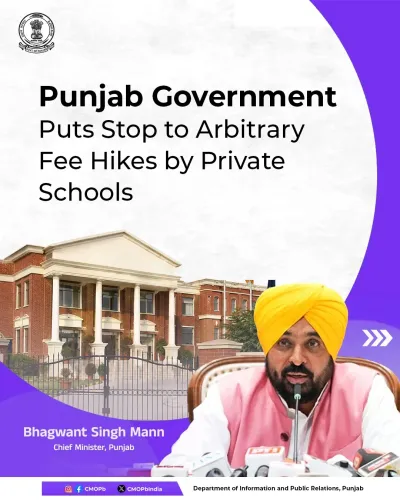
Punjab CM Bhagwant Mann has approved an ordinance capping private school fee hikes at 15% over three years, mandating refunds for excess charges, banning compulsory vendor tie-ups, and imposing fines up to Rs 1 lakh for violations — covering 32 lakh students across 7,800 schools.
Key Takeaways
An ordinance curbing arbitrary private school practices has been approved by the Punjab government on 13 July 2026 .
The move is projected to benefit 32 lakh children enrolled in 7,800 private schools across Punjab.
Schools must upload four years of fee records to a government portal within 10 days of the ordinance taking effect.
Any fee increase exceeding 15 per cent in the past three years must be refunded to parents.
Schools can no longer force students to buy books or uniforms from specific vendors.
Violations attract fines up to Rs 1 lakh and potential cancellation of school recognition.
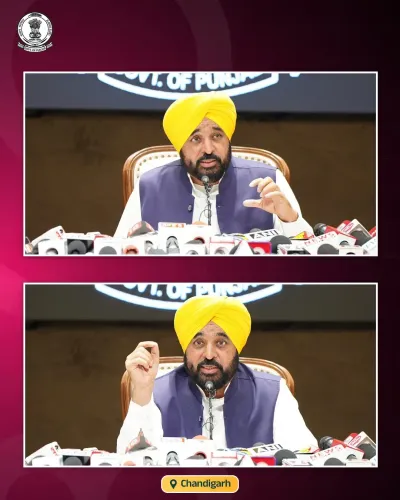
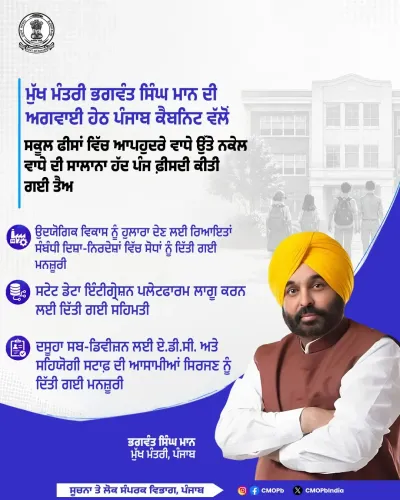
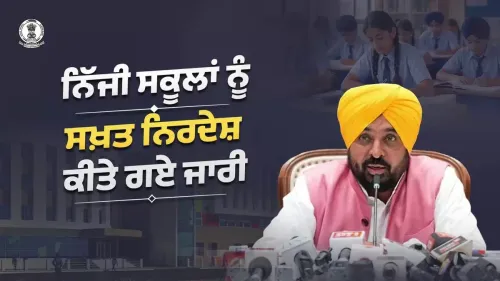
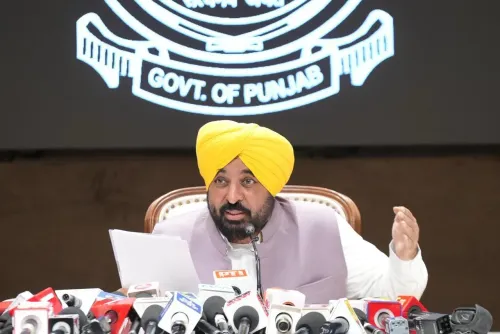
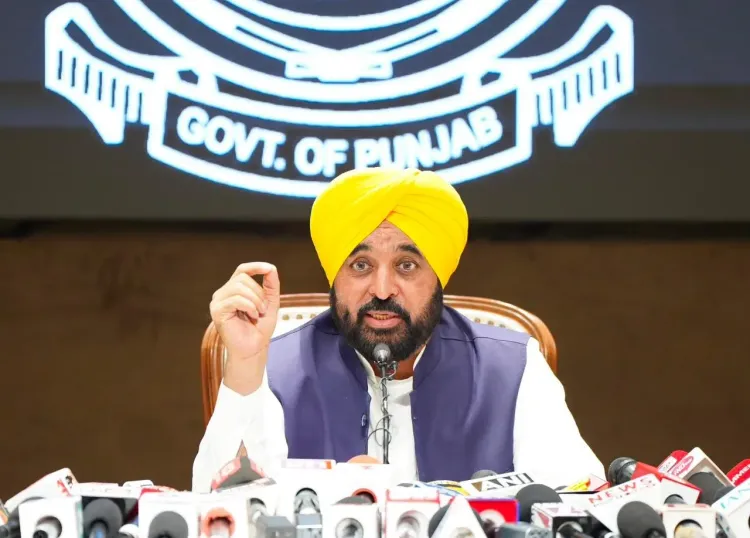
Punjab Chief Minister Bhagwant Mann announced on Monday, 13 July 2026 that an ordinance aimed at ending arbitrary practices by private schools has received approval, promising relief to families across the state. The move, described by Mann as 'historic', is set to benefit students and parents in 7,800 private schools across Punjab.
What the Ordinance Says
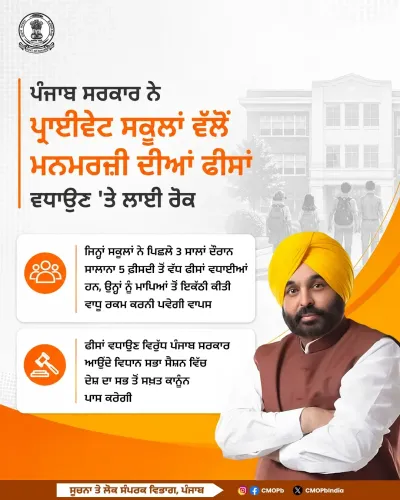
Posting in Punjabi, Mann summarised the key provisions: 'ਵਿੱਦਿਆ ਵਪਾਰ ਨਹੀਂ, ਹਰ ਬੱਚੇ ਦਾ ਹੱਕ ਹੈ' — 'Education is not commerce, it is every child's right.' Under the ordinance, private schools must upload four years of fee records to a government portal within 10 days. If any school raised fees by more than 15 per cent over the past three years, it must refund the excess amount to parents.
The ordinance also bans schools from compelling students to purchase books, uniforms, or other materials from specific vendors — a practice long criticised as a hidden revenue stream for school managements. Schools found in violation face fines of up to Rs 1 lakh and, in serious cases, cancellation of recognition.
Context
The Aam Aadmi Party had pledged in its 2022 Punjab election manifesto to rein in fee hikes and commercial practices in private schools. The party drew on its experience governing Delhi, where its education department had previously monitored fee structures and ancillary charges in private institutions. This ordinance is widely seen as the fulfilment of that pre-election commitment.
Private school regulation has been a politically sensitive issue across Indian states, with parent groups repeatedly raising concerns about unchecked annual fee increases, mandatory purchase of branded stationery, and opaque billing. Punjab's ordinance route — bypassing the legislative assembly session — signals urgency in the government's approach.
Stakeholders and Impact
The government says the ordinance will directly affect 32 lakh children and their families enrolled in private schools statewide. For parents, the most immediate relief is the fee-refund clause: any excess collected above the 15 per cent cap over three years must be returned. The compulsory vendor tie-up ban is expected to reduce the ancillary cost burden that families face at the start of each academic year.
Private school associations are likely to scrutinise the ordinance closely, particularly the 10-day deadline for uploading historical fee data and the penalty provisions. Legal challenges cannot be ruled out, as similar regulatory moves in other states have faced court proceedings initiated by school management bodies.
What's Next
The Punjab Education Department is expected to operationalise the online portal for fee-record submissions immediately. The government will need to notify detailed rules specifying how refunds are calculated, how complaints are filed, and how penalties are enforced. Compliance monitoring and the handling of disputes between parents and school managements will be the key test of the ordinance's effectiveness. Mann's government has indicated it will treat non-compliance firmly, with recognition cancellation serving as the ultimate deterrent.
Point of View
Converting a 2022 manifesto promise into enforceable law. The fee-refund clause is particularly aggressive — requiring schools to claw back past excess charges rather than merely capping future hikes — and sets a higher bar than comparable measures in most other Indian states. By routing the reform through an ordinance rather than waiting for an assembly session, Mann's administration signals political urgency, likely timed to build goodwill with middle-class parents ahead of future electoral cycles. The real test will be portal compliance and penalty enforcement: without robust follow-through, the ordinance risks becoming symbolic rather than transformative.
NationPress
13 Jul 2026
Frequently Asked Questions
What is the Punjab private school fee ordinance 2026?
It is an ordinance approved by the Punjab government on 13 July 2026 that caps private school fee increases at 15 per cent over three years, requires schools to upload four years of fee records to a portal within 10 days, mandates refunds for excess fees charged, bans compulsory vendor tie-ups for books and uniforms, and imposes fines up to Rs 1 lakh for violations.
How many students will benefit from the Punjab school fee ordinance?
The Punjab government states that 32 lakh children and their parents across 7,800 private schools will benefit from the ordinance.
Will private schools in Punjab have to refund excess fees already collected?
Yes. If a school raised fees by more than 15 per cent in the past three years, it is required under the ordinance to refund the excess amount to parents.
What happens if a private school violates the Punjab fee ordinance?
Violating schools face a financial penalty of up to Rs 1 lakh and, in serious cases, cancellation of their recognition by the state government.
Can Punjab private schools still ask parents to buy books from specific shops?
No. The ordinance explicitly prohibits schools from compelling students or parents to purchase books, uniforms, or other materials from any specific vendor or shop.