Punjab Cabinet caps private school fee hike at 5%, passes three key ordinances
Synopsis
Punjab's Cabinet has capped private school annual fee hikes at 5% and mandated regulatory approval for anything beyond — a direct response to years of parent complaints about arbitrary increases. Paired with industrial subsidy reforms and a new data integration platform, Monday's decisions mark one of the Mann government's most wide-ranging single-session governance moves.
Key Takeaways
The Punjab Cabinet on 22 June 2026 approved the Punjab Regulation of Fee of Unaided Educational Institutions (Amendment) Ordinance, 2026 .
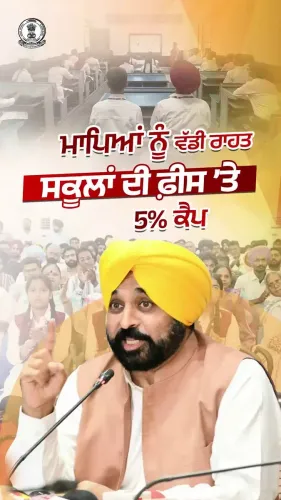
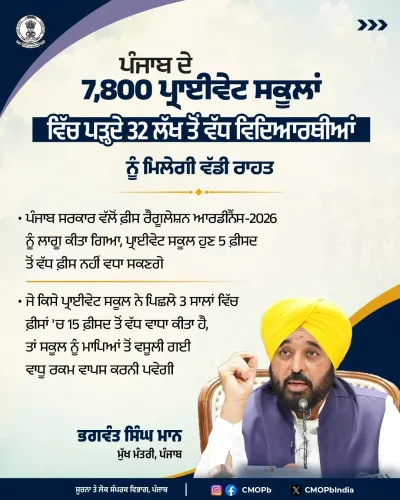
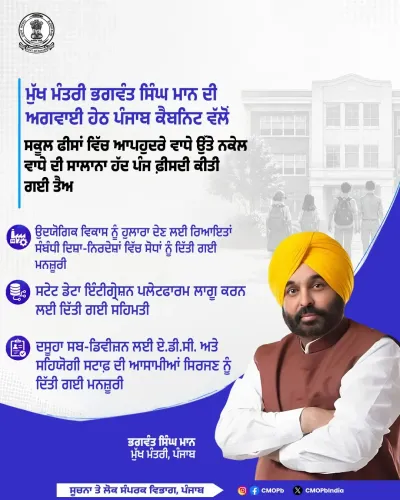
Annual fee hikes by private unaided schools are now capped at 5 per cent ; any increase beyond this requires regulatory body approval.
Amendments clarify definitions of 'fee', 'fee enhancement', and 'cumulative fee enhancement' to close existing loopholes.
Industrial incentive guidelines dated 13 November 2019 were amended to streamline capital subsidy disbursement by omitting Clauses 1.1 and 1.2 .
The State Data Integration Platform (SDIP) was approved to unify departmental databases, overseen by a three-tier committee chaired by the Chief Secretary .
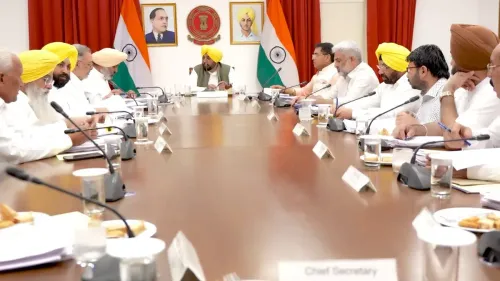
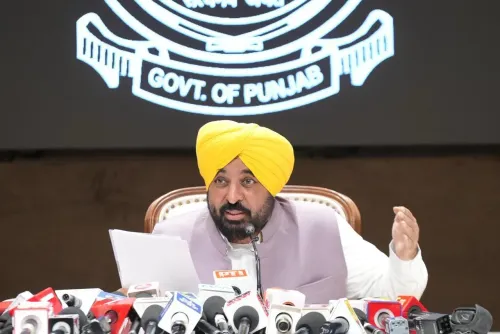
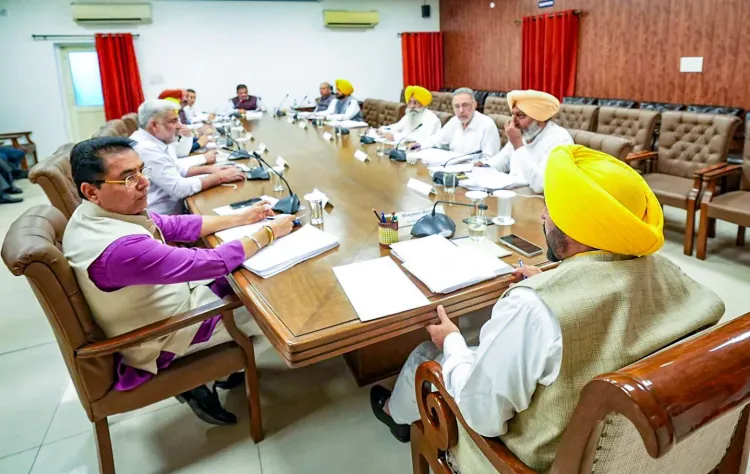
The Punjab Cabinet, chaired by Chief Minister Bhagwant Mann, on Monday, 22 June 2026, approved a package of three significant decisions — including an ordinance to rein in arbitrary fee hikes by private unaided schools, amendments to industrial subsidy guidelines, and the rollout of a State Data Integration Platform. The moves signal a broad governance push by the Aam Aadmi Party (AAP) government ahead of the next budget cycle.
Private School Fee Cap: What Changes
The Cabinet cleared the Punjab Regulation of Fee of Unaided Educational Institutions (Amendment) Ordinance, 2026, amending the parent Punjab Regulation of Fee of Unaided Educational Institutions Act, 2016. The ordinance places a hard cap of 5 per cent on annual fee hikes by private unaided schools. Any increase beyond that threshold will require prior approval from the designated regulatory body.
The amendments also sharpen legal definitions — clarifying the terms 'fee', 'fee enhancement', and 'cumulative fee enhancement' — to close loopholes that schools had reportedly used to impose staggered or bundled increases. The stated objectives are to protect students and parents from arbitrary charges, enforce transparency in fee structures, and ensure institutional accountability.
This comes amid persistent complaints from parent groups across Punjab about steep, unannounced fee revisions, particularly in urban centres such as Ludhiana and Amritsar. Several states, including Rajasthan and Himachal Pradesh, have enacted similar fee-regulation frameworks in recent years, with mixed enforcement records.
Industrial Incentive Guidelines Revised
In a second decision, the Cabinet approved amendments to the industrial incentive guidelines dated 13 November 2019, which govern the disbursement of capital subsidies and investment incentives under Punjab's industrial policy. The revision omits Clauses 1.1 and 1.2 of the original guidelines, enabling eligible industrial units to receive capital subsidies directly upon verification of requisite documents and fulfilment of prescribed conditions.
The government said the changes are intended to simplify subsidy disbursement, improve administrative efficiency, and ensure uniform implementation across eligible units. Industry observers have long flagged the earlier framework for procedural bottlenecks that delayed incentive payouts and deterred investment.
State Data Integration Platform to Unify Departments
The Cabinet also approved the implementation of the State Data Integration Platform (SDIP) in Punjab, designed to link various departmental databases, eliminate duplication, and streamline government processes. A three-tier steering committee will oversee the project, headed by the Chief Secretary as chairperson, with the Administrative Secretary (Good Governance) serving as member-convener, and administrative secretaries of other departments as members.
The SDIP is part of a broader digital governance agenda the Mann administration has pursued since taking office. If implemented effectively, it could reduce data silos that currently slow welfare delivery and subsidy tracking across departments.
What to Watch
The fee ordinance will require legislative ratification when the Punjab Assembly reconvenes. Enforcement mechanisms — specifically the composition and powers of the regulatory body that must approve hikes beyond 5 per cent — have not yet been publicly detailed. Private school associations are expected to respond in the coming days, and legal challenges cannot be ruled out given similar ordinances in other states have faced court scrutiny. The SDIP rollout timeline and budget outlay also remain to be announced.
Point of View
While framed as simplification, removes two clauses without public explanation of why they were problematic, which warrants scrutiny. And the SDIP, if it delivers on data integration, could genuinely improve welfare targeting — but the government has yet to disclose a budget, a vendor, or a go-live timeline, making it difficult to assess beyond intent.
NationPress
21 Sept 2026
Frequently Asked Questions
What is the Punjab private school fee ordinance approved on 22 June 2026?
It is the Punjab Regulation of Fee of Unaided Educational Institutions (Amendment) Ordinance, 2026, approved by the Punjab Cabinet on 22 June 2026. It caps annual fee hikes by private unaided schools at 5 per cent and requires regulatory body approval for any increase beyond that limit.
Who is affected by the 5% fee cap in Punjab?
Students and parents enrolled in private unaided schools across Punjab are directly affected. Private school managements will now need regulatory clearance before raising fees by more than 5 per cent annually.
What changes were made to Punjab's industrial subsidy guidelines?
The Cabinet amended the industrial incentive guidelines of 13 November 2019, omitting Clauses 1.1 and 1.2 to simplify capital subsidy disbursement. Eligible industrial units can now receive subsidies upon document verification and fulfilment of prescribed conditions, without the procedural steps those clauses required.
What is the State Data Integration Platform (SDIP) approved by the Punjab Cabinet?
The SDIP is a digital governance initiative to integrate databases across Punjab government departments, reduce duplication, and streamline administrative processes. It will be overseen by a three-tier steering committee chaired by the Chief Secretary.
Will the Punjab fee ordinance need Assembly approval?
Yes. As an ordinance, it has immediate legal force but must be ratified by the Punjab Legislative Assembly when it next convenes. The detailed composition and powers of the regulatory body that will approve fee hikes beyond 5 per cent have not yet been publicly specified.