Punjab Caps Private School Fee Hikes at 5%, Orders Refunds
Synopsis
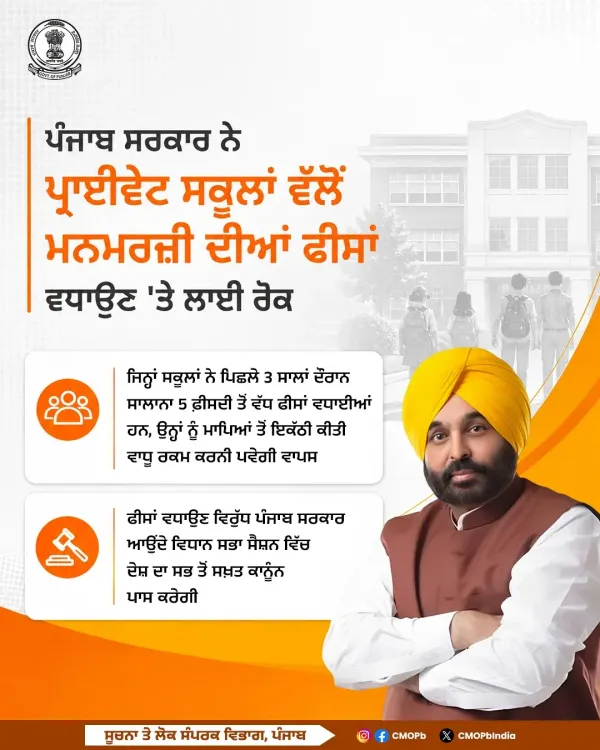
The Chief Minister's Office of Punjab has unveiled a regulatory framework capping annual private school fee hikes at 5 per cent, mandating refunds for excess collections over the last three years, and prescribing penalties up to cancellation of recognition for non-compliant institutions across the state.
Key Takeaways
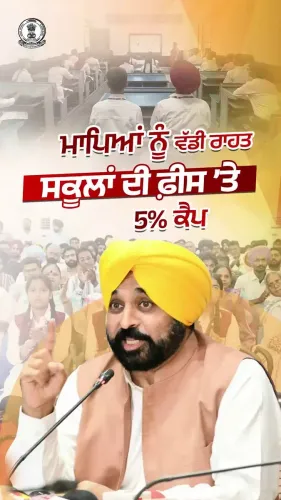
Annual fee increases by private schools in Punjab capped at 5 per cent .
Schools that breached the limit in the last three years must refund excess fees to parents.
Penalties for non-compliance can extend up to cancellation of recognition .
Move announced by the Chief Minister's Office of Punjab under Bhagwant Singh Mann on June 4, 2026 .
Framework targets relief for lakhs of families amid long-standing complaints over arbitrary hikes.
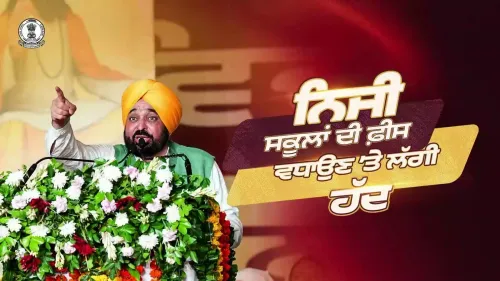
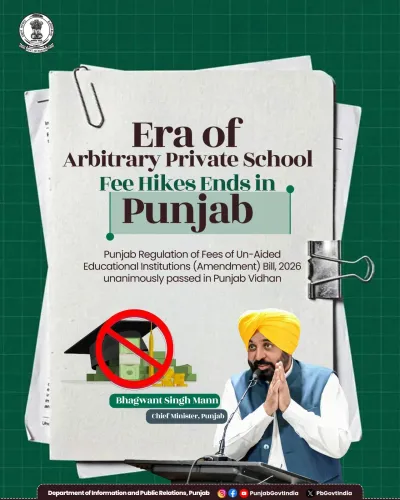
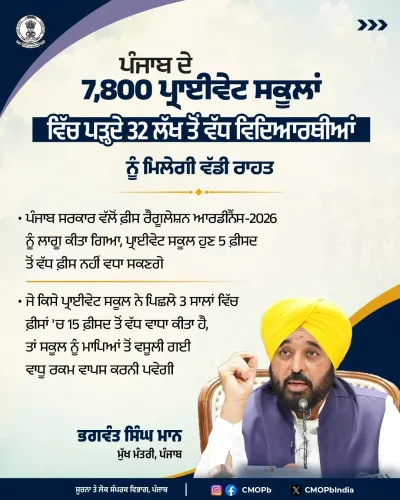
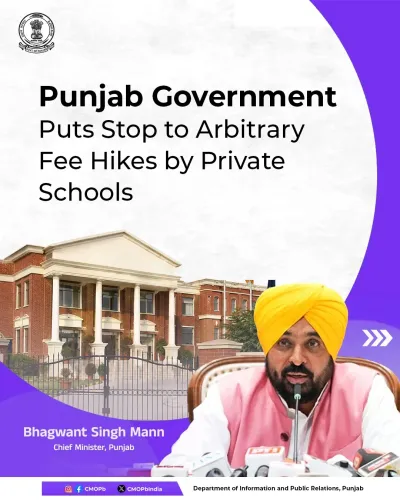
The Chief Minister's Office of Punjab on June 4, 2026 announced a sweeping regulatory framework to rein in arbitrary fee increases by private schools across the state. The order, issued under the Bhagwant Singh Mann-led government, caps annual fee hikes at 5 per cent, mandates refunds where schools breached the limit over the past three years, and prescribes penalties that can culminate in cancellation of a school's recognition.
Context
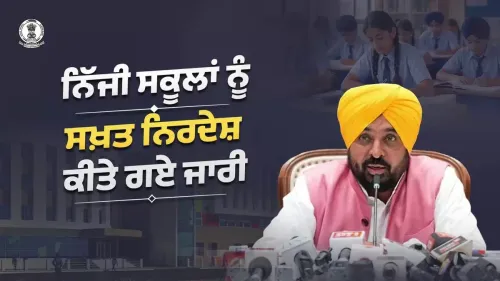
In its post, the Chief Minister's Office of Punjab described the move as a 'landmark' step aimed at 'ending arbitrary fee hikes by private schools and providing long-awaited relief to lakhs of families across Punjab'. The Punjabi text framed the decision as 'ਇਤਿਹਾਸਕ ਕਦਮ' (a historic step), targeting what it called the practice of schools raising fees at will.
The framework has three core pillars: a hard ceiling of 5 per cent on annual fee increases, mandatory refunds of excess amounts already collected from parents during the last three academic cycles, and graded penalties for non-compliance. The most serious sanction, according to the announcement, is the withdrawal of a school's official recognition.
Policy backdrop
Fee regulation in unaided private schools has been a recurring flashpoint in Punjab, where parent associations have repeatedly flagged double-digit annual hikes that outpace inflation. Successive governments have considered statutory caps, but enforcement has historically lagged behind announcement.
The Aam Aadmi Party government, in office since March 2022, has positioned education as a signature governance plank, with earlier initiatives focused on government schools. The latest move extends that remit into the private sector, mirroring a broader pattern across Indian states, several of which have introduced similar caps, refund provisions and recognition-linked penalties in response to parental complaints.
Stakeholders and impact
For parents, the most immediate consequence is the refund clause. Families whose children attended private schools that exceeded the annual limit between roughly 2023 and 2026 stand to recover the excess amount, subject to verification by the state.
For private school managements, the framework alters the financial planning cycle. Schools accustomed to setting fees through internal trust boards will now have to justify any hike beyond 5 per cent and reconcile past collections. Industry bodies representing unaided institutions have, in comparable jurisdictions, raised concerns about operational autonomy and rising input costs such as salaries and infrastructure upgrades.
The cancellation-of-recognition clause is the most consequential lever. A school stripped of recognition typically loses the ability to enrol students for board examinations, making the penalty a meaningful deterrent rather than a notional fine.
What's next
Attention will now shift to the fine print of the regulatory order — the audit mechanism, the timeline for refunds, the appellate route for aggrieved schools, and the body empowered to recommend de-recognition. Compliance reports from districts will be the first test of whether the cap translates from announcement to enforcement.
Private school associations are likely to study the order closely, with the possibility of representations to the state or recourse to the courts on questions of regulatory overreach into unaided institutions. For the Mann government, the success of the framework will be judged by how quickly refunds reach parents and how consistently the 5 per cent ceiling is enforced across the state's diverse private school landscape — from elite urban institutions to mid-tier schools in smaller towns.
Point of View
Where parental discontent has long outpaced policy response. For the Aam Aadmi Party in Punjab, extending its education plank from government schools into private fee regulation is politically logical, broadening the constituency of beneficiaries beyond state-school parents. The real test, however, lies in enforcement architecture: caps without audit teeth have failed in other states. The recognition-cancellation clause gives this framework unusual bite, but it also raises the legal stakes if private school associations choose to litigate.
NationPress
21 Oct 2026
Frequently Asked Questions
What is the new cap on private school fee hikes in Punjab?
Private schools in Punjab can now raise fees by a maximum of 5 per cent annually under the new regulatory framework announced by the Chief Minister's Office. Any increase beyond this ceiling will attract penalties.
Will parents get refunds for excess school fees paid earlier?
Yes, schools that breached the annual fee hike limit during the past three years are required to refund the excess amount collected from parents. The refund is mandatory under the new order.
What happens if a private school violates the fee cap in Punjab?
Non-compliant schools face graded penalties that can ultimately lead to cancellation of their official recognition. Loss of recognition typically bars schools from enrolling students for board examinations.
Who announced the Punjab private school fee regulation?
The framework was announced by the Punjab government led by Chief Minister Bhagwant Singh Mann, with the official communication issued through the Chief Minister's Office.
Does the 5 per cent cap apply to all private schools in Punjab?
The cap is framed as a state-wide regulatory measure covering private schools across Punjab. Specific operational details on coverage and exemptions will emerge through the formal order.