Punjab caps private school fee hikes at 5% with new law
Synopsis
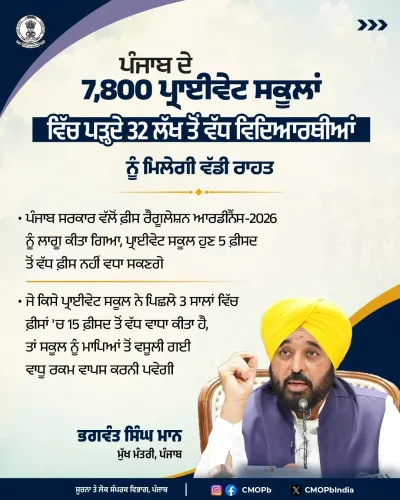
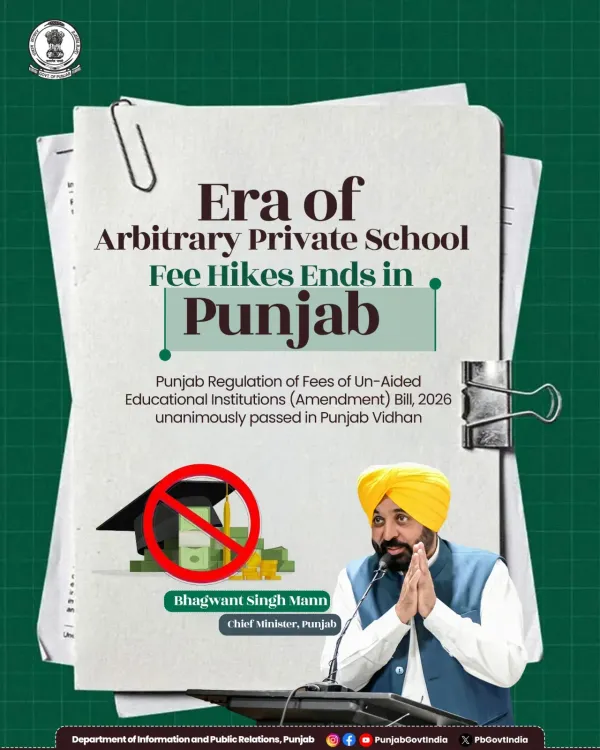
The Punjab Vidhan Sabha unanimously passed the Punjab Regulation Of Fees Of Un-Aided Educational Institutions (Amendment) Bill, 2026 on August 11, capping annual fee hikes at private schools at 5% and placing every charge collected from parents under regulatory oversight.
Key Takeaways
The Punjab Vidhan Sabha passed the Punjab Regulation Of Fees Of Un-Aided Educational Institutions (Amendment) Bill, 2026 by unanimous voice vote on August 11, 2026 .
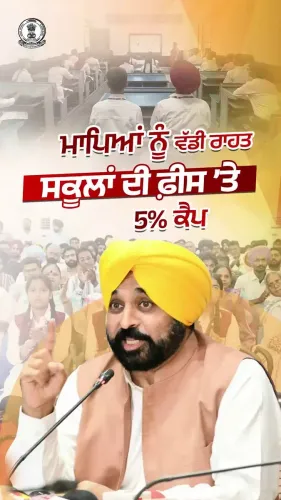
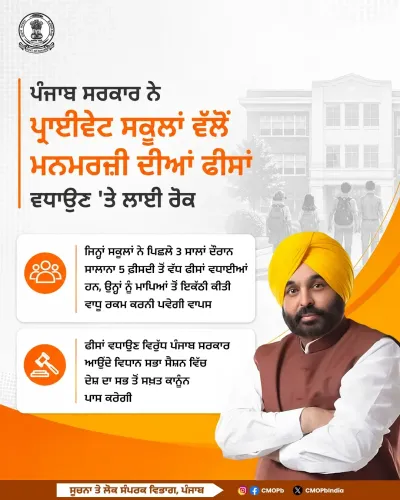
Private unaided schools in Punjab cannot raise fees by more than 5 per cent per academic session under the new law.
Every amount collected from parents under any head — including development charges and activity fees — will now be classified and regulated as 'fee'.
The bill passed without dissent, reflecting cross-party consensus on the need to protect parents from arbitrary billing.
Effective enforcement will depend on the notification of detailed rules and the constitution of fee regulatory committees before the next academic year.
Punjab joins several other Indian states that have enacted similar fee-regulation legislation under the broader Right to Education Act framework.
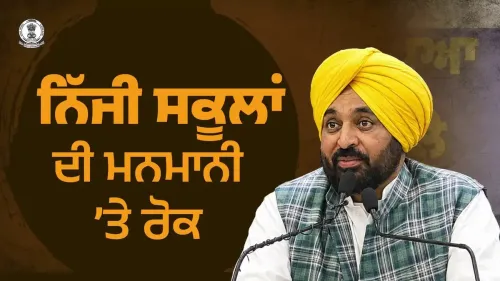
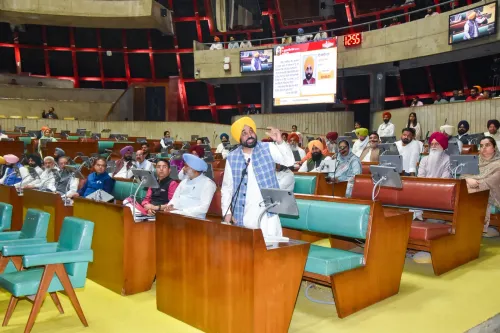
Millions of Punjab parents who have watched school bills balloon year after year just got a legal shield. The Punjab Vidhan Sabha unanimously passed — by voice vote — the Punjab Regulation Of Fees Of Un-Aided Educational Institutions (Amendment) Bill, 2026 on Tuesday, August 11, 2026, capping annual fee hikes at private schools at 5 per cent and bringing every charge collected from parents under regulatory oversight.
What the 5% cap actually means for families
The headline number is blunt and deliberate: no private unaided school in Punjab can raise fees by more than 5 per cent at the start of a new academic session. But the sharper edge of the law is its sweep — every amount collected from parents under any head will now be treated as 'fee' and brought under regulation. That closes the loophole schools have long exploited: rebranding hikes as 'development charges', 'activity fees', or 'smart-class levies' to sidestep earlier caps.
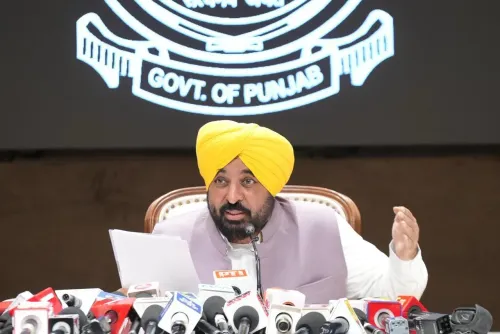
The Chief Minister's Office of Punjab described the legislation as 'putting an end to arbitrary fee hikes', signalling that the Bhagwant Mann-led government intends this as a structural fix, not a one-session freeze.
A unanimous vote and what it signals
The bill passed by voice vote without dissent — a rare display of cross-party agreement in a chamber that has seen sharp political battles. That unanimity matters: it removes the easiest avenue for legal challenge based on legislative legitimacy and gives the law a broader political mandate than a simple majority would have.
Punjab joins a growing list of Indian states — including Rajasthan, Maharashtra, and Tamil Nadu — that have moved to regulate private school fees following sustained parental complaints about opaque and aggressive billing. The underlying framework is the Right to Education Act, which permits state regulation of unaided institutions without amounting to a takeover of management.
The rollout questions that will define the law's real impact
Legislation is only as strong as its enforcement machinery. Three things will determine whether this law delivers on its promise: the notification of detailed rules spelling out the compliance process, the constitution of fee regulatory committees with genuine investigative powers, and the state's readiness to handle grievances before the next academic session begins. Private school associations have historically challenged such laws in court — Punjab's government will need its regulatory architecture in place before that front opens.
For now, the message from Chandigarh is unambiguous: the era of unchecked fee hikes in Punjab's private schools is, at least on paper, over. Whether the rulebook matches the rhetoric is the next test.
Point of View
A constituency that feels the pinch of private school billing acutely. Fee regulation has become a pan-India trend, but Punjab's 'all charges count as fee' provision is notably aggressive in closing definitional loopholes. The real test is institutional: without empowered regulatory committees and a clear grievance mechanism, the 5% cap risks becoming a ceiling that schools navigate around rather than comply with. If enforcement holds, this could become a template other AAP-governed or opposition-governed states point to in their own legislative debates.
NationPress
25 Sept 2026
Frequently Asked Questions
What is the Punjab school fee cap bill 2026?
The Punjab Regulation Of Fees Of Un-Aided Educational Institutions (Amendment) Bill, 2026 limits annual fee increases by private unaided schools to a maximum of 5 per cent per academic session and brings every charge collected from parents under regulatory oversight.
Can Punjab private schools increase fees in 2026?
Yes, but only by up to 5 per cent at the start of a new academic session. Any increase beyond that is prohibited under the newly passed amendment.
Does the Punjab fee law cover development charges and activity fees?
Yes. The law treats every amount collected from parents under any head — including development charges, activity fees, and similar levies — as 'fee', bringing all such collections under regulation.
Was the Punjab school fee bill passed unanimously?
Yes. The Punjab Vidhan Sabha passed the bill by unanimous voice vote on August 11, 2026, with no recorded dissent from any party.
When will the Punjab private school fee regulation take effect?
The bill has been passed by the legislature; enforcement will depend on the state government notifying detailed rules and constituting fee regulatory committees, which are expected ahead of the next academic session.