Punjab CM Mann: Fee Regulation Bill Passed Unanimously
Synopsis
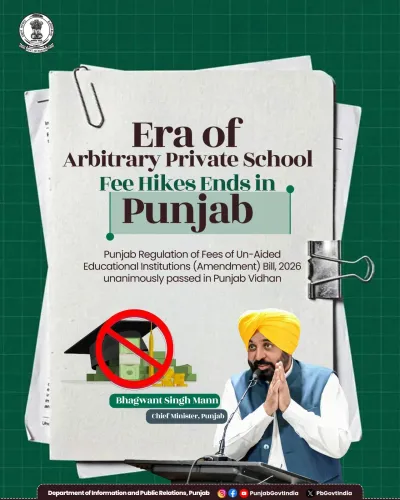
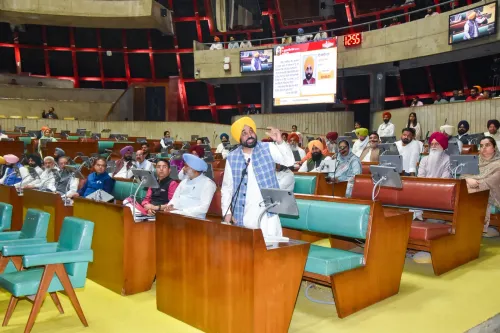
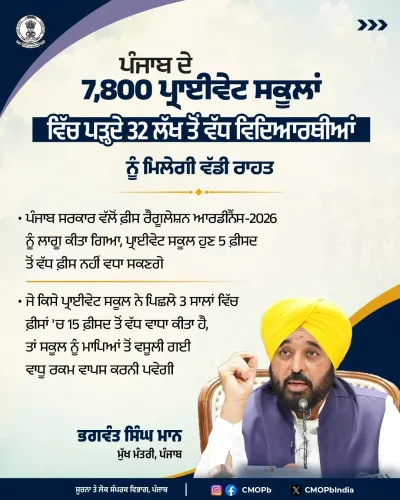
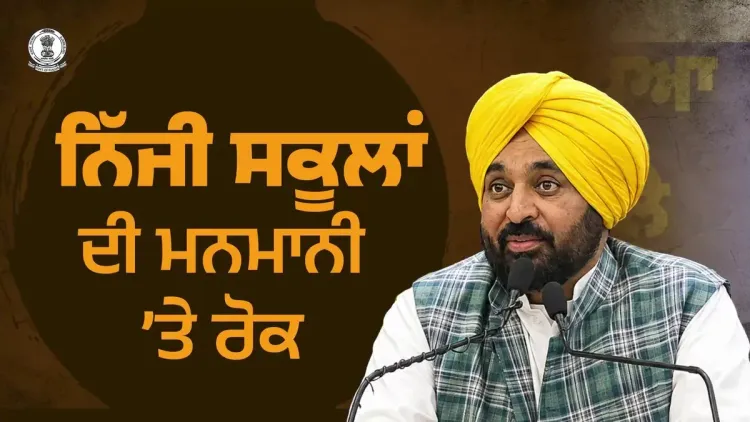
The Punjab Vidhan Sabha unanimously passed a Fee Regulation Bill on August 11, 2026. CM Bhagwant Mann announced that parents can now buy books and uniforms from any shop, and private schools are barred from charging extra fees beyond the regulated structure.
Key Takeaways
The Fee Regulation Bill was passed unanimously by the Punjab Vidhan Sabha on August 11, 2026 .
CM Bhagwant Mann announced that parents are free to purchase books and uniforms from any shop of their choice.
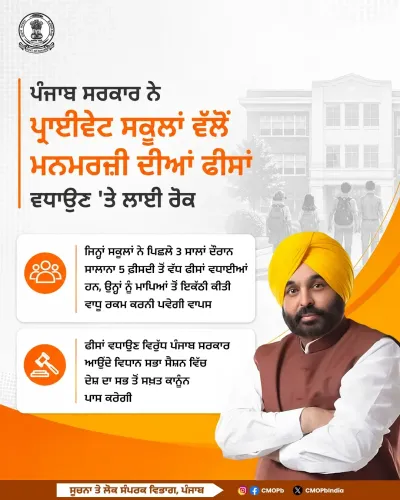
Private schools in Punjab are now prohibited from charging extra fees beyond the regulated limit.
The law targets mandatory vendor tie-ups — a practice where schools directed parents to specific suppliers.
Punjab joins states like Maharashtra and Karnataka that have enacted similar fee-cap frameworks.
Implementation will depend on the notification of rules; legal challenges from private school associations remain a possibility.
Punjab's private schools can no longer dictate where parents shop for books and uniforms — and they cannot charge a rupee more than what the law permits. Chief Minister Bhagwant Mann announced on Tuesday, August 11, 2026 that the Fee Regulation Bill was passed unanimously by the Punjab Vidhan Sabha, marking a significant shift in how the state governs private school finances.
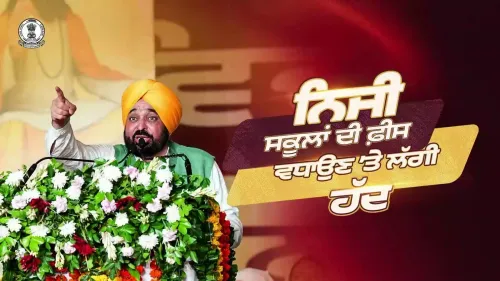
In Punjabi, the Chief Minister's Office stated: 'ਹੁਣ ਮਾਪੇ ਕਿਸੇ ਵੀ ਦੁਕਾਨ ਤੋਂ ਕਿਤਾਬਾਂ ਤੇ ਵਰਦੀਆਂ ਖ਼ਰੀਦ ਸਕਣਗੇ' — 'Parents will now be able to buy books and uniforms from any shop they choose, and schools will not be able to collect any extra fees.'What the Bill Actually Changes for Punjab Families
The law targets two of the most persistent complaints from parents across Punjab's private school ecosystem: mandatory vendor tie-ups and unchecked fee hikes. Schools had routinely directed families to specific stationery shops and uniform suppliers — arrangements that critics called monopolies dressed as school policy. Under the new legislation, that practice ends. Parents are free to purchase from any vendor, and schools are barred from levying charges beyond the regulated structure.
The unanimous passage in the Vidhan Sabha signals that the bill faced no legislative opposition — a notable detail given that fee regulation can draw pushback from private school lobbies. It also gives the law a stronger political mandate as it moves toward implementation.
Punjab Joins a Growing List of States Reining In Private Schools
Punjab's move is not isolated. States including Maharashtra and Karnataka have previously enacted fee-cap frameworks in response to rising household education costs and organised parent protests. The national scaffolding for such laws traces back to the Right of Children to Free and Compulsory Education Act, 2009, which established baseline norms on school transparency that state governments have since built upon.
For the Aam Aadmi Party government in Punjab, education reform has been a central political identity since CM Mann took office in March 2022. The party's record in Delhi on government school upgrades gave it a strong electoral narrative, and Punjab's fee regulation law extends that brand into the private school space — where the majority of urban middle-class families are enrolled.
Rules, Enforcement, and the Private School Response Ahead
Passing a bill is step one. The harder work begins with the notification of implementing rules — the specific fee-cap formulas, the grievance redressal mechanism, and the penalties for non-compliance. Private school associations in other states have challenged similar legislation in courts, and Punjab's law will likely face scrutiny from the same quarter. How the government frames and enforces the rules will determine whether the relief promised today reaches classrooms by the next academic cycle.
For now, the unanimous vote sends an unambiguous message: in Punjab's legislature, at least, no one was willing to be seen defending the status quo on school fees.
Point of View
Which has staked its identity on education reform since 2022. By extending regulatory reach into private schools — where urban middle-class families are most concentrated — the party is translating a populist promise into enforceable law. The real test, however, is implementation: fee regulation bills across Indian states have a mixed record of enforcement, and private school associations have shown willingness to litigate. If Punjab's government notifies clear rules and a credible grievance mechanism quickly, this could become a durable policy win; if enforcement lags, the unanimous vote risks becoming a headline without consequence.
NationPress
26 Sept 2026
Frequently Asked Questions
What is the Punjab Fee Regulation Bill 2026?
It is a law passed unanimously by the Punjab Vidhan Sabha that regulates private school fees, prohibits schools from mandating purchases from specific vendors, and bars them from charging parents any extra fees beyond the regulated structure.
Can Punjab schools still force parents to buy uniforms from a specific shop?
No. Under the new Fee Regulation Bill, parents are free to purchase books and uniforms from any shop of their choice, and schools cannot compel them to use designated vendors.
When was the Punjab Fee Regulation Bill passed?
The bill was passed on Tuesday, August 11, 2026, and was announced by Chief Minister Bhagwant Mann via the Chief Minister's Office of Punjab.
Does the Punjab fee regulation law apply to all private schools?
The bill applies to private schools in Punjab; the exact scope and categories of schools covered will be detailed in the implementing rules to be notified by the state government.
Which other Indian states have similar school fee regulation laws?
States including Maharashtra and Karnataka have previously enacted fee-cap frameworks for private schools, and Punjab's new law follows a similar pattern of state-level regulation building on national education norms.