Punjab caps private school fee hike at 5%, orders refunds for past breaches
Synopsis
Punjab is taking the sharpest swing yet at private school fee inflation — a 5% annual cap covering all charges, mandatory refunds for past breaches, and de-recognition as the final penalty. CM Bhagwant Mann is framing it as the country's toughest fee law, betting that an Ordinance plus a hard ceiling can do what the 2016 Act and its diluted 2019 version could not.
Key Takeaways
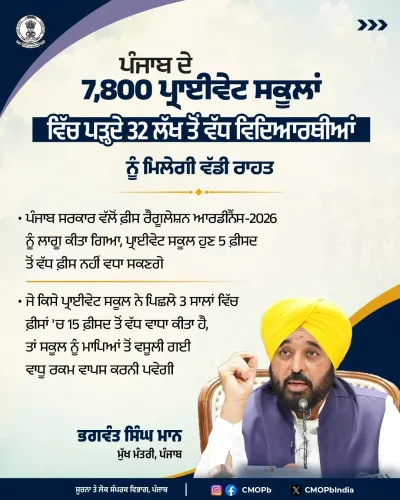
The Punjab government will cap annual private school fee hikes at 5 per cent , covering tuition and all mandatory charges.
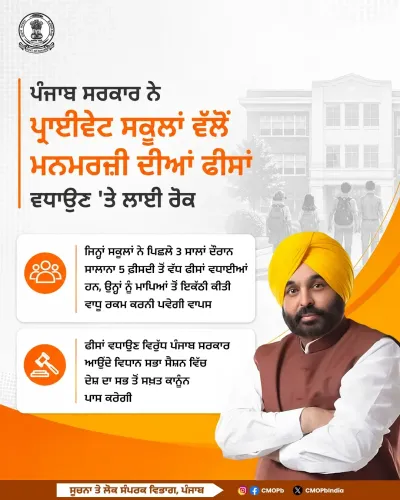
Schools that raised fees by more than 15 per cent over the past three years face strict action, including refunds.
Penalties can escalate to cancellation of a school's recognition.
CM Bhagwant Mann blamed the 2019 Congress-era amendment for diluting the original 2016 Act's 8 per cent cap.
An Ordinance will precede formal legislation in the next Punjab Assembly session.
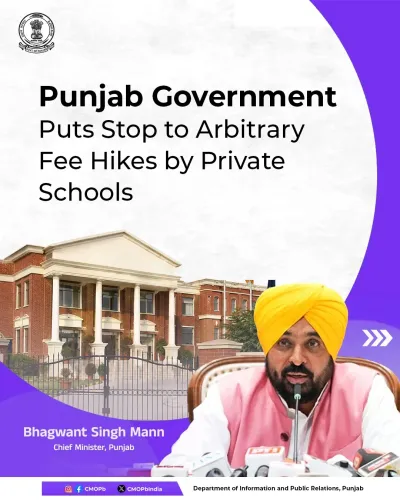
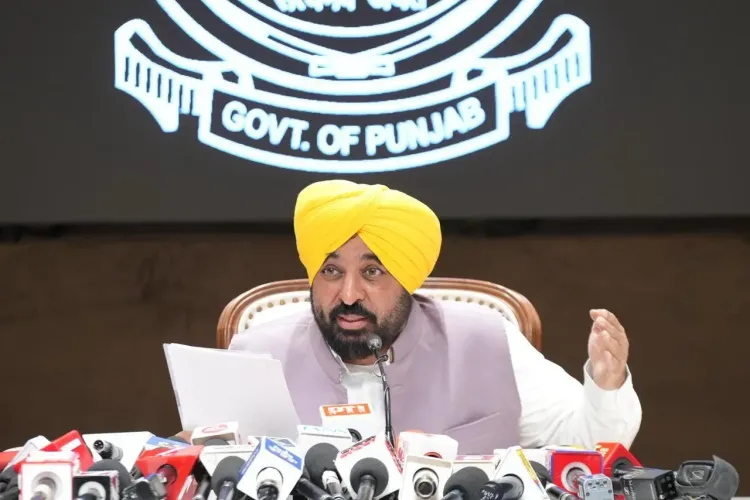
The Punjab government on 3 June unveiled a regulatory framework that caps annual fee hikes by private schools at 5 per cent, mandates refunds of excess fees collected from parents over the past three years, and prescribes penalties that can lead to cancellation of a school's recognition. Chief Minister Bhagwant Mann described the proposed law as the country's toughest measure against arbitrary fee hikes, with the legislation set to be introduced in the upcoming Punjab Assembly session.
Key Provisions of the New Framework
The 5 per cent ceiling will apply not only to tuition fees but to all mandatory charges and funds collected by schools, closing avenues that institutions have often used to load additional costs on parents. The legislation will apply to all private schools across the state.
An Ordinance is expected ahead of the formal legislation. Schools that have raised fees by more than 15 per cent over the past three years will face strict action, including refunds and potential cancellation of recognition.
What the Chief Minister Said
CM Mann said the unchecked fee hikes were enabled by amendments brought in by the previous Congress government in 2019. He argued that the new law would restore accountability in the education sector, protect parents from exploitation, and end the harassment of families over school fees.
“We will bring an Ordinance in this regard. Schools that have increased fees by more than 15 per cent during the past three years will face strict action,” Mann said, adding that the original 2016 Act had capped annual hikes at 8 per cent of the previous year's fee.
How the 2019 Amendment Diluted the Original Law
The fee structure of private unaided schools is currently governed by the Punjab Regulation of Fee of Unaided Educational Institutions Act, 2016, amended in 2019. The amendment allowed schools to exceed the prescribed cap through a disclosure mechanism — proposed hikes had to be displayed on notice boards, school websites, and the Department of School Education's website before admissions began.
“Though the law mandated transparency regarding fee increases, these provisions were rarely implemented in practice. As a result, parents continued to face unjustified and excessive fee burdens,” Mann said. He added that successive governments had failed to implement the original law effectively.
Impact on Parents and Schools
For parents, the framework promises immediate financial relief through refunds where schools breached the annual limit in the past three years. For schools, the penalties escalate from fines to the ultimate sanction of de-recognition — a tool rarely deployed in earlier rounds of fee regulation across Indian states.
What Happens Next
The Ordinance is expected to precede the formal legislation in the next Assembly sitting. Implementation will hinge on whether the Department of School Education can audit three years of fee records across thousands of private schools — a logistical test that has tripped up similar laws in other states.
Point of View
But Punjab's own history is the cautionary tale — the 2016 Act already had an 8% ceiling that was quietly diluted in 2019 and barely enforced thereafter. The real innovation here is the retrospective refund clause, which puts financial skin in the game for schools that overcharged. Whether it survives the inevitable legal challenge from private school associations will decide if this is genuine reform or another headline cap. Enforcement bandwidth — auditing thousands of schools across three years of records — is the silent variable that no Indian state has yet cracked.
NationPress
21 Oct 2026
Frequently Asked Questions
What is the new Punjab school fee hike cap?
The Punjab government has announced a regulatory framework capping annual private school fee hikes at 5 per cent, covering tuition fees and all mandatory charges. The framework will apply to all private schools across the state through an upcoming Ordinance and Assembly legislation.
Will parents get refunds for past fee hikes?
Yes. The framework mandates refunds of excess fees collected from parents wherever schools breached the annual limit in the past three years. Schools that raised fees by more than 15 per cent over three years face strict action.
What penalties will schools face for violations?
Schools that breach the 5 per cent cap will face stringent penalties that can ultimately lead to cancellation of recognition. The exact penalty structure will be detailed in the Ordinance and the Assembly Bill.
Why is the existing 2016 fee law being replaced?
CM Bhagwant Mann said the Punjab Regulation of Fee of Unaided Educational Institutions Act, 2016 was diluted by a 2019 amendment under the previous Congress government, which allowed schools to exceed the original 8 per cent cap through a disclosure mechanism. He said the disclosure provisions were rarely enforced, leaving parents exposed to excessive hikes.
When will the new fee cap take effect?
An Ordinance is expected first, followed by formal legislation in the upcoming Punjab Assembly session. Implementation timelines for refunds and audits have not yet been spelled out.