Jitendra Singh Flags India-South Africa AI, Tech Cooperation Push
Synopsis
Union Science and Technology Minister Dr. Jitendra Singh has flagged a fresh India-South Africa understanding to deepen cooperation in artificial intelligence and future technologies, amplifying the bilateral move on X as part of New Delhi's wider Global South tech diplomacy push within the BRICS and IBSA frameworks.
Key Takeaways
Jitendra Singh highlighted India-South Africa cooperation in AI and future technologies via an X post on 4 June 2026.
The move builds on the IBSA science and technology track established in 2003 and BRICS-level digital cooperation.
India's outreach is anchored in its 2018 National Strategy for AI, branded '#AIforAll'.
Likely beneficiaries include research institutions, universities and AI startups in both countries.
Follow-up MoUs or working groups may be announced around the next BRICS summit or India-Africa Forum Summit.
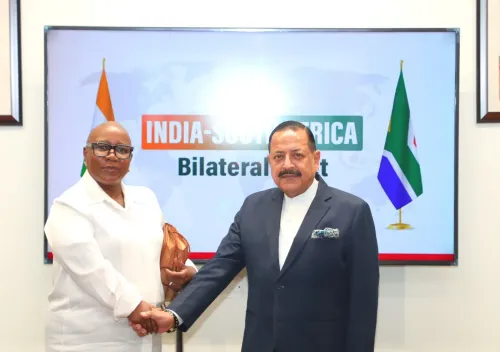
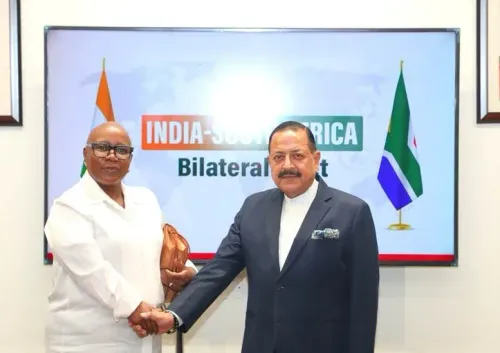
Union Science and Technology Minister Dr. Jitendra Singh on 4 June 2026 drew attention to a fresh understanding between India and South Africa to deepen cooperation in artificial intelligence and other emerging technologies, sharing a news link on X that flagged the bilateral movement. The minister's post signals New Delhi's continued push to anchor frontier-technology partnerships within its wider Global South diplomacy.
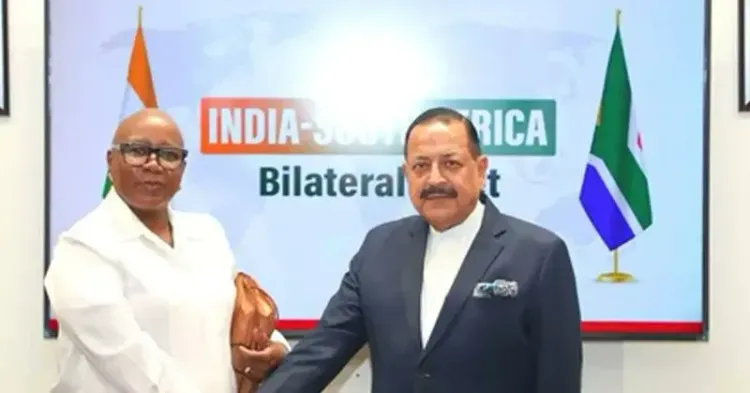
The shared headline read 'India, South Africa agree to deepen cooperation in AI, future technologies', a framing Dr. Singh amplified without additional commentary. The post, carrying one accompanying image, comes amid a thickening calendar of India's science-diplomacy engagements with fellow BRICS members.
Context
Dr. Jitendra Singh holds independent charge of the Ministry of Science and Technology and the Ministry of Earth Sciences, and is also Minister of State in the Prime Minister's Office and the Department of Personnel. He has been among the most visible Union ministers on India's emerging-technology agenda, regularly framing AI, quantum computing and space-tech as pillars of a 'Viksit Bharat' growth pathway.
South Africa, the only African member of the original BRICS grouping since 2010, has been a consistent partner for India in multilateral science platforms. The two countries also work together within IBSA, the India-Brazil-South Africa trilateral set up in 2003, which has a dedicated science and technology track.
Policy backdrop
India's outreach on AI sits on the foundation of its National Strategy for Artificial Intelligence, branded '#AIforAll', released in 2018. That document explicitly identified international partnerships, capacity building and ethical frameworks as priority areas, and successive ministerial engagements have sought to translate it into bilateral instruments.
With South Africa, existing cooperation already spans space science, biotechnology, astronomy through the Square Kilometre Array, and renewable energy research. Extending the agenda to AI and 'future technologies' is consistent with a broader pattern in which New Delhi layers frontier-tech collaboration on top of long-running scientific MoUs with African partners.
The move also dovetails with India's G20 legacy initiatives on digital public infrastructure and responsible AI, where Pretoria has been a vocal Global South voice. South Africa's own National AI Policy Framework, unveiled in recent years, has flagged skills, compute access and ethics as areas where partnerships with countries like India can accelerate domestic capacity.
Stakeholders and impact
The immediate beneficiaries of any operationalised cooperation are likely to be government research institutions, university labs and AI-focused startups in both countries. Indian agencies such as the Department of Science and Technology, the Ministry of Electronics and Information Technology and bodies like C-DAC typically anchor such engagements on the Indian side.
For startups, deeper bilateral channels can translate into pilot deployments, data-sharing protocols and joint funding calls in areas such as agri-tech AI, health diagnostics and climate modelling, themes that resonate across both economies. Researchers, in turn, often gain from co-supervised PhDs, exchange fellowships and joint access to compute and datasets.
Industry watchers will also be tracking whether the cooperation extends to AI safety and governance, given that both India and South Africa have been pushing for inclusive rule-making in emerging multilateral forums on AI.
What's next
The practical contours of the agreement will likely become clearer through follow-up joint working groups, ministerial visits or MoUs that could be announced around the next BRICS summit or the India-Africa Forum Summit cycle. Observers will be watching for specific funding envelopes, identified institutions of cooperation and timelines for joint calls for proposals.
For Dr. Jitendra Singh's ministry, the post reinforces a consistent message: India intends to position itself not just as a consumer of frontier technology but as a co-developer and standard-setter with Global South partners. How quickly that intent translates into deployable projects on the ground will determine whether the India-South Africa tech track moves from communiqué language to measurable outcomes.
Point of View
New Delhi reinforces its narrative of being a co-developer rather than a passive importer of frontier technology. The real test, however, lies in implementation: whether joint working groups, funded calls and deployable pilots actually materialise, or whether the partnership remains largely declaratory.
NationPress
17 Sept 2026
Frequently Asked Questions
What did Dr. Jitendra Singh say about India-South Africa AI cooperation?
Dr. Jitendra Singh shared a news headline on X on 4 June 2026 noting that India and South Africa have agreed to deepen cooperation in artificial intelligence and future technologies, amplifying the bilateral move without additional commentary.
Which ministries does Dr. Jitendra Singh head?
He holds independent charge of the Ministry of Science and Technology and the Ministry of Earth Sciences, and is also Minister of State in the Prime Minister's Office and the Department of Personnel.
What is India's National Strategy for AI?
India's National Strategy for Artificial Intelligence, branded '#AIforAll', was released in 2018 and sets out priority sectors, international partnerships, capacity building and ethical considerations as pillars of India's AI policy.
How are India and South Africa linked through BRICS and IBSA?
South Africa joined the BRICS grouping in 2010 and is part of the IBSA trilateral with India and Brazil, established in 2003, which includes a dedicated science and technology cooperation track.
What could come next from this India-South Africa tech engagement?
Watchers expect follow-up joint working groups, MoUs or funding calls in areas such as AI governance, health diagnostics and climate modelling, possibly announced around the next BRICS summit or India-Africa Forum Summit.