Dr. Jitendra Singh highlights tech-driven governance reforms
Synopsis
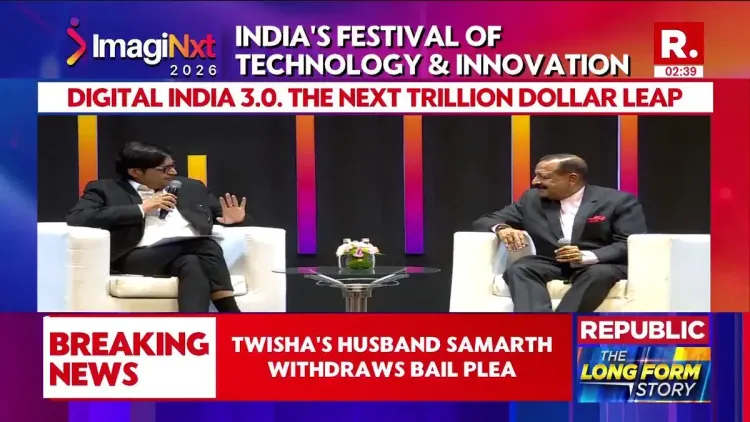
Union Science and Technology Minister Dr. Jitendra Singh on 26 May 2026 highlighted technology-driven governance reforms including digitalised grievance redressal via CPGRAMS and a face recognition app for senior citizens, reinforcing the government's 'Minimum Government, Maximum Governance' agenda under the Digital India framework.
Key Takeaways
Jitendra Singh stated on 26 May 2026 that every governance reform is driven by technology to improve ease of living for common citizens.
The CPGRAMS platform enables online filing and tracking of grievances across all central ministries and linked state portals.
A face recognition app for senior citizens is cited as an example of biometric technology reducing physical compliance burdens for pensioners.
These reforms fall under the Digital India programme launched in July 2015 and the Jeevan Pramaan digital life-certificate system introduced in 2014 .
Singh oversees Science and Technology, Earth Sciences, PMO affairs , and Personnel, Public Grievances and Pensions , making him central to both the technology and delivery sides of these reforms.
Future steps include possible expansion of facial recognition across welfare portals and compliance with India's Digital Personal Data Protection Act .
Union Science and Technology Minister Dr. Jitendra Singh on Tuesday, 26 May 2026 underscored the central government's push to embed technology at every level of citizen-facing administration, citing digitalisation of grievance redressal and a face recognition application for senior citizens as flagship examples of governance reform aimed at improving ease of living.
In a post on X, the Minister stated: 'From digitalisation of grievance redressal to face recognition app for senior citizens, every governance reform is driven by latest technology to seek ease of living for common citizen.' The remark encapsulates the administration's stated philosophy of using digital tools to reduce friction between the state and its citizens.
Context
The reference to grievance digitalisation points to CPGRAMS — the Centralised Public Grievance Redress and Monitoring System — which allows citizens to file and track complaints against central government ministries entirely online. The platform was significantly upgraded after 2014-15 to integrate all central ministries and subsequently linked with state portals for unified tracking. The face recognition application for senior citizens aligns with the broader ecosystem built around Aadhaar-based biometric authentication, which underpins services such as the Jeevan Pramaan digital life-certificate system introduced in 2014 to spare pensioners the burden of physical reporting.
Policy Backdrop
Both initiatives sit within the larger arc of the Digital India programme, launched in July 2015, which set out to convert government processes into paperless, cashless and faceless delivery mechanisms. Successive Union Budgets have allocated funds for artificial intelligence, facial recognition and mobile applications in citizen services, particularly for pensions and welfare delivery. The overarching slogan guiding these reforms — 'Minimum Government, Maximum Governance' — has been a consistent rhetorical and policy anchor since 2014.
Dr. Jitendra Singh holds charge of the Ministry of Science and Technology, the Ministry of Earth Sciences, and also serves as Minister of State in the Prime Minister's Office with responsibility for Personnel, Public Grievances and Pensions — making him a direct stakeholder in the grievance-redressal and pensioner-welfare machinery he referenced.
Stakeholders and Impact
The primary beneficiaries of these reforms are common citizens filing administrative complaints and senior citizens and pensioners who previously had to appear in person to verify their eligibility for monthly disbursements. Digital life certificates and face-authentication apps reduce dependence on physical visits to bank branches or government offices, a particularly significant relief for elderly or differently-abled individuals in smaller towns and rural areas. Civil society groups monitoring digital governance have noted that streamlined grievance portals can also improve accountability by creating auditable trails for every complaint.
What's Next
Observers will watch for further integration of facial recognition technology across pension and welfare portals, as well as the release of any formal guidelines on data-protection compliance for biometric applications used in citizen services. With India's Digital Personal Data Protection Act now on the books, any expansion of face-authentication features will need to align with the new regulatory framework. The Minister's statement signals continued political will to deepen tech-led administrative reform across the ministries under his charge.
Point of View
Citizen-facing tools like biometric pension verification. The dual reference to grievance redressal and senior-citizen face recognition is notable because both domains fall directly under his ministerial portfolio, lending the statement operational weight beyond routine political messaging. It also comes at a time when questions around data privacy and biometric surveillance are gaining traction in policy circles, suggesting the government is keen to frame these tools through an 'ease of living' lens rather than a surveillance one. The broader pattern points to a sustained effort to use technology as a legitimising narrative for administrative reform ahead of future electoral cycles.
NationPress
10 Oct 2026
Frequently Asked Questions
What is CPGRAMS and how does it help citizens?
CPGRAMS (Centralised Public Grievance Redress and Monitoring System) is an online portal that allows any Indian citizen to file a complaint against a central government ministry or department and track its resolution in real time. It was integrated across all central ministries after 2014-15 and later linked with state portals.
What is the face recognition app for senior citizens that Dr. Jitendra Singh mentioned?
The face recognition app for senior citizens is part of the broader Aadhaar -linked biometric authentication ecosystem, which includes the Jeevan Pramaan digital life-certificate system. It allows pensioners to verify their identity using facial recognition on a mobile device instead of visiting a bank or government office in person. Specific features or a formal launch date for any 2026 version of this app have not been officially confirmed.
What is the Digital India programme?
Digital India is a flagship government programme launched in July 2015 to transform government services into digitally delivered, paperless and faceless mechanisms. It covers everything from online portals for citizen services to Aadhaar-linked welfare delivery and broadband connectivity in rural areas.
What ministries does Dr. Jitendra Singh currently oversee?
Dr. Jitendra Singh is Union Minister of State (Independent Charge) for Science and Technology and Earth Sciences . He also serves as Minister of State in the Prime Minister's Office and holds charge of Personnel, Public Grievances and Pensions .
How does the Jeevan Pramaan system work for pensioners?
Jeevan Pramaan , introduced in 2014 , uses Aadhaar -based biometric authentication — fingerprint or iris scan, and increasingly facial recognition — to generate a digital life certificate for pensioners. This certificate is submitted electronically to the pension-disbursing authority, eliminating the need for pensioners to appear physically before a bank or government office each year.