Dr. Jitendra Singh launches AI voice chatbot for CPGRAMS grievances
Synopsis
Union Minister Dr. Jitendra Singh on 30 May 2026 launched an AI-enabled voice chatbot for CPGRAMS, citing a rise from 2 lakh to over 25 lakh annual grievances and a 95-per-cent disposal rate under the Modi government, with regional languages like Bhojpuri and Garo being added in phases.
Key Takeaways
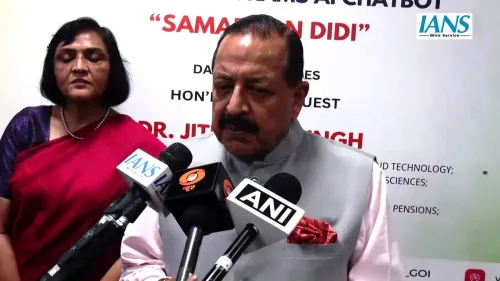
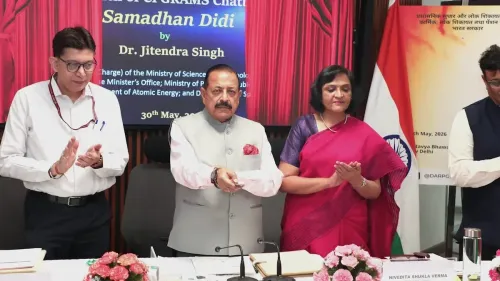
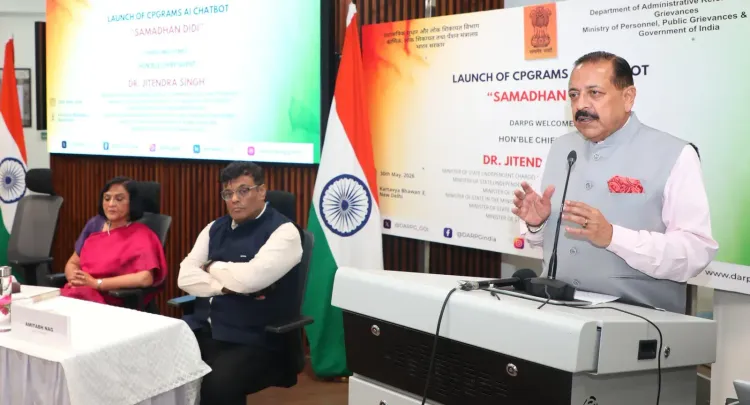
Jitendra Singh addressed the launch of an AI-driven voice chatbot for CPGRAMS on 30 May 2026 .
Annual grievances registered on CPGRAMS have grown from approximately 2 lakh in 2014 to over 25 lakh following successive reforms.
The grievance disposal rate on CPGRAMS has crossed 95 per cent .
The chatbot supports all 22 languages of the Eighth Schedule of the Constitution.
Regional and indigenous languages — Bhojpuri, Garo, Khasi, Mizo, Bodhi and others — are being added in a phased manner.
The initiative is framed as part of the Modi government's 'Ease of Using' public services agenda under the broader Digital India framework.
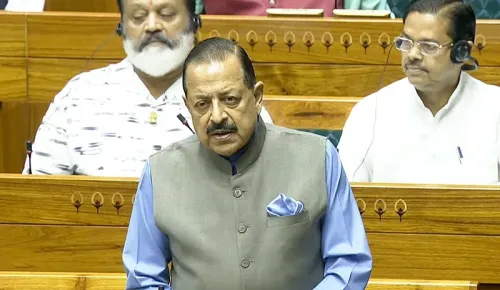
Union Minister of State (Independent Charge) for Science and Technology Dr. Jitendra Singh on Saturday, 30 May 2026 addressed the launch of an artificial-intelligence-driven grievance chatbot for the Centralised Public Grievance Redress and Monitoring System (CPGRAMS), marking a significant upgrade to the Centre's citizen-facing administrative infrastructure. The minister said the chatbot reflects the government's commitment to 'Ease of Using' public services and supports languages beyond the 22 listed in the Eighth Schedule of the Constitution.
Context
Speaking at the launch, Dr. Jitendra Singh described a 'paradigm shift' in the public grievance mechanism over the last 12 years of the Narendra Modi government. He noted that when the government took office in 2014, grievance registrations stood at roughly 2 lakh annually; following successive CPGRAMS reforms, that figure has risen to over 25 lakh grievances per year. The grievance disposal rate, he added, has now crossed 95 per cent.
The minister attributed the surge in filings not to a rise in maladministration but to growing public confidence in a system perceived as responsive and citizen-centric. The new AI-enabled voice chatbot is positioned as the next step in that trajectory.
Policy backdrop
CPGRAMS is the national online platform through which citizens can lodge and track complaints against central and state departments. It sits within the broader Digital India programme launched in July 2015, which has progressively integrated technology into public administration — from Aadhaar-enabled services to the UMANG unified portal.
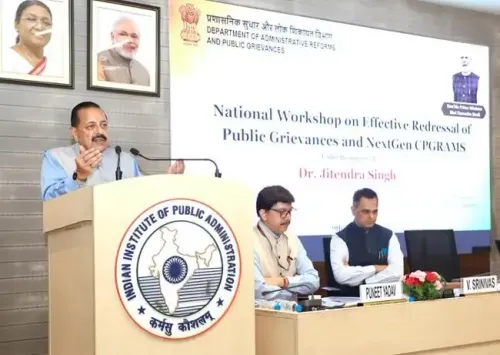
The chatbot's multilingual design follows an approach already visible in platforms such as UPI and DigiLocker, where linguistic inclusion has been treated as an accessibility imperative. The Department of Administrative Reforms and Public Grievances (DARPG), which oversees CPGRAMS, falls under the ministry portfolio held by Dr. Jitendra Singh through his role as Minister of State in the Prime Minister's Office and for Personnel, Public Grievances and Pensions.
Stakeholders and impact
The chatbot currently supports all 22 languages of the Eighth Schedule. In a phased rollout, regional and indigenous languages — including Bhojpuri, Garo, Khasi, Mizo and Bodhi — are being added, extending the system's reach to communities that have historically faced barriers due to language. This is expected to benefit citizens in northeastern states, the Gangetic belt and other linguistically diverse regions.
For central and state government departments, a higher-volume, AI-triaged grievance pipeline could reduce manual processing load while improving first-response times. Citizens who previously could not navigate English or Hindi interfaces stand to gain direct access to the redressal system.
What's next
The government has indicated that additional regional and indigenous languages will be incorporated into the chatbot on a phased basis, though no fixed timeline was announced for completing the expanded language roster. Observers will watch for DARPG performance reports and parliamentary questions that track language-wise grievance disposal rates as the rollout progresses.
The launch signals that AI-assisted citizen services are moving from pilot to mainstream within India's administrative reform agenda — with multilingual voice interfaces likely to become a standard expectation across other government portals as well.
Point of View
Citizen-driven feedback loop. By foregrounding the jump from 2 lakh to 25 lakh annual grievances, the government is recasting higher complaint volumes as a sign of institutional trust rather than failure — a politically useful reframe. The multilingual push, extending beyond the Eighth Schedule to Bhojpuri and northeastern languages, also carries electoral and social-inclusion signalling that aligns with the BJP's outreach in the Gangetic belt and the Northeast. The real test will be whether disposal quality, not just disposal rate, holds as volumes continue to scale.
NationPress
14 Oct 2026
Frequently Asked Questions
What is the CPGRAMS AI chatbot launched by Jitendra Singh?
The CPGRAMS AI chatbot is an artificial-intelligence-enabled voice interface for the Centralised Public Grievance Redress and Monitoring System, allowing citizens to file and track complaints against government departments in multiple Indian languages, including all 22 Eighth Schedule languages and several regional ones such as Bhojpuri, Garo and Khasi.
How many grievances does CPGRAMS receive every year now?
According to Union Minister Dr. Jitendra Singh, CPGRAMS now receives over 25 lakh grievances annually, up from about 2 lakh per year when the Modi government took office in 2014.
What is the grievance disposal rate on CPGRAMS?
Dr. Jitendra Singh stated at the chatbot launch on 30 May 2026 that the CPGRAMS grievance disposal rate has crossed 95 per cent.
Which languages does the CPGRAMS AI chatbot support?
The chatbot currently supports all 22 languages listed in the Eighth Schedule of the Indian Constitution. Regional and indigenous languages including Bhojpuri, Garo, Khasi, Mizo and Bodhi are being added in a phased manner.
What is CPGRAMS and who oversees it?
CPGRAMS (Centralised Public Grievance Redress and Monitoring System) is the Indian government's national online platform for citizens to lodge complaints against central and state departments. It is overseen by the Department of Administrative Reforms and Public Grievances, which falls under the portfolio of Dr. Jitendra Singh as Minister of State in the Prime Minister's Office.