Dr. Jitendra Singh Launches AI Chatbot 'Samadhan Didi' on CPGRAMS
Synopsis
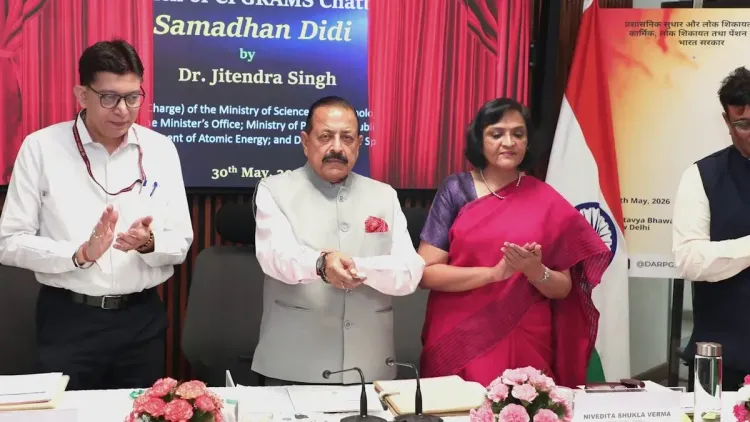
Union Minister Dr. Jitendra Singh on 30 May 2026 launched 'Samadhan Didi', an AI voice chatbot on CPGRAMS that lets citizens file grievances orally in their native language, with AI handling follow-up — targeting elderly, Divyang, and semi-literate users.
Key Takeaways
Samadhan Didi is a new AI-driven voice chatbot integrated into CPGRAMS , India's centralised grievance redressal portal.
Citizens can now lodge complaints orally in their native language without needing to type or navigate a web form.
The AI handles follow-up autonomously after a complaint is registered by voice.
The launch was announced by Union Minister Dr.
Jitendra Singh on 30 May 2026 under the DARPG framework.
Primary beneficiaries identified are elderly citizens , Divyang (differently abled) individuals , and semi-literate citizens .
The initiative extends the Digital India and AI for All policy arc into voice-based, vernacular-language public service delivery.
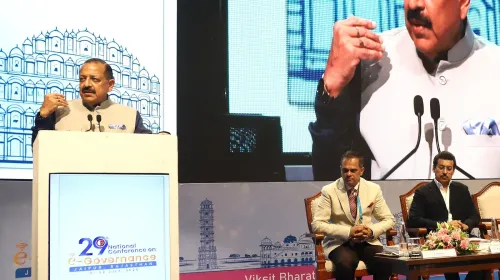
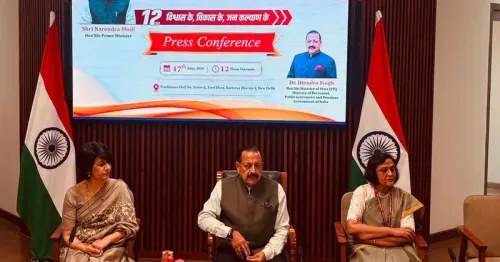
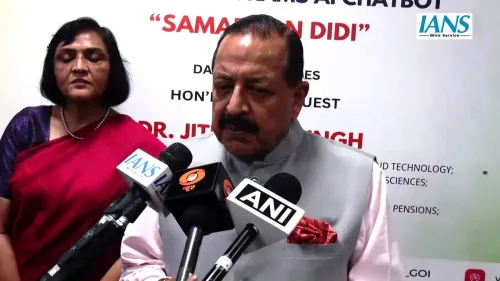
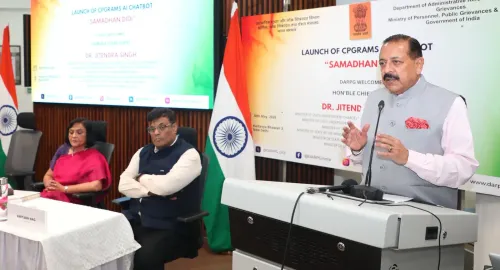
Union Minister of State (Independent Charge) for Science and Technology Dr. Jitendra Singh announced on Saturday, 30 May 2026 the launch of 'Samadhan Didi', an AI-driven voice chatbot integrated into India's centralised grievance portal CPGRAMS, enabling citizens to file complaints orally in their native language from anywhere in the country.
Context
CPGRAMS — the Centralised Public Grievance Redress and Monitoring System — is the Government of India's primary online platform for citizens to register and track complaints against central and state departments. Dr. Jitendra Singh described the system as 'hailed as a global model' and said the new chatbot marks 'a new phase' for the platform. He characterised the development as 'AI driven democratisation of grievance redressal', crediting the reform push to Prime Minister Narendra Modi.
The minister specifically highlighted the benefit for three groups: the elderly, Divyang (differently abled) citizens, and the semi-literate — populations historically underserved by text-based digital interfaces. Under the new system, a citizen speaks their grievance in their native language; the AI then handles follow-up autonomously.
Policy Backdrop
CPGRAMS was first revamped and linked to the Prime Minister's Office monitoring framework in 2014–15 to reduce pendency in grievance resolution. It became a flagship component of the Digital India programme launched in 2015, which included explicit goals around vernacular service delivery and electronic grievance redressal.
India's National Strategy for AI, released in 2018 under the banner #AIforAll, identified citizen services and accessibility as priority sectors for government AI adoption. The introduction of Samadhan Didi represents the convergence of that AI strategy with the long-running CPGRAMS infrastructure, now extended to voice and regional languages. The nodal body overseeing the platform is the Department of Administrative Reforms and Public Grievances (DARPG).
Parallel AI chatbot experiments are under way across other ministries for service delivery and information dissemination, suggesting a broader administrative shift toward conversational interfaces in public services.
Stakeholders and Impact
The most direct beneficiaries are citizens who face barriers with written or English-language portals — particularly senior citizens, Divyang individuals, and those with limited formal education. Voice-based, vernacular-language access removes the need for literacy in any specific script or familiarity with web navigation, lowering the threshold for participation in formal grievance mechanisms.
For DARPG and line ministries, the chatbot's AI follow-up function could reduce manual workload in initial complaint intake and status communication. Civil society groups focused on digital inclusion and last-mile governance delivery are likely to watch the rollout closely, particularly regarding which languages are supported at launch and how resolution timelines compare to the existing text-based pipeline.
What's Next
Key metrics to watch include the number of regional and tribal languages covered by Samadhan Didi at rollout, grievance resolution rates compared to pre-chatbot baselines, and any parliamentary scrutiny or audit observations on data handling within the AI system. DARPG is expected to publish periodic dashboards on CPGRAMS performance, which would reflect the chatbot's uptake over coming quarters.
If voice-based AI intake demonstrably reduces grievance pendency and widens citizen participation, the model could be replicated across state-level grievance portals — potentially reshaping how India's 1.4 billion citizens interact with government redressal systems at every tier.
Point of View
And from English to native languages. By targeting the elderly, Divyang, and semi-literate, the government is addressing a persistent equity gap in grievance access that text-based portals could never fully close. Politically, the rollout reinforces the Modi administration's 'ease of living' narrative ahead of a period of heightened scrutiny on public service delivery. The real test, however, will be in the resolution data: wider intake is only transformative if backend disposal rates keep pace.
NationPress
15 Oct 2026
Frequently Asked Questions
What is Samadhan Didi?
'Samadhan Didi' is an AI-driven voice chatbot launched on CPGRAMS on 30 May 2026 that allows citizens to file government grievances orally in their native language, with AI handling follow-up on their complaint.
Who launched Samadhan Didi?
Union Minister of State (Independent Charge) for Science and Technology Dr. Jitendra Singh announced the launch of Samadhan Didi on 30 May 2026 via an official post on X.
Who benefits most from the Samadhan Didi chatbot?
The chatbot is designed especially for elderly citizens, Divyang (differently abled) individuals, and semi-literate citizens who face barriers with text-based or English-language digital interfaces.
Which ministry oversees CPGRAMS and Samadhan Didi?
The Department of Administrative Reforms and Public Grievances (DARPG), which functions under the Ministry of Personnel, Public Grievances and Pensions, is the nodal body for CPGRAMS and the Samadhan Didi initiative.