Dr. Jitendra Singh Launches IAS e-Civil List 2026, 71st Edition
Synopsis
Union Minister Dr. Jitendra Singh launched the IAS e-Civil List 2026 — the 71st edition and 6th digital release by DoPT — featuring advanced search, hyperlinking, cadre-wise data, and retirement projections for IAS officers, aligned with the Digital India mission.
Key Takeaways
Jitendra Singh launched the IAS e-Civil List 2026 on 22 June 2026 .
It is the 71st edition of the Civil List and the 6th edition released as a PDF e-book.
The list is published by the Department of Personnel and Training (DoPT) and covers batch, cadre, posting, pay level, qualifications, and superannuation date of every IAS officer.
It includes cadre-wise strength data and the number of officers retiring over the next five years , aiding manpower planning.
Advanced search and hyperlinking features replace the earlier practice of printing voluminous physical copies.
The initiative is aligned with the government's Digital India mission and aims to improve transparency and evidence-based administrative decision-making.
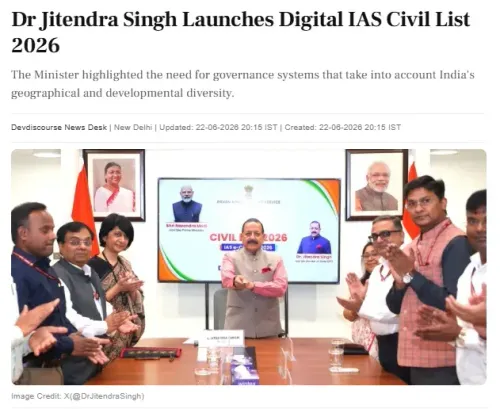
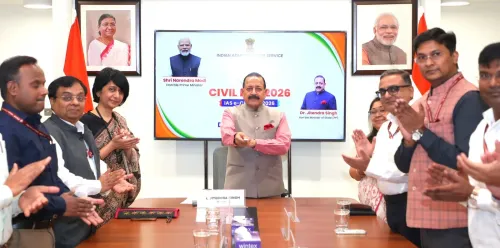
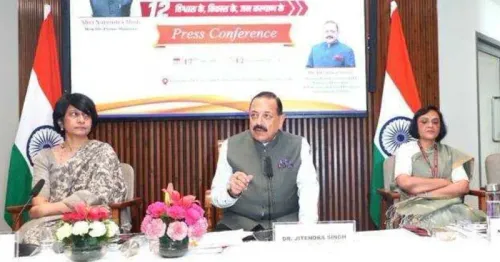
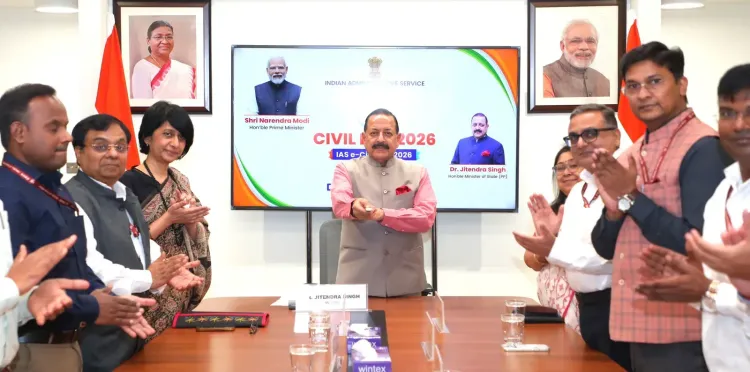
Union Minister of State (Independent Charge) for Science and Technology Dr. Jitendra Singh on Monday, 22 June 2026 launched the IAS e-Civil List 2026, the 71st edition of the Civil List and the sixth consecutive edition to be released in PDF e-book format, marking a significant step in digitising India's administrative personnel records.
What Is the IAS e-Civil List?
The IAS e-Civil List is a comprehensive directory maintained by the Department of Personnel and Training (DoPT), which functions under the Prime Minister's Office. It contains authoritative details on every serving Indian Administrative Service (IAS) officer, including their batch, cadre, present posting, pay level, educational qualifications, and date of superannuation. The 2026 edition also carries cadre-wise strength figures, the number of officers due to retire over the next five years, and statistics on officers appointed through the Civil Services Examination.
Dr. Jitendra Singh described the initiative as 'a brilliant option for technology-driven talent mapping of IAS officers from across the country.' The list is equipped with advanced search facilities and hyperlinking features, enabling quick access to officer profiles at the click of a button.
Context: From Print to Platform
For decades, the Civil List was printed in voluminous physical volumes and distributed to ministries, state governments, and administrative bodies. The shift to a PDF-based e-book began six editions ago, progressively reducing paper consumption and distribution delays. The 2026 edition consolidates those gains by enhancing search and navigation capabilities.
The move aligns explicitly with the government's flagship Digital India mission, which seeks to transform public services and internal government processes through technology. DoPT, as the nodal department for IAS cadre management, has been a consistent driver of e-governance reforms in personnel administration.
Policy Backdrop: Cadre Management and Governance Reform
Effective cadre management of the IAS — the country's premier all-India service — is central to the quality of district and state administration. With over 5,000 IAS officers in service across the country's cadres, maintaining an accurate, accessible, and up-to-date personnel database is critical for deployment decisions, succession planning, and inter-cadre transfers.
The e-Civil List directly supports evidence-based decision-making by giving policymakers, state governments, and central ministries instant access to officer profiles. Information on qualifications and experience, in particular, enables 'expertise mapping' — matching officers to specialised postings in areas such as finance, health, or infrastructure.
Stakeholders and Impact
The primary beneficiaries of the digitised list are state governments, central ministries, and constitutional bodies that deal with IAS cadre postings and approvals. Researchers, civil society organisations, and citizens exercising the Right to Information also stand to benefit from improved accessibility of officer data.
The hyperlinking and search features are expected to cut the time taken by personnel departments to retrieve officer profiles, reducing administrative friction in time-sensitive posting decisions. The retirement projection data — officers retiring in the next five years — is particularly valuable for advance manpower planning at both central and state levels.
What's Next
With the sixth digital edition now in place, DoPT is expected to explore further enhancements such as real-time updating of posting data and integration with existing government human-resource management systems. The e-Civil List's evolution into a dynamic, searchable platform — rather than a static annual PDF — could mark the next frontier for transparent and efficient IAS cadre governance in India.
Point of View
The government is shifting cadre management from an opaque, paper-bound exercise toward a more data-driven and accountable process. For Dr. Jitendra Singh, who oversees both science policy and personnel administration, positioning the Civil List as a 'talent-mapping' tool signals an intent to treat the IAS as a deployable knowledge resource rather than a seniority-driven hierarchy. The real test will be whether the next iteration moves from a static annual PDF to a live, integrated platform — a step that would meaningfully close the gap between ambition and administrative reality.
NationPress
21 Sept 2026
Frequently Asked Questions
What is the IAS e-Civil List 2026?
The IAS e-Civil List 2026 is the 71st edition of the annual directory of all serving Indian Administrative Service officers, published by the Department of Personnel and Training (DoPT). It is the 6th edition released as a PDF e-book, containing details such as batch, cadre, posting, pay level, qualifications, and date of superannuation.
Who launched the IAS e-Civil List 2026?
Union Minister of State (Independent Charge) for Science and Technology and MoS in the Prime Minister's Office, Dr. Jitendra Singh, launched the IAS e-Civil List 2026 on 22 June 2026.
What are the new features of the IAS e-Civil List 2026?
The 2026 edition includes advanced search facilities and hyperlinking features for quick navigation, cadre-wise strength data, retirement projections for the next five years, and details on officers appointed through the Civil Services Examination — all in a downloadable PDF format.
How is the IAS e-Civil List different from the old printed Civil List?
Earlier editions were printed as voluminous physical volumes. Since the sixth digital edition, the list has been released as a PDF e-book, eliminating printing costs and distribution delays while adding searchability and hyperlinking for faster access to officer data.
How does the IAS e-Civil List support the Digital India mission?
By replacing physical print copies with a searchable digital format, the e-Civil List improves accessibility and transparency in IAS cadre management. It enables state governments and central ministries to make evidence-based posting and manpower decisions, in line with the government's broader Digital India push.