What Are the 5 Digital Reforms Launched by the Government for a Transparent, Citizen-Focused Administration?
Synopsis
The Indian Union government has unveiled five innovative digital reforms designed to enhance transparency and citizen engagement in governance. These initiatives, which include AI tools and mobile applications, aim to streamline administrative processes and empower civil servants, reflecting a commitment to modern governance.
Key Takeaways
Five digital reforms have been launched to enhance transparency.
The reforms focus on citizen-centric administration .
AI tools will streamline recruitment processes . e-HRMS 2.0 App will simplify HR services for government employees.
The initiative is part of a broader effort to modernize governance in India.
New Delhi, Dec 25 (NationPress) On Thursday, the Union government introduced five digital reforms aimed at enhancing transparency and ensuring a citizen-centric administration throughout the nation.
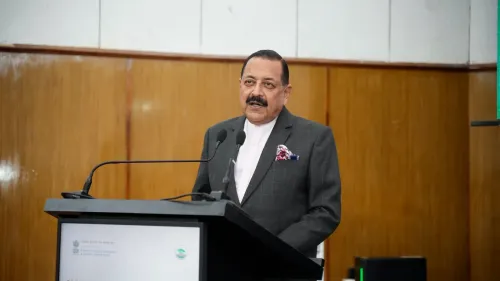
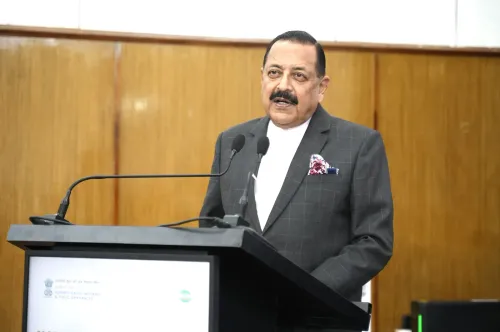
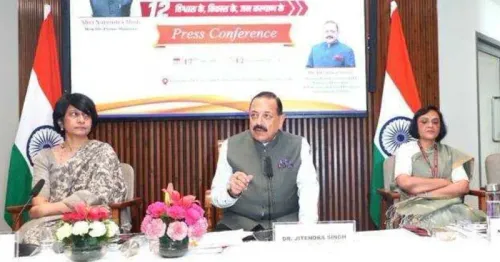
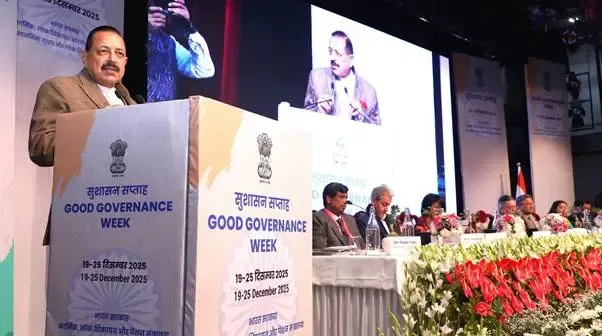
The reforms include the Ex-Servicemen Reservation Compendium, AI Recruitment Tool, e-HRMS 2.0 App, iGOT AI Platforms, and Karmayogi Digital Learning Lab 2.0. These initiatives were launched by Dr. Jitendra Singh, the Union Minister of State (Independent Charge) for the Department of Personnel and Training (DoPT), during the National Workshop on Good Governance Practices 2025 held in the capital.
“Good governance is not merely an abstract concept; it is a daily administrative duty grounded in transparency, accountability, and citizen-centric service delivery,” said Singh while addressing the audience on Good Governance Day, celebrated every year on December 25.
Singh emphasized the significance of Good Governance Day, coinciding with the birth anniversary of former Prime Minister Atal Bihari Vajpayee, who institutionalized integrity in public service and laid the groundwork for governance centered on the populace.
He mentioned that the concept of good governance had been articulated before, but it gained momentum post-2014 under Prime Minister Narendra Modi, who embraced the motto of “Minimum Government, Maximum Governance”.
The five initiatives aim to strengthen essential governance processes, support key stakeholders, and prepare civil servants for the evolving challenges of administration.
The Compendium of Guidelines for Ex-Servicemen Reservation in Central Government compiles all existing instructions into a single, updated, and user-friendly reference.
“This initiative represents the government's dedication to honoring Ex-Servicemen's service by providing clarity, uniformity, and timely delivery of reservation-related benefits while minimizing confusion and errors in implementation across various Ministries and Departments,” remarked Singh.
The AI-Powered Recruitment Rules Generator Tool is integrated with the Recruitment Rules Formulation, Amendment, and Monitoring System (RRFAMS) portal.
“Recruitment Rules form the foundation of fair hiring and career advancement. The new AI-enabled tool will significantly decrease delays and discrepancies by guiding users through simple queries and automatically generating draft rules in the required format, fully compliant with DoPT guidelines,” the Minister elaborated.
The e-HRMS 2.0 mobile application, available on both Android and iOS, provides essential human resource services directly to government employees.
As a core component of Mission Karmayogi, e-HRMS 2.0 consolidates service records and HR processes, including promotions, transfers, training, and retirement, along with connections to platforms like SPARROW, PFMS, and Bhavishya. Singh highlighted that the mobile app will minimize paperwork, expedite approvals, and enhance transparency in personnel management.
The iGOT Karmayogi platform's new AI features include iGOT AI Sarthi for intelligently discovering relevant learning resources, iGOT AI Tutor for personalized in-course assistance, the iGOT Specialisation Programme offering structured learning pathways in critical fields, and an AI-based Capacity Building Plan Tool to help Ministries and States systematically identify roles, competencies, and training requirements.
The Karmayogi Digital Learning Lab 2.0 is a modern facility designed to create high-quality digital learning content using advanced technologies like AR/VR, gamification, and interactive simulations.
“The upgraded lab will facilitate faster and broader dissemination of best practices, reforms, and essential skills across the civil services, thereby strengthening implementation capabilities on the ground,” the Minister stated.
“Collectively, these initiatives represent a cohesive, future-oriented strategy for governance reform, leveraging technology, fortifying institutions, and centering citizens and civil servants in the change process,” concluded Singh.
Point of View
Citizen engagement, and efficient service delivery is commendable and essential for building trust and accountability in public institutions. As these reforms take shape, they will undoubtedly shape the future of governance in India.
NationPress
7 Oct 2026
Frequently Asked Questions
What are the five digital reforms launched by the government?
The five digital reforms include the Ex-Servicemen Reservation Compendium, AI Recruitment Tool, e-HRMS 2.0 App, iGOT AI Platforms, and Karmayogi Digital Learning Lab 2.0.
Who launched these digital reforms?
The reforms were launched by Dr. Jitendra Singh, Union Minister of State (Independent Charge) for the Department of Personnel and Training.
What is the purpose of the e-HRMS 2.0 App?
The e-HRMS 2.0 App aims to provide key human resource services directly to government employees, integrating various HR processes and reducing paperwork.
How does the AI Recruitment Tool improve the recruitment process?
The AI Recruitment Tool reduces delays and inconsistencies by guiding users through questions to generate draft recruitment rules aligned with DoPT guidelines.
What is the significance of Good Governance Day?
Good Governance Day, observed on December 25, commemorates the birth anniversary of former Prime Minister Atal Bihari Vajpayee and emphasizes the importance of transparency and accountability in governance.