Is Madhya Pradesh Set to Become a Major MSME Hub? Amit Shah Thinks So!
Synopsis
Union Home Minister Amit Shah declares Madhya Pradesh's potential as a leading hub for MSMEs, emphasizing its low operational costs and policies. He highlights record registrations and significant investments aimed at creating jobs, while also celebrating India's economic milestones. Discover how MP's innovative strategies could inspire growth across the nation!
Key Takeaways
Madhya Pradesh is on the path to becoming a key MSME hub.
Over 457,000 MSME units registered in a year.
Investment announcements could create 193,000 jobs .
The state has transitioned from power deficit to surplus.
India's foreign exchange reserves exceed 700 billion US dollars .
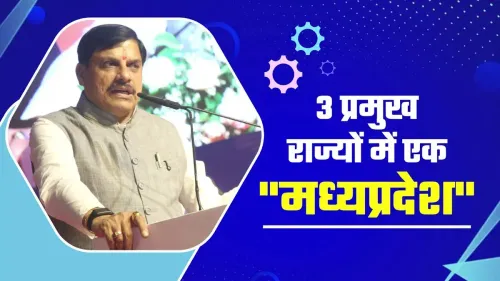
Gwalior, Dec 25 (NationPress) Union Home and Cooperation Minister Amit Shah expressed confidence that Madhya Pradesh is set to become a significant center for micro, small, and medium enterprises (MSMEs), attributing this potential to its cost-effective operations and progressive policies.
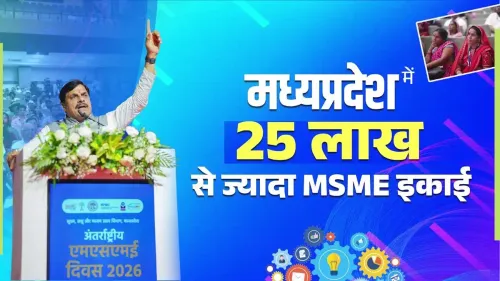
He highlighted the impressive registration of over 457,000 MSME units in just one year, establishing Madhya Pradesh as a frontrunner in the MSME sector across India.
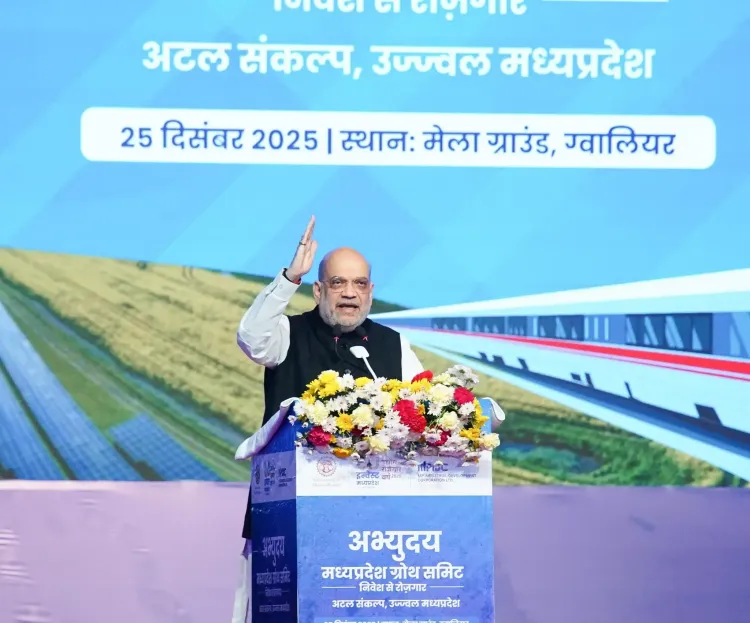
While addressing entrepreneurs at the “Abhyudaya Madhya Pradesh Growth Summit,” where he initiated the foundation for 1,655 industrial units with investments exceeding Rs 2 lakh crore and an expectation to generate nearly 193,000 jobs, HM Shah underscored the state’s transformation under the BJP's double-engine government.
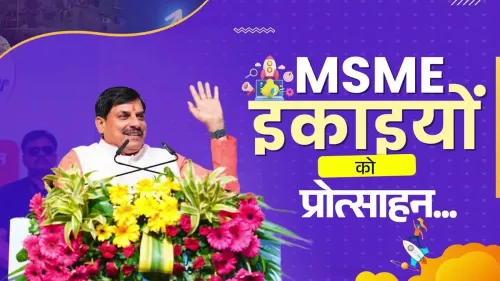
HM Shah lauded Chief Minister Mohan Yadav's creative regional industrial conferences, reflecting a balanced approach that extends beyond the structured initiatives introduced by Prime Minister Narendra Modi.
He remarked that this equitable development model across various regions would greatly benefit local communities and serve as a benchmark for other states.
Once referred to as 'Bimaru' under previous Congress administrations, including that of Digvijay Singh, Madhya Pradesh has shed that label during Shivraj Singh Chouhan's leadership and is now rapidly advancing towards developed status, according to HM Shah.
The Home Minister noted several advantages for Madhya Pradesh, including the lowest input costs for metro operations and a transition from power deficit to surplus.
He stressed on the importance of symmetrical industrial growth to exploit the state's geographical benefits, revitalizing traditional sectors like cotton in the Malwa and Gwalior-Chambal areas through local processing units.
On a national front, HM Shah announced that India's foreign exchange reserves have crossed 700 billion US dollars, indicating economic resilience. The nation has progressed to produce and export semiconductors, generate 60% of the world’s vaccines, and secure the second position in mobile phone manufacturing.
The digital landscape is thriving, with 99 crore broadband users, nearly all operating on 4G and transitioning to 5G, alongside India managing half of the globe’s digital transactions.
In August alone, transactions totaling Rs 25 lakh crore amounted to 2,000 crore. Infrastructure developments have propelled the “Ease of Doing Business” ranking from 142 to 63, expansion of highways from 90,000 km to 1.5 lakh km, increase in airports from 74 to 163, railway electrification from 22,000 km to 68,000 km, and a rise in metro cities from five to 23.
More than 214,000 panchayats now enjoy optical fiber connectivity, while the count of Vande Bharat trains has surged from zero to 164, with manufacturing set to commence in Madhya Pradesh.
HM Shah also commended the state’s agricultural prowess, having been awarded the Krishi Karman Award for seven consecutive years, and highlighted the forthcoming multi-modal logistics park, anticipated to draw additional investments.
The summit, themed “Nivesh Se Rozgar -- Atal Sankalp, Ujjawal Madhya Pradesh” (Investment to Employment – Atal's Resolve, a Bright Madhya Pradesh), honored former Prime Minister Atal Bihari Vajpayee on his birth anniversary, reinforcing commitments to self-reliance and inclusive growth.
Point of View
The developments in Madhya Pradesh under the guidance of Amit Shah and the BJP government present a significant opportunity for economic revival and growth. The focus on MSMEs and equitable development reflects a strategic shift that could serve as a model for other regions. The achievements highlighted in infrastructure and digital transactions further reinforce India's economic resilience.
NationPress
29 Sept 2026
Frequently Asked Questions
What is the significance of Madhya Pradesh for MSMEs?
Madhya Pradesh is emerging as a vital hub for MSMEs due to its low operational costs, supportive policies, and record registrations of over 457,000 units in a single year.
How many jobs are projected to be created in Madhya Pradesh's industrial sector?
The investments announced at the recent summit are expected to create nearly 193,000 jobs across various industrial units.
What are some key infrastructure developments in India?
India has seen significant improvements in infrastructure, including a rise in highways, airports, and railway electrification, along with a notable improvement in the Ease of Doing Business ranking.
How does Madhya Pradesh's agricultural sector perform?
Madhya Pradesh has excelled in agriculture, winning the Krishi Karman Award for seven consecutive years, showcasing its agricultural capabilities.
What are India's foreign exchange reserves currently at?
India's foreign exchange reserves have surpassed 700 billion US dollars, indicating strong economic performance.