CM Bhupendra Patel Hails Gujarat's National Agriculture Award
Synopsis
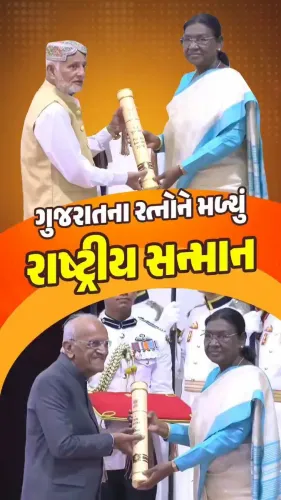
Gujarat Chief Minister Bhupendra Patel on 10 July 2026 congratulated the state's farming community after Gujarat received national-level agricultural recognition, attributing the honour to lakhs of hardworking farmers and crediting Prime Minister Modi's leadership for making Gujarat's farm development a model for the country.
Key Takeaways
CM Bhupendra Patel publicly congratulated Gujarat's farmers and agriculture workers on 10 July 2026 after the state received national-level recognition.
Patel described the award as 'the result of the hard work of lakhs of hardworking farmers of Gujarat.' He credited Prime Minister Narendra Modi's leadership for making Gujarat's agricultural development journey 'a model worth emulating at the national level.' Both the central and state governments were cited as 'always committed to the upliftment and prosperity of farmers.' Gujarat's agricultural strengths include micro-irrigation (from 2005), horticulture, dairy, and cooperative models, alongside central schemes such as PM-KISAN (launched 2019).
Gujarat Chief Minister Bhupendra Patel on Friday, 10 July 2026 extended congratulations to the state's farming community after Gujarat received recognition at the national level for agricultural development, crediting the achievement to the hard work of millions of farmers across the state.
Writing in Gujarati on X, CM Patel said: 'રાજ્યના ધરતીપુત્રો અને કૃષિ ક્ષેત્રના સૌ કર્મયોગીઓને હાર્દિક અભિનંદન' — 'Heartfelt congratulations to the sons of the soil and all dedicated workers of the agriculture sector.' He added that the award was 'the result of the hard work of lakhs of hardworking farmers of Gujarat' and that both the central and state governments remain 'always committed to the upliftment and prosperity of farmers.'
The Chief Minister also noted that under the leadership and guidance of Prime Minister Narendra Modi, 'Gujarat's agricultural development journey has become a model worth emulating at the national level' — a sentiment he described as a matter of pride for all.
Context
Gujarat has long been associated with gains in agricultural productivity, particularly in horticulture, dairy, and irrigation. The state's farming sector has been a recurring reference point in national policy discussions, with its cooperative and value-added crop models cited as replicable templates by the central government.
CM Patel, who assumed office in 2021, has continued the governance tradition established during Prime Minister Modi's tenure as Gujarat Chief Minister from 2001 to 2014, maintaining farmer welfare as a central pillar of the state's development agenda.
Policy Backdrop
The central government's PM-KISAN scheme, launched in 2019, has provided direct income support to landholding farmers across India, including those in Gujarat. At the state level, Gujarat's micro-irrigation programme, implemented from 2005 onward, expanded drip and sprinkler coverage significantly, improving water efficiency for farmers.
Together, these initiatives form the backbone of the BJP-led governments' consistent framing of farmer welfare as a core governance priority at both the state and national levels. Gujarat's agricultural performance has repeatedly been positioned by the centre as a benchmark for other states.
Stakeholders and Impact
The primary beneficiaries of the policies being celebrated are Gujarat's farmers and agricultural workers, who number in the lakhs. Recognition at the national level serves both as validation of ground-level outcomes and as political affirmation of the state government's agricultural strategy.
For the broader farming community, such awards can translate into increased policy attention, potential budget allocations, and enhanced access to central schemes. The emphasis on joint credit between the centre and state also reinforces the cooperative federal model that the BJP has promoted in its governance messaging.
What's Next
Attention will now turn to whether this national recognition is followed by fresh scheme announcements or enhanced allocations in the upcoming Gujarat state budget. The next round of agriculture awards, including any Krishi Karman-style recognitions, will be closely watched as an indicator of whether Gujarat sustains its position at the top of national rankings.
As both the central and state governments continue to align their messaging on farmer prosperity, Gujarat's agricultural model is likely to remain a reference point in national policy discourse — and a political asset for the BJP ahead of future electoral cycles.
Point of View
Reinforcing party cohesion and national brand. Gujarat's agricultural record has served as a long-running policy and electoral asset for the BJP, and this recognition extends that narrative into 2026. The timing and tone suggest the state government is positioning farmer welfare prominently, likely with an eye on budget season and future electoral messaging. Neutral observers will note that the specific award is not named, leaving the substantive policy achievement somewhat undefined even as the political dividend is clearly claimed.
NationPress
10 Jul 2026
Frequently Asked Questions
What award did Gujarat win for agriculture in 2026?
CM Bhupendra Patel's post congratulated Gujarat's farmers on receiving national-level agricultural recognition in July 2026, though the specific award was not named in the post.
What did CM Bhupendra Patel say about Gujarat farmers?
CM Patel said the award was 'the result of the hard work of lakhs of hardworking farmers of Gujarat' and that both the central and state governments remain committed to farmers' upliftment and prosperity.
How has Gujarat performed in agriculture under BJP rule?
Gujarat has recorded significant gains in horticulture, dairy, and irrigation, supported by a state micro-irrigation programme from 2005 and central schemes like PM-KISAN from 2019, making it a frequently cited model at the national level.
What is PM-KISAN and how does it benefit Gujarat farmers?
PM-KISAN, launched by the central government in 2019, provides direct income support to landholding farmers across India, including those in Gujarat, as part of the BJP-led government's farmer welfare agenda.
Why does Gujarat's agriculture model get national attention?
Gujarat's combination of micro-irrigation expansion, value-added crops, and cooperative dairy models has led the central government to cite it as a replicable template for other states seeking to improve agricultural productivity.