Quad Foreign Ministers meet in Delhi, alliance gains strategic depth
Synopsis
The Quad's New Delhi meeting wasn't a diplomatic formality — it was a statement of intent. A $20 billion critical minerals pledge and a joint rebuke of coercive actions in the South China Sea signal that the grouping is hardening into a practical security architecture, not just a talking shop, even as Trump-era US-China diplomacy creates headwinds.
Key Takeaways
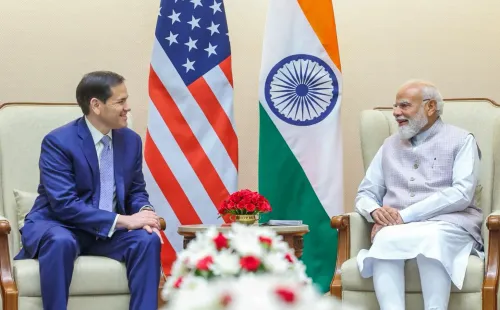
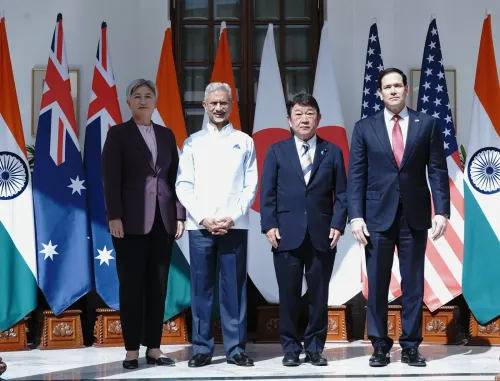
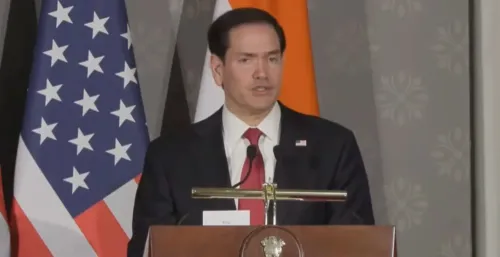
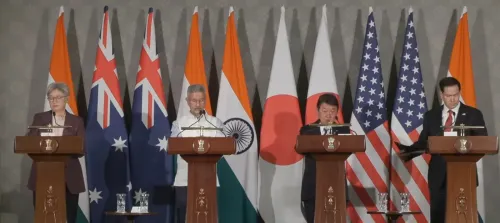
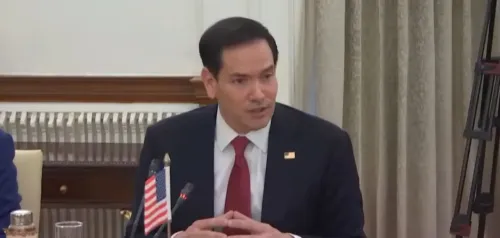
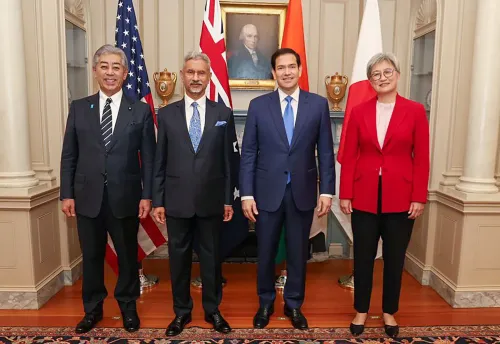
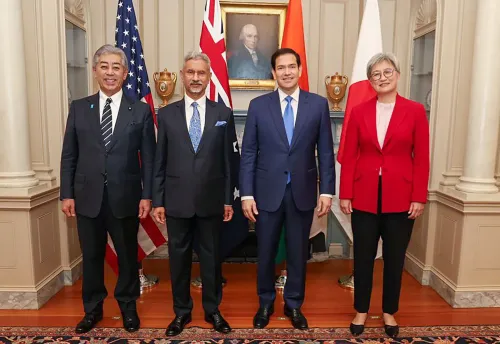
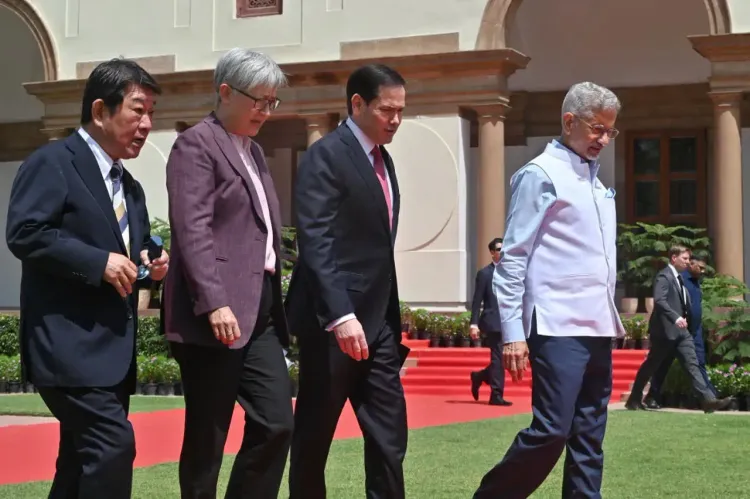
The Quad Foreign Ministers' Meeting was held in New Delhi in May 2025 , attended by US Secretary of State Marco Rubio and the Foreign Ministers of India , Japan , and Australia .
The joint statement reaffirmed cooperation on maritime domain awareness , critical minerals , energy security , counter-terrorism , and regional resilience .
The four nations committed to mobilising approximately $20 billion in public and private investment for critical minerals supply chains to counter China's dominance.
The meeting expressed concern over coercive actions in the South China Sea and East China Sea , opposing unilateral changes to the status quo.
According to analysis in Eurasia Review , the alliance is entering a more practical, operationally grounded phase despite questions over US strategic ambiguity.
The Quad Foreign Ministers' Meeting, held in New Delhi in May 2025, has reinforced the grouping's relevance at a moment when the Indo-Pacific security landscape is growing more contested, according to an analysis published in Eurasia Review. Far from fading into irrelevance, the alliance appears to be entering a more operationally grounded phase.
Who Was at the Table
US Secretary of State Marco Rubio joined the Foreign Ministers of India, Japan, and Australia for the meeting. The gathering notably dispelled concerns that the grouping had lost momentum amid President Donald Trump's stated interest in stabilising trade relations with China and reported ambiguity over the Taiwan question, according to the Eurasia Review piece.
Key Outcomes and Commitments
The joint statement from the meeting reaffirmed Quad cooperation across a broad agenda: maritime domain awareness, critical minerals, energy security, infrastructure, counter-terrorism, and regional resilience. The four nations also expressed concern over coercive actions in the South China Sea and East China Sea, opposing any unilateral attempts to alter the status quo in the region.
One of the most consequential decisions was a commitment to mobilise approximately $20 billion in combined public and private investment for critical minerals supply chains — covering mining and processing — as a direct counter to China's dominant position in rare earth and critical mineral processing globally.
The Broader Strategic Logic
The Eurasia Review analysis argues that the Quad's evolving mandate now extends well beyond naval hardware. As the article put it: 'The Quad understands that securing the Indo-Pacific is not only about naval and military assets with aircraft carriers and missiles, but also increasingly about human capital for the control of logistics, who finances infrastructure, who sees maritime movement first, who processes the minerals needed for defence and technology, and who can keep sea lanes open during a crisis.'
This framing reflects a shift toward what analysts describe as 'comprehensive deterrence' — where economic and technological levers are as central as military ones. Notably, the emphasis on critical minerals directly addresses a structural vulnerability that the US, India, Japan, and Australia share: dependence on Chinese-controlled supply chains for materials essential to defence manufacturing and clean energy transitions.
Why This Meeting Matters Now
The meeting comes amid a period of heightened uncertainty about US strategic commitments in the Indo-Pacific under the Trump administration. Critics had questioned whether Washington's transactional approach to Beijing would hollow out multilateral security frameworks like the Quad. The New Delhi meeting, and the specificity of its outcomes, suggests the grouping retains institutional momentum regardless of bilateral US-China dynamics.
This is also the latest in a series of Quad gatherings — at both ministerial and summit levels — since the grouping was revived in 2017 and formalised at leaders' level in 2021. Each iteration has added layers of practical cooperation, moving the alliance from a declaratory platform toward one with deliverable commitments. The $20 billion critical minerals pledge is the clearest signal yet of that trajectory.
Point of View
And that is precisely what makes this meeting different from its predecessors. But the harder question is execution: pledges in multilateral frameworks routinely outpace actual disbursements, and China's lead in rare earth processing took decades to build. The meeting also papers over a real tension — Trump's transactional posture toward Beijing sits uneasily alongside a grouping whose entire logic is structured deterrence of Chinese coercion. Whether Washington's bilateral China diplomacy and its Quad commitments can coexist without one undermining the other is the central stress test the alliance has not yet faced at full intensity.
NationPress
26 Oct 2026
Frequently Asked Questions
What was decided at the Quad Foreign Ministers' Meeting in New Delhi?
The Quad Foreign Ministers agreed to mobilise approximately $20 billion for critical minerals supply chains and reaffirmed cooperation on maritime security, energy, infrastructure, and counter-terrorism. The joint statement also expressed concern over coercive actions in the South China Sea and East China Sea.
Who attended the Quad meeting in New Delhi?
US Secretary of State Marco Rubio attended alongside the Foreign Ministers of India, Japan, and Australia. The meeting was held in New Delhi in May 2025.
Why is the Quad's critical minerals pledge significant?
The $20 billion commitment targets mining and processing supply chains as a direct counter to China's dominant position in rare earth and critical mineral processing. These minerals are essential for defence manufacturing and clean energy technology, making supply chain security a strategic priority for all four Quad members.
Has the Quad weakened under the Trump administration?
Concerns had emerged that President Trump's interest in stabilising trade ties with China and reported ambiguity over Taiwan could dilute the Quad's purpose. According to analysis in Eurasia Review, the New Delhi meeting and the specificity of its outcomes suggest the grouping retains institutional momentum despite those concerns.
What is the Quad and when was it formed?
The Quad — formally the Quadrilateral Security Dialogue — groups the US, India, Japan, and Australia around shared Indo-Pacific security interests. It was revived in 2017 after an earlier iteration lapsed, and was formalised at leaders' level in 2021, since when it has progressively expanded its practical cooperation agenda.