Rubio's India visit signals reset of US-India ties amid tariff and Pakistan strains
Synopsis
Rubio's New Delhi visit wasn't just a Quad stopover — it was a carefully managed attempt to repair a relationship bruised by Trump tariffs, US-Pakistan outreach after Operation Sindoor, and doubts about Washington's strategic consistency. A former Indian envoy called it 'overdue', and Rubio's 'linchpin' language suggests Washington knows it.
Key Takeaways
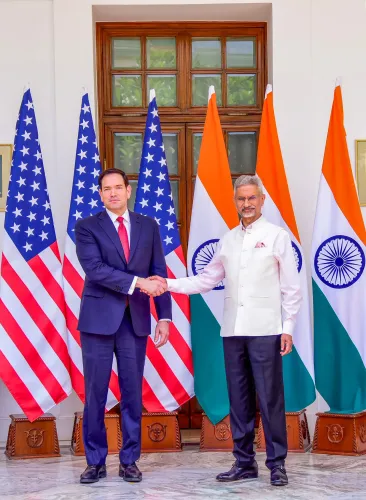
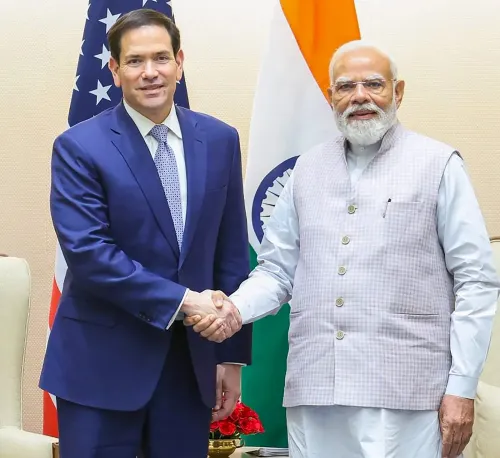
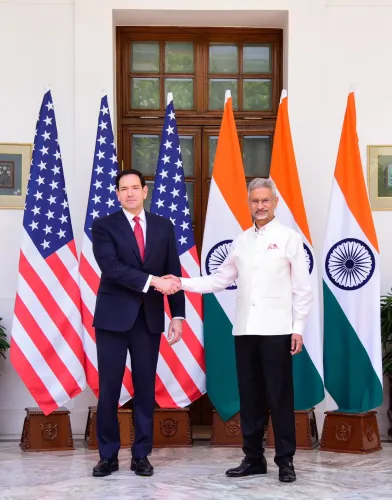
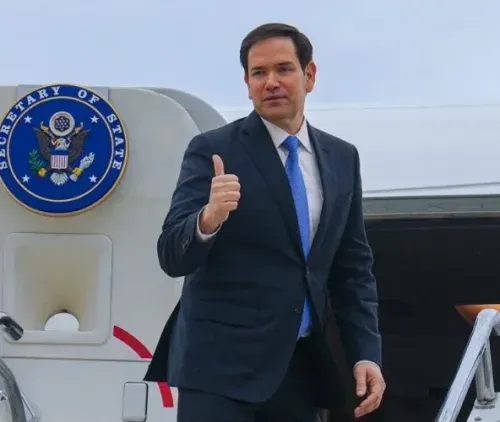
US Secretary of State Marco Rubio visited New Delhi in May 2025 for the Quad foreign ministers' meeting, also holding bilateral talks with PM Narendra Modi .
Former Indian High Commissioner Ajay Bisaria described the visit as 'partially also a damage control visit' that was 'overdue'.
Bisaria characterised the period from August to February as a 'bad dream' due to Trump administration tariffs, which have since been rolled back.
Washington's renewed engagement with Pakistan — especially after Operation Sindoor — remains a significant irritant in India-US ties.
Rubio called India a 'linchpin and a cornerstone' of US global strategy following the Quad session.
The Quad talks covered the Indo-Pacific , maritime security, critical minerals, energy security, and supply chains.
US Secretary of State Marco Rubio's visit to New Delhi in May 2025 has been widely read as a course-correction in India-US relations, coming after months of strain driven by Trump administration tariffs, renewed American outreach to Pakistan, and growing uncertainty over Washington's China policy. The visit, officially anchored around the Quad foreign ministers' meeting, carried a deeper subtext of diplomatic repair, according to analysts.
The Quad Framework and What Was Discussed
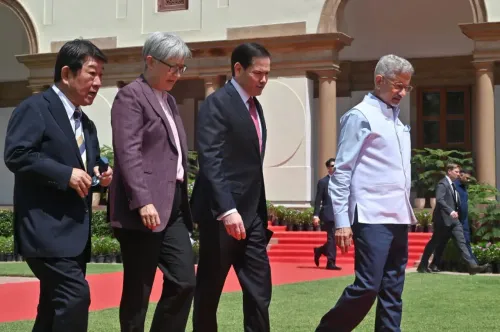
The foreign ministers of the four-nation Quad grouping — India, the United States, Japan, and Australia — convened in New Delhi to advance cooperation on the Indo-Pacific, maritime security, critical minerals, energy security, and supply chains. While the multilateral agenda provided the official scaffolding, bilateral optics dominated the visit's political reading.
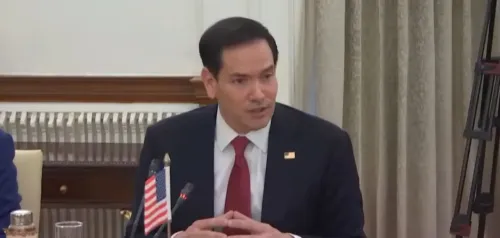
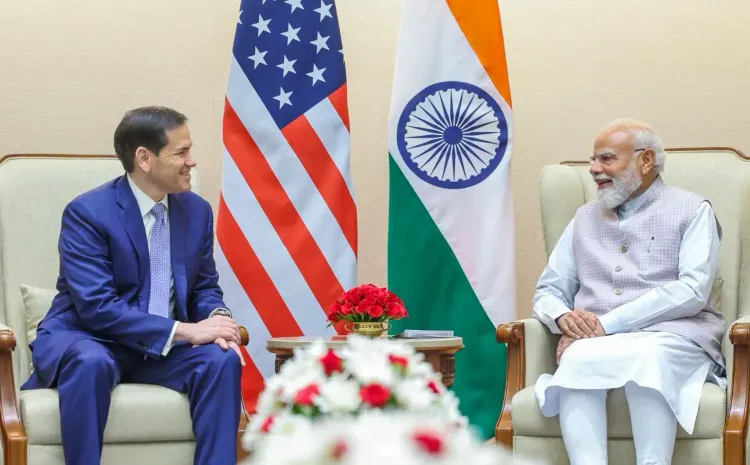
Ahead of the Quad session, Rubio called on Prime Minister Narendra Modi. The Prime Minister's Office stated that Rubio briefed Modi on 'sustained progress in bilateral cooperation across a wide range of sectors, including defence, strategic technologies, trade and investment, energy security, connectivity, education and people-to-people ties.' Rubio also conveyed the US perspective on regional and global issues, 'including the situation in West Asia', while Modi reiterated India's commitment to 'peaceful resolution of the conflicts through dialogue and diplomacy.'
A 'Damage Control Visit', Say Analysts
Former Indian High Commissioner Ajay Bisaria, speaking to Newsweek, described Rubio's trip as 'partially also a damage control visit', adding that it was 'overdue' because 'some signals of reassurance politically of reassurance from the US were required.' Bisaria characterised the period from August to February as a 'bad dream' driven by Trump-era tariff impositions. 'Once those tariffs were rolled back, things began to get better,' he told Newsweek.
Pakistan and Operation Sindoor: A Persistent Irritant
Bisaria identified Washington's renewed engagement with Pakistan — particularly in the aftermath of Operation Sindoor — as a second major friction point. 'This is a matter of concern in India,' he said, arguing that New Delhi believed Washington had grown 'insensitive to India's concerns about the perpetrators of that terrorism.' He characterised the Trump administration's Pakistan policy as driven by 'transactional calculation' rather than 'strategic conviction', shaped by interests in critical minerals, cryptocurrency, and counter-terrorism cooperation.
'This particular administration has been framing not just Pakistan, but other relationships, very transactionally,' Bisaria said.
Rubio's Reassurance and What It Signals
Following the Quad meeting, Rubio offered a pointed endorsement of the India partnership: 'We are deeply committed to this partnership. It is a linchpin and a cornerstone of our global strategy as a nation.' The language was notably stronger than routine diplomatic boilerplate — analysts read it as a deliberate signal to New Delhi that Washington values the relationship beyond transactional calculus.
This comes amid broader questions about the Quad's political urgency under the Trump administration, which has prioritised bilateral deal-making over multilateral frameworks. Whether Rubio's visit translates into durable policy alignment — particularly on Pakistan and trade — will be the real measure of this reset.
Point of View
But the structural fault lines remain intact. Washington's Pakistan calculus has not changed — Operation Sindoor exposed how quickly US 'strategic partnership' language gives way to transactional deal-making when critical minerals or counter-terrorism interests are in play. The tariff rollback eased one pressure point, but it was a policy reversal driven by US economic self-interest, not a concession to New Delhi. India's challenge is that it needs Washington more than it publicly admits, particularly on technology access and Indo-Pacific security architecture — which limits how hard it can push back. The Quad provides useful multilateral cover, but as long as the US frames every bilateral relationship transactionally, India will keep hedging with Russia and the Gulf, and calling it 'strategic autonomy'.
NationPress
15 Oct 2026
Frequently Asked Questions
Why did US Secretary of State Marco Rubio visit India in May 2025?
Rubio visited New Delhi primarily for the Quad foreign ministers' meeting, which brought together India, the United States, Japan, and Australia to discuss Indo-Pacific security, critical minerals, and supply chains. The visit also included a bilateral meeting with PM Narendra Modi and was widely seen as an effort to repair strained India-US ties.
What had strained India-US relations ahead of Rubio's visit?
Three main factors strained ties: Trump administration tariffs imposed from August onwards, renewed US engagement with Pakistan — particularly after Operation Sindoor — and uncertainty over Washington's China policy and the Quad's political urgency. Former envoy Ajay Bisaria described this period as a 'bad dream' for bilateral relations.
What did Ajay Bisaria say about Rubio's India visit?
Former Indian High Commissioner Ajay Bisaria told Newsweek that Rubio's visit was 'partially also a damage control visit' and was 'overdue', as India needed political reassurance from Washington. He also criticised the Trump administration's Pakistan policy as driven by 'transactional calculation' rather than 'strategic conviction'.
How did India respond to US engagement with Pakistan after Operation Sindoor?
India viewed Washington's continued engagement with Pakistan after Operation Sindoor with concern, believing the US had grown 'insensitive to India's concerns about the perpetrators of that terrorism', according to Bisaria. New Delhi has repeatedly called for accountability from Islamabad over cross-border terrorism.
What did Rubio say about the India-US partnership after the Quad meeting?
Following the Quad session, Rubio said, 'We are deeply committed to this partnership. It is a linchpin and a cornerstone of our global strategy as a nation.' The statement was seen as a deliberate reassurance to New Delhi about Washington's long-term commitment to the bilateral relationship.