Trump alone can fix US-India ties after Rubio's 'band-aid' visit: Lisa Curtis
Synopsis
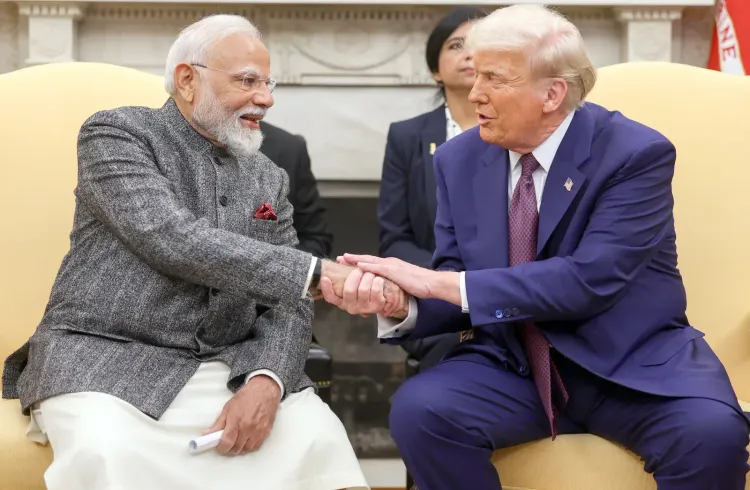
A former senior White House official has delivered a blunt verdict on US-India relations: Rubio's visit patched the wound, but only Trump can heal it. With tariffs, immigration curbs, Pakistan outreach, and a softer US line on China all feeding Indian anxiety, the relationship is at its most uncertain point in years — and the fix, Curtis argues, must come from the top.
Key Takeaways
Former NSC Senior Director Lisa Curtis described Secretary Rubio 's India visit as 'a kind of band-aid' to strained US-India relations .
Curtis said only President Trump can 'really reset the relationship' by publicly prioritising India.
Concerns in New Delhi have built over US tariffs , immigration restrictions , and Washington's outreach to Pakistan .
India is reportedly uneasy about the Trump-Xi summit outcome, fearing a US pivot toward trade-focused engagement with China over strategic competition.
The Quad missed its first leaders' summit in five years, raising doubts about top-level commitment despite active ministerial engagement.
Curtis suggested a Trump visit to India or a strong public statement on India's strategic importance would be the most effective confidence-builder.
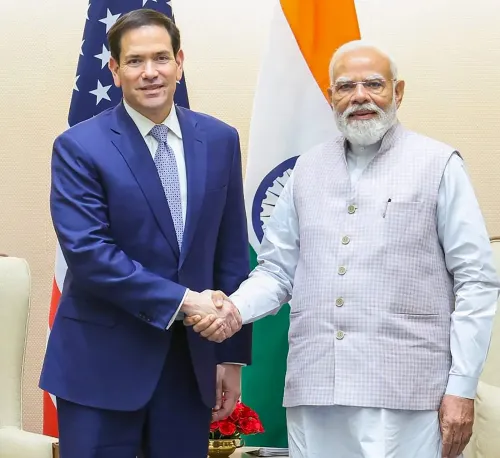
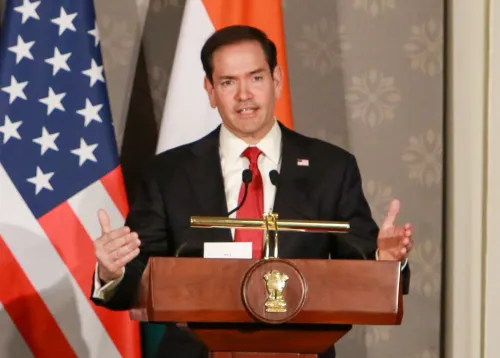
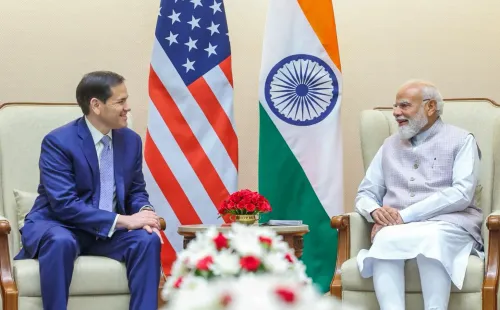
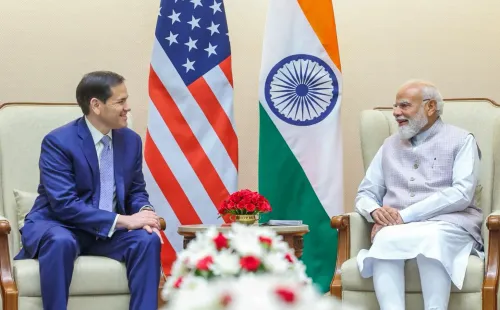
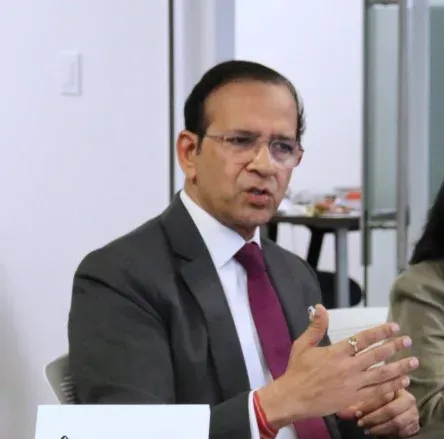
Former White House official Lisa Curtis has said that US Secretary of State Marco Rubio's recent visit to India helped stabilise strained Washington-New Delhi ties, but argued that only President Donald Trump himself could fully restore confidence in the bilateral relationship. Curtis made the remarks in an interview on 28 May, offering one of the sharpest assessments yet of where US-India relations stand under the second Trump administration.
Rubio Visit: Stabilising, Not Resetting
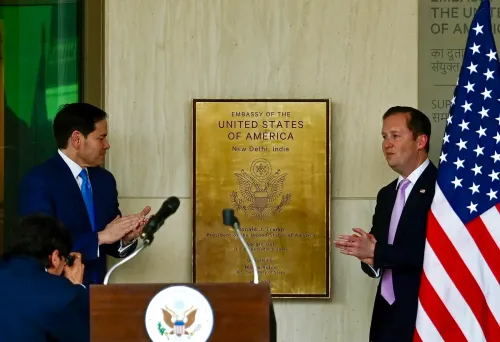
Curtis, who served as Deputy Assistant to the President and National Security Council Senior Director for South and Central Asia from 2017 to 2021, described Rubio's India trip as a necessary but limited intervention. 'I think it was very important for Secretary Rubio to go to India to try to repair some of the damage done to the US-India relationship over the last year,' she said. 'I think his visit did serve as a kind of band-aid to relations.'
Curtis, currently Director of the Indo-Pacific Security Programme at the Centre for a New American Security, also noted that the Quad Foreign Ministers' meeting held during Rubio's trip was 'very symbolic' and demonstrated that the grouping 'still had momentum even though the leaders did not meet.'
What Has Unsettled India
Curtis identified several developments over the past year that had, in her assessment, built up unease within India. These included US tariffs, immigration restrictions, and what she characterised as Washington's growing cosiness with Pakistan. 'This is all built up in the Indian psyche,' she said, adding that 'the second Trump administration has not been prioritising India and its relationship with India as the first Trump administration did.'
On a more positive note, she pointed to Washington's decision to extend a waiver allowing India to continue importing Russian oil as a development viewed favourably in New Delhi.
India's China Anxiety
Curtis also flagged Indian concern over the trajectory of US-China relations following Trump's recent summit with Chinese President Xi Jinping. 'I think that the outcome of that summit probably has led Indians to believe that President Trump is much more interested in pursuing smooth ties with China, focusing on trade rather than strategic competition,' she said.
She added that suggestions that weapons sales to Taiwan could become a 'negotiating chip' had raised concern across the broader Indo-Pacific — a signal, analysts note, that US strategic commitments in the region are being read with fresh scepticism.
Only Trump Can Reset the Relationship
On the path forward, Curtis was unambiguous: 'Only President Trump can really reset the relationship. I think only when he shows that he prioritises the relationship and wants to see an improvement from what happened last year.'
She suggested that a Trump visit to India or a public reaffirmation of India's centrality to US Indo-Pacific strategy would be the most effective confidence-builders. 'The best thing is for President Trump to keep talking about the importance of India,' she said.
The Quad and the Missing Leaders' Summit
Curtis expressed concern about the absence of a Quad leaders' summit in the past year — the first such gap in five years. 'We missed having a leader-level meeting last year,' she said. 'This was the first time in five years that there was no leader-level meeting.' The Quad, comprising the United States, India, Japan, and Australia, has emerged as a central pillar of Indo-Pacific strategy amid growing concerns over China's regional influence. Ministerial engagement remains active, Curtis acknowledged, but doubts persist without a summit-level signal.
As trade tensions, immigration concerns, and shifting regional diplomacy continue to test the relationship, the coming months will test whether the second Trump administration recalibrates its approach to one of Washington's most strategically significant partnerships.
Point of View
However well-intentioned, cannot substitute for presidential-level commitment. The irony is that India was arguably the biggest strategic beneficiary of Trump's first term, yet the second term has generated more bilateral friction than any period since the 2008 civil nuclear deal era. The convergence of tariff pressure, immigration crackdowns, Pakistan rehabilitation, and a softer China line has compounded in ways that no single diplomatic visit can undo. If Trump does not make a visible gesture — a visit, a phone call, a public statement — before the next Quad window, the grouping risks becoming a ministerial talking shop rather than the strategic anchor it was designed to be.
NationPress
19 Sept 2026
Frequently Asked Questions
What did Lisa Curtis say about Marco Rubio's India visit?
Curtis described Rubio's visit as 'a kind of band-aid to relations' — helpful in stabilising ties but insufficient to fully restore confidence in the US-India relationship. She said only President Trump himself could engineer a genuine reset.
Why are US-India relations under strain in 2025?
According to Curtis, several developments have unsettled India over the past year, including US tariffs, immigration restrictions, Washington's closer engagement with Pakistan, and signs that the Trump administration may be prioritising smooth ties with China over strategic competition. She said these factors have 'built up in the Indian psyche.'
What is the significance of the missing Quad leaders' summit?
Curtis noted that 2024 marked the first time in five years that no Quad leaders' summit was held, which she said raised doubts about top-level commitment to the grouping. While ministerial engagement remains active, the absence of a summit-level meeting has weakened the symbolic weight of the Quad.
How has the Trump-Xi summit affected India's outlook?
Curtis said the summit outcome has led Indians to believe Trump is more interested in pursuing trade-focused, smooth ties with China rather than treating Beijing as a strategic competitor. Suggestions that Taiwan arms sales could become a negotiating chip have added to anxiety across the Indo-Pacific.
What would help rebuild US-India trust, according to Curtis?
Curtis said the most effective steps would be a Trump visit to India or a strong public reaffirmation of India's importance to US Indo-Pacific strategy. 'The best thing is for President Trump to keep talking about the importance of India,' she said.