Trump India visit 2026: Leaders call it a 'great opportunity' to reset ties
Synopsis
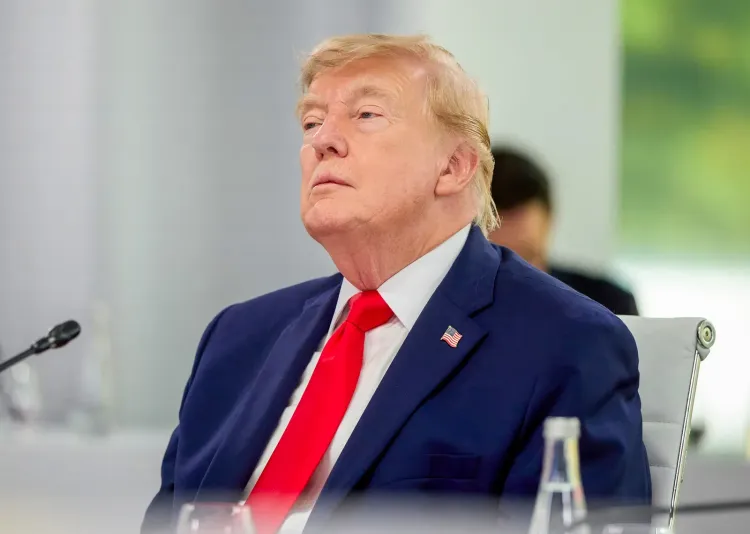
A potential Trump visit to India early next year has drawn a pointed mix of optimism and caution from across the political spectrum. With a trade deal reportedly in its final stages and tariff tensions still unresolved, the visit — if it happens — would be the most consequential India-US engagement in years, arriving at a moment when both sides need each other more than their public posturing suggests.
Key Takeaways
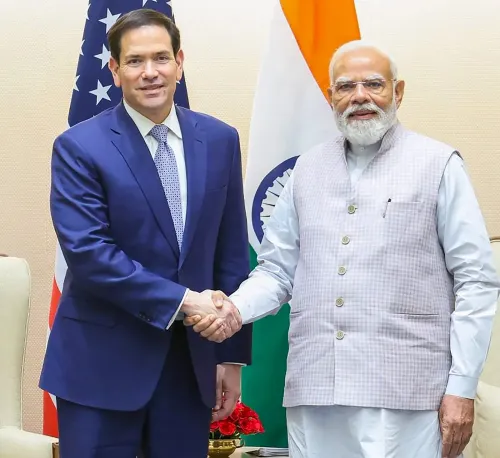
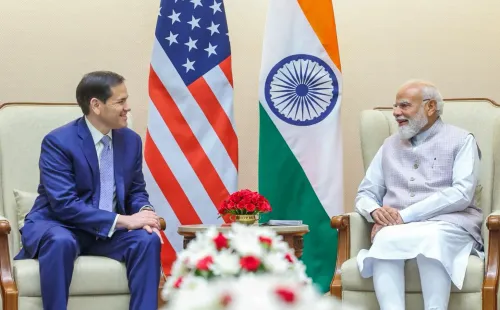
US Secretary of State Marco Rubio stated that President Donald Trump may visit India early next year.
Rubio described India, under PM Narendra Modi , as being on course to becoming a global power .
Jagvinder Singh Virk , Chairman of the Australia India Strategic Alliance , called the development 'very significant' and a 'great opportunity to reset ties.' Former J&K DGP S.P.
Vaid flagged that Trump had singled out India for a 50 per cent tariff , with an additional 10 per cent even under the broader 15 per cent regime.
BJP MP Brij Lal welcomed the visit, citing the India-US trade deal as being in its 'final stage.' Congress MP Imran Masood warned the trade deal could harm India's economy and farmers while benefiting the US.
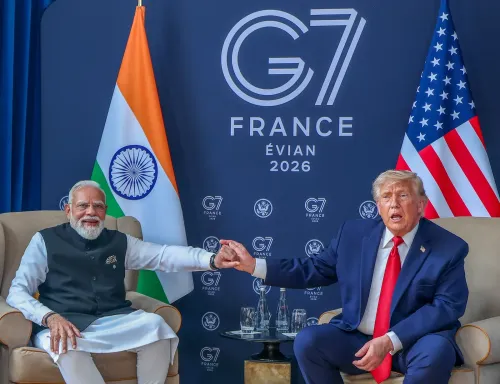
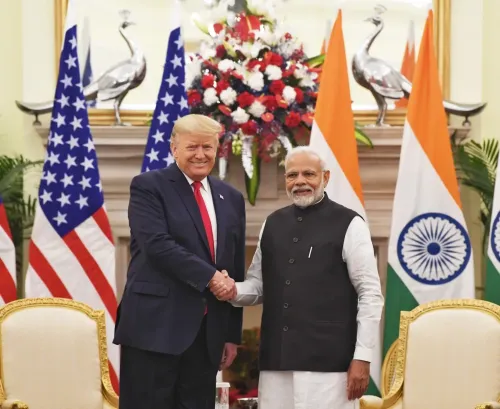
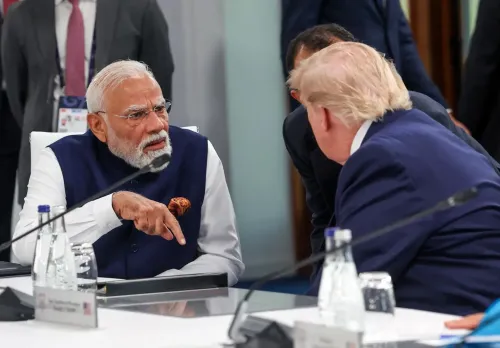
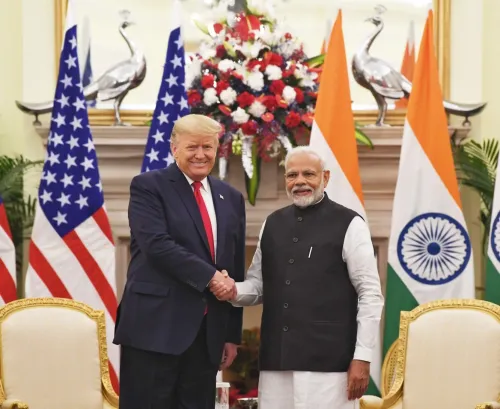
Senior political figures and strategic analysts have described the prospect of US President Donald Trump visiting India early next year as a pivotal moment to repair and reframe bilateral ties — a relationship that has navigated significant turbulence over tariffs, the West Asia conflict, and shifting US foreign policy priorities. The remarks came after US Secretary of State Marco Rubio confirmed that President Trump may undertake an official visit to India in the coming year, with Rubio also stating that India, under Prime Minister Narendra Modi, is on course to becoming a global power.
Strategic Significance of the Proposed Visit
Jagvinder Singh Virk, Chairman of the Australia India Strategic Alliance, described Rubio's statement as a 'very significant development.' He noted that the post-conflict global order is prompting a broad reset of relationships — not just between India and the US, but across the world.
'After the war, the relationships are being reset. Over the last one or two years US' relations were strained not only with India but with countries across the world — whether it was Australia, Canada, Europe or France,' Virk said. He further underlined that ignoring India can prove to be 'dangerous' for any nation in the world, adding: 'When US President Donald Trump visits India (next year), it will be a great opportunity to reset ties.'
Tariff Tensions and Strained Ties
Former Jammu and Kashmir Director General of Police S.P. Vaid acknowledged the strains that have built up since Trump returned to power. 'Over the past some time, relations between India and the US have witnessed some strain. Especially since President Donald Trump came to power, things have changed. Otherwise, India and the US had maintained a strategic partnership,' he said.
Vaid pointed specifically to trade friction, noting that Trump had singled out India for a 50 per cent tariff and, even when he later imposed 15 per cent on other nations, India was asked to pay an additional 10 per cent. He also referenced US appreciation for Pakistan Army Chief Asim Munir as a factor that 'definitely strained our ties,' while crediting Prime Minister Modi and the Ministry of External Affairs for 'maintaining patience.'
Trade Deal in Focus
Bharatiya Janata Party (BJP) Member of Parliament Brij Lal struck an optimistic note, welcoming Trump's prospective visit. 'Donald Trump is welcome in India. America is still the largest economy in the world and is our biggest business partner. So, when he comes, our trade deal which is already in the final stage... our relationship with America will be stronger,' he said.
The proposed India-US trade deal has emerged as a central element of the diplomatic conversation, with both sides reportedly in advanced stages of negotiation. Notably, Rubio's remarks about India's growing global stature were seen by BJP leaders as an endorsement of Modi's foreign policy track record.
Political Divide Over the Engagement
BJP leader Rohan Gupta used Rubio's praise to challenge the Opposition, asking whether they agreed with the senior US official's appreciation of Prime Minister Modi's leadership and India's economy. 'They should have at least tweeted that they are standing with US' appreciation for PM Modi's leadership and India's economy,' he said.
However, Indian National Congress (INC) MP Imran Masood offered a sharp counter-view. Referring to the proposed trade deal, Masood alleged that the BJP-led Central government was 'handing over India's market to America.' He argued: 'India's economy, its farmers will be destroyed while US economy will prosper, so why won't they praise us.' The Congress critique reflects a broader Opposition concern that the trade agreement may be asymmetric in its benefits.
What Comes Next
No official date has been confirmed for President Trump's India visit, with early next year cited as the likely window. The proposed India-US trade deal is expected to be a centrepiece of any summit-level engagement. Diplomatic observers note that a successful visit could help stabilise a relationship that has been tested by tariff disputes, geopolitical repositioning, and competing signals over South Asia policy.
Point of View
With tariff asymmetry, competing South Asia signals, and a trade deal whose terms remain opaque to the public. Rubio's praise for Modi is diplomatically useful but not a substitute for resolving the 50-per-cent tariff overhang — an anomaly that persists even as the US offered softer terms to others. The Congress critique about market access, however politically motivated, raises a legitimate question that the trade deal's final text will eventually have to answer. A visit without a signed agreement risks being optics without outcomes.
NationPress
26 Sept 2026
Frequently Asked Questions
Is Donald Trump confirmed to visit India in 2026?
No official date has been confirmed. US Secretary of State Marco Rubio indicated that President Trump may visit India early next year, but the visit has not been formally scheduled as of late June 2025.
What is the current state of the India-US trade deal?
The India-US trade deal is reportedly in its final stages of negotiation. BJP MP Brij Lal stated the deal is 'already in the final stage,' and a potential Trump visit is expected to accelerate or formalise the agreement.
Why have India-US relations been under strain recently?
Relations have been strained by several factors, including Trump singling out India for a 50 per cent tariff and imposing an additional 10 per cent on India even when other nations received a lower 15 per cent rate. US appreciation for Pakistan Army Chief Asim Munir has also been cited as a point of friction.
What did Marco Rubio say about India and PM Modi?
Secretary of State Marco Rubio stated that India, under the leadership of Prime Minister Narendra Modi, is on its way to becoming a global power and is increasingly participating in decisions being made on the international stage.
What is the Congress party's position on the India-US trade deal?
Congress MP Imran Masood accused the BJP-led Central government of handing over India's market to America, arguing that the trade deal would harm India's economy and farmers while benefiting the US economy.