Modi-Trump G7 meet: First step to rebuild India-US trust, analysts say
Synopsis
The Modi-Trump handshake in France was more optics than overhaul — analysts say the bilateral relationship, strained for over 16 months, needs far more than a half-hour G7 sidebar to recover. With mutual trust identified as the central deficit, the real test begins when both leaders return home.
Key Takeaways
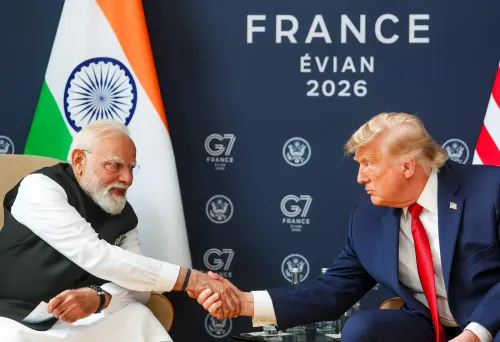
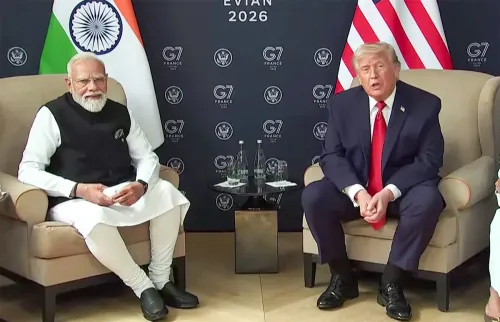
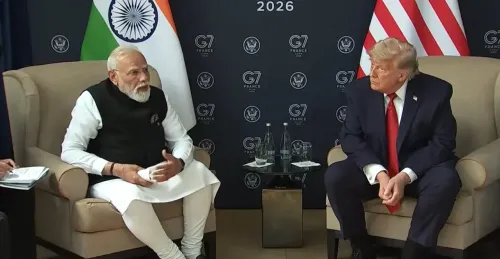
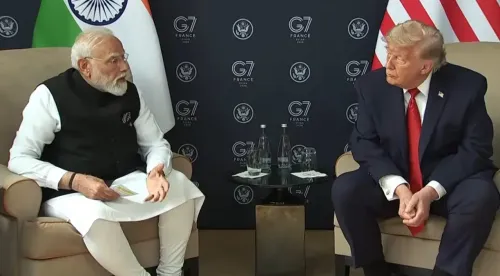
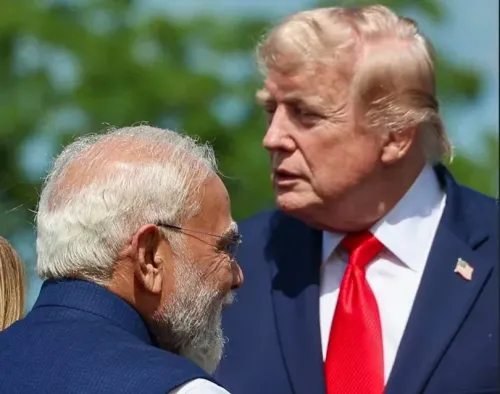
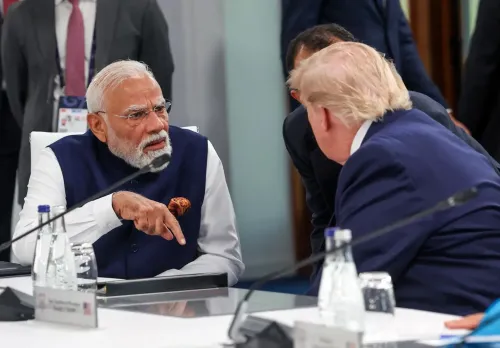
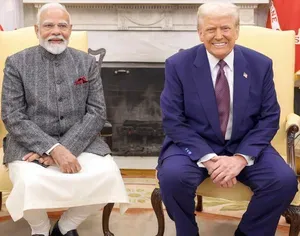
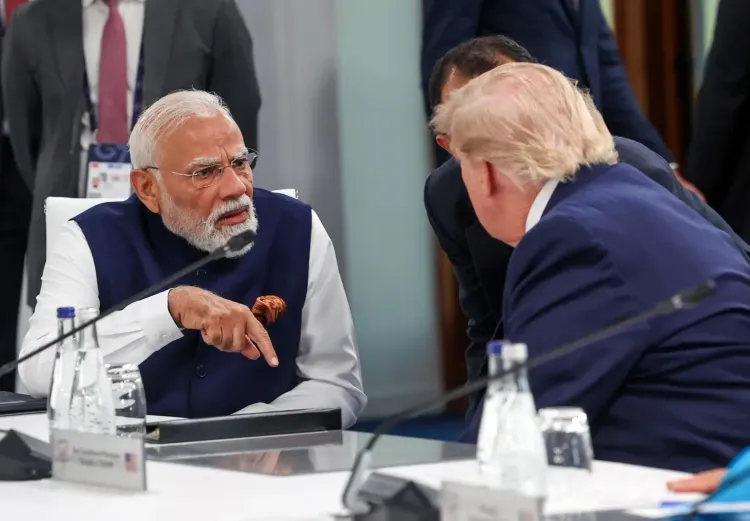
Prime Minister Narendra Modi and US President Donald Trump met on the sidelines of the G7 Summit in France , their first in-person meeting in over a year.
Analysts described the encounter as a cautious first step, not a full reset, in a relationship strained for roughly 16 months .
Former US trade official Raymond Vickery warned that a single half-hour meeting cannot repair the trust deficit between the two nations.
Atman Trivedi of Albright Stonebridge Group noted 'scepticism from a number of Indian observers' about the meeting's significance.
Emerging technologies — semiconductors, quantum computing, and AI — were flagged as the most promising frontier for future India-US collaboration.
All analysts agreed that tangible progress will depend on diplomatic follow-through in the months ahead, not summit imagery alone.
Prime Minister Narendra Modi and US President Donald Trump met on the sidelines of the G7 Summit in France in what analysts and community leaders are cautiously describing as a first positive step toward repairing a bilateral relationship that has faced strain over the past year and a half. While the meeting generated visible optimism, experts warned that restoring trust between the two nations will require sustained follow-through, not just symbolic summitry.
A Welcome but Measured Reset
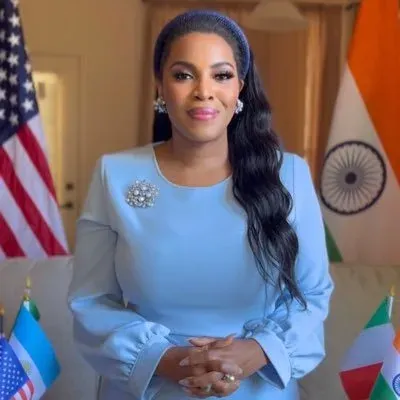
Singer and political commentator Mary Millben welcomed the encounter as a meaningful signal. 'It's been over a year since we've seen President Trump and Prime Minister Modi physically in the same room together. So that in itself was a positive and, by imagery, a natural reset to the US-India relationship,' she said. Millben noted Trump's remarks during the meeting — which she characterised as reassurance that 'India is our strongest democratic ally' and that the US remains 'a close friend to India' — as encouraging. However, she was quick to add that results would be measured in actions. 'We'll see what happens when he returns home,' she said. 'It's my hope that there will be a different approach to India after this summit.'
Millben also highlighted Modi's own framing at the summit: 'The Prime Minister said it best at the Summit. Mutual Trust is the most important strategic asset today. The future of the US-India relationship really is gonna rely on rebuilding trust.'
Experts Urge Caution on Expectations
Raymond Vickery, a former US Assistant Secretary of Commerce for Trade Development, acknowledged that the meeting was valuable given what he described as 'a standard kind of malaise' in bilateral ties over the preceding 16 months. 'It was good that there was a meeting. There was good chemistry between the leaders,' he said. But Vickery cautioned against reading too much into a single encounter. 'No one half-hour meeting at the end of a three-day summit, even if there's a press conference effort, is going to remedy the damage which has been done to the trust between the two greatest democracies. That's gonna take a lot of work, a lot of follow-through on promises,' he said.
Atman Trivedi, Partner at Albright Stonebridge Group, echoed that scepticism. 'The meeting was not a reset in US-India relations,' he said, noting that 'the response was one of scepticism from a number of Indian observers.' Trivedi did, however, suggest the leaders' interaction likely helped ease anxieties in India following the deaths of Indian sailors the previous week.
Academic and Diaspora Voices: Tech Collaboration a Bright Spot
Gurdip Singh, Divisional Dean of the School of Computing at George Mason University, pointed to ongoing university, industry, and research collaboration as a durable foundation beneath the political turbulence. 'There is a desire to collaborate and those things are happening,' Singh said, adding that India-US relations are 'bound to improve' given shared strategic interests and the growing influence of the Indian diaspora. He identified emerging technologies — semiconductors, quantum computing, and artificial intelligence — as the most promising frontier. 'Whether it's semiconductors, whether it's quantum, whether it's AI, there is a lot of potential for collaboration there,' he said.
Political Optimism and the Trade Angle
Former Ohio State Senator Niraj Antani offered the most upbeat assessment, calling the G7 encounter 'a positive step forward in the US-India relationship' and pointing to Trump's support for a bilateral trade agreement as a concrete signal of intent. India and the United States have steadily deepened cooperation over the past two decades across defence, trade, technology, energy, and education, with successive administrations in both capitals describing the partnership as one of the most consequential bilateral relationships of the 21st century.
What Comes Next
Analysts broadly agree that the France meeting sets a floor rather than a ceiling. Whether it translates into tangible progress — on trade negotiations, technology transfer, or defence procurement — will depend on diplomatic activity in the months ahead. The consensus: the imagery was right; the substance still needs to follow.
Point of View
Visible in trade friction, visa disputes, and the muted response to the Indian sailors' deaths. A half-hour sidebar cannot substitute for a working diplomatic architecture. The Modi framing of 'mutual trust as the most important strategic asset' is astute, but trust is built through consistent follow-through on deliverables — trade deal timelines, technology transfer frameworks, defence supply chains — not through summit optics. Until Washington and New Delhi move from declarations to binding commitments, this meeting risks being remembered as another warm photo without a working relationship behind it.
NationPress
18 Sept 2026
Frequently Asked Questions
What happened at the Modi-Trump meeting at the G7 Summit in France?
Prime Minister Narendra Modi and US President Donald Trump met on the sidelines of the G7 Summit in France for a roughly half-hour bilateral interaction. Analysts described it as a welcome but cautious first step toward repairing India-US ties, which have faced strain over the past 16 months.
Why has the India-US relationship been under strain?
Experts cited a 'standard kind of malaise' in bilateral ties over approximately 16 months, stemming from trade tensions, trust deficits, and diplomatic friction. The deaths of Indian sailors the week before the summit also added to anxieties in New Delhi.
What did analysts say about the outcome of the Modi-Trump meeting?
Analysts offered a mixed assessment. While commentator Mary Millben called it 'a natural reset,' former US trade official Raymond Vickery warned that one half-hour meeting cannot 'remedy the damage which has been done to the trust.' Atman Trivedi of Albright Stonebridge Group said the meeting 'was not a reset in US-India relations.'
Which areas of India-US cooperation are seen as most promising going forward?
Emerging technologies — semiconductors, quantum computing, and artificial intelligence — were identified as the most promising areas for future collaboration, according to Gurdip Singh, Divisional Dean of Computing at George Mason University. Trade and defence cooperation were also highlighted.
What needs to happen for the India-US relationship to genuinely improve?
Analysts broadly agreed that sustained follow-through on diplomatic and trade commitments is essential. Raymond Vickery said rebuilding trust will require 'a lot of work, a lot of follow-through on promises,' while Mary Millben stressed that the meeting's success would ultimately be 'measured by actions rather than words.'