Modi-Trump G7 meet: New momentum in India-US ties, Hormuz focus
Synopsis
At the G7 in Evian, Modi and Trump met face-to-face for the first time since February — and the agenda went well beyond pleasantries. Modi pressed for Hormuz to stay open, raised the welfare of hundreds of thousands of Indian seafarers in the Gulf, and praised Trump's Iran outreach. The bilateral is moving fast, with trade talks and AI partnerships both live on the table.
Key Takeaways
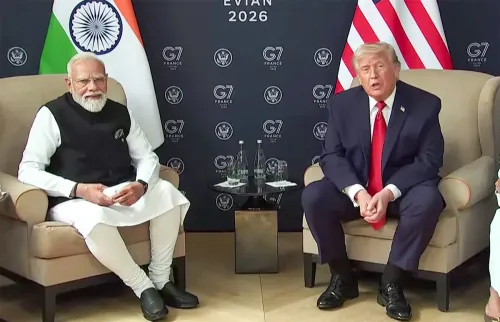
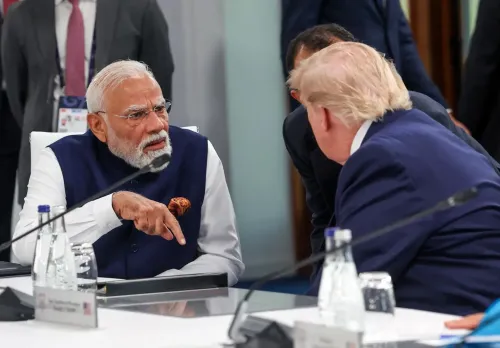
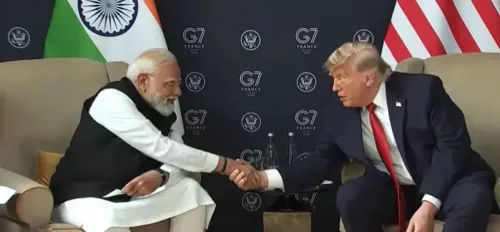
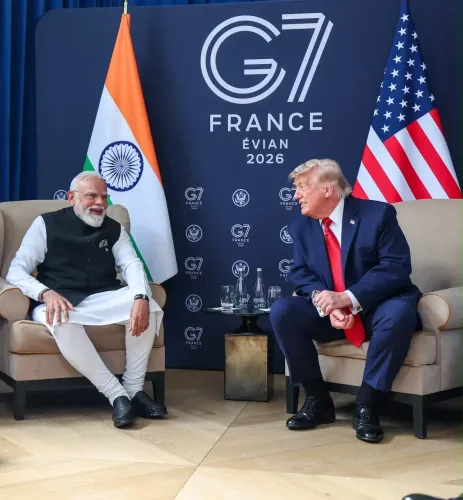
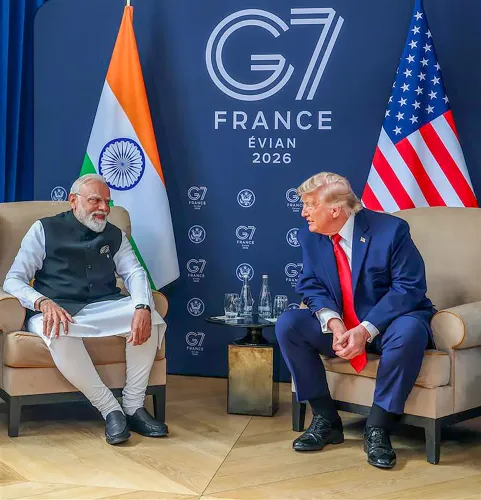
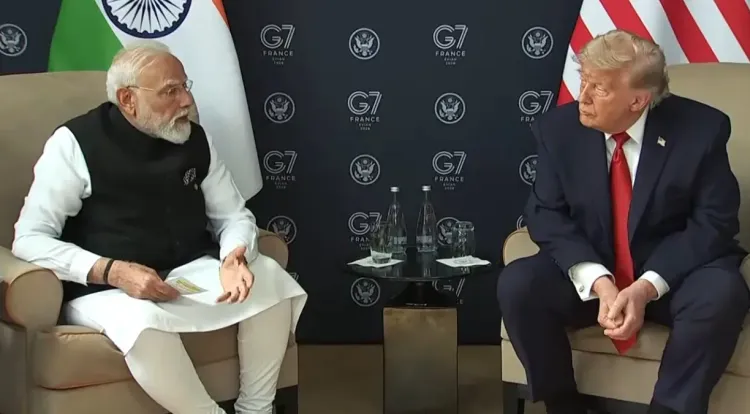
PM Narendra Modi and President Donald Trump held a bilateral meeting on 17 June on the sidelines of the G7 Summit in Evian, France .
It was their first in-person meeting since a summit in Washington in February .
Modi described 'new momentum and energy' in India-US relations and said both sides are 'moving forward very fast.' Modi praised Trump's 'tremendous efforts' toward an agreement with Iran and called for lasting peace in West Asia .
Modi raised the safety of hundreds of thousands of Indian seafarers operating along Gulf maritime routes, including through the Strait of Hormuz .
The White House said the agenda covered economic growth , supply chains , AI , investment partnerships , and global security .
Prime Minister Narendra Modi met US President Donald Trump on the sidelines of the G7 Summit in Evian, France on Wednesday, 17 June, describing a 'new momentum and energy' in India-US relations while pressing for the safety of Indian seafarers and the continued openness of the Strait of Hormuz. The bilateral meeting — their first in-person engagement since a summit in Washington last February — comes amid active negotiations on a possible trade agreement and ongoing diplomatic efforts to stabilise West Asia.
What Modi Said on India-US Relations
'The last time we met in Washington. After that, there has been a new momentum in our relations. There has been a new energy. And, in many ways, we are moving forward together,' Modi said. He added that both countries' teams were 'moving forward very fast' toward mutually agreed targets, calling it 'a matter of joy' that the two nations were working in tandem.
The White House had flagged ahead of the meeting that the two leaders would discuss economic growth, supply chains, artificial intelligence, investment partnerships, and a range of global security challenges.
Modi Commends Trump on West Asia Peace Efforts
Prime Minister Modi praised President Trump for what he described as 'tremendous efforts' toward reaching an agreement with Iran to resolve the ongoing regional crisis. 'A new hope for peace and stability in the region has been rekindled and I am confident that this will lead to a longstanding peace in the region,' Modi said.
He also underscored the shared strategic interest in keeping the Strait of Hormuz open: 'You and I agree that keeping the Strait of Hormuz open is vital for the global economy. India has consistently emphasised the importance of ensuring freedom of navigation and we should work together with particular emphasis on this issue.'
Indian Seafarers' Safety Raised at the Highest Level
In a pointed reference to India's maritime workforce, Modi highlighted that 'hundreds of thousands of Indian seafarers' are deployed along global maritime trade routes, including through the Strait of Hormuz. 'Their safety and security are of utmost importance to us,' he said, urging that seafarer welfare receive the 'highest priority' during implementation of any Iran agreement.
This is notably one of the few instances where seafarer welfare has been raised directly in a bilateral summit context, reflecting the scale of India's dependence on safe passage through the Gulf for both its workforce and its energy imports.
Context: Trade Talks and a Shifting Bilateral Agenda
The Evian meeting is the latest in a series of high-level engagements between New Delhi and Washington that have gathered pace since the February summit. Talks on a bilateral trade agreement remain ongoing, with both sides reportedly working to resolve differences on tariffs and market access. The G7 sideline format — informal and relatively unconstrained by protocol — is seen as conducive to frank exchanges on sensitive issues including technology transfer and defence supply chains.
Analysts note that the India-US relationship has entered a particularly active phase, with convergence on Indo-Pacific security, semiconductor supply chains, and clean energy investment all on the table simultaneously.
What Comes Next
No joint statement was issued following the Evian meeting. Both governments are expected to continue working-level negotiations on the trade framework in the weeks ahead. The trajectory of the Iran agreement — and its implications for Gulf shipping lanes — will remain a key variable shaping India's foreign policy calculus through the rest of 2025.
Point of View
But the substance is more consequential than the optics suggest. Modi's public commendation of Trump's Iran diplomacy is a calibrated signal — New Delhi is aligning itself with Washington's West Asia approach at a moment when Gulf stability directly affects India's energy security and its vast seafaring workforce. The seafarer welfare mention, rarely elevated to summit level, underscores how exposed India is to any Hormuz disruption. Meanwhile, the trade agreement remains conspicuously unsigned despite months of talks — the warmth in the room has not yet translated into a deal, and that gap is the real story.
NationPress
23 Sept 2026
Frequently Asked Questions
What did PM Modi and President Trump discuss at the G7 Summit in Evian?
The two leaders discussed the state of India-US relations, West Asia peace efforts, the importance of keeping the Strait of Hormuz open, and the safety of Indian seafarers. The White House had also flagged economic growth, supply chains, artificial intelligence, investment partnerships, and global security as agenda items.
When was the last time Modi and Trump met before the G7 meeting?
Their previous in-person meeting was a summit in Washington in February. The Evian meeting on 17 June was their first bilateral since then.
Why did PM Modi raise the Strait of Hormuz at the G7 meeting?
Modi stressed that keeping the Strait of Hormuz open is vital for the global economy and specifically for hundreds of thousands of Indian seafarers who work along Gulf maritime trade routes. India is also heavily dependent on Gulf energy imports that transit the strait.
What did Modi say about Trump's efforts on West Asia?
Modi praised Trump for making 'tremendous efforts' toward an agreement with Iran to end the regional crisis, saying a 'new hope for peace and stability' had been rekindled. He expressed confidence the efforts would lead to lasting peace and urged that Indian seafarer welfare be prioritised in any resulting agreement.
Is a India-US trade deal imminent after the G7 meeting?
No deal was announced following the Evian meeting, and no joint statement was issued. Negotiations on a bilateral trade agreement are ongoing, with both sides reportedly working through differences on tariffs and market access.