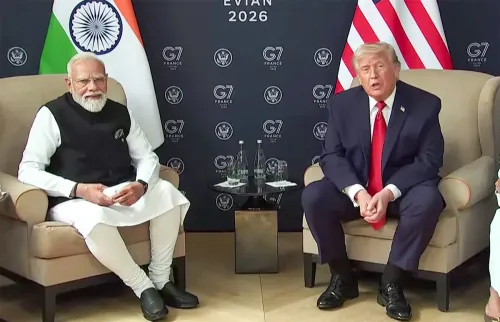
Trump-Modi G7 bilateral: 'Spent a long time together,' says US President
Synopsis
On the sidelines of the G7 in Evian, Trump singled out PM Modi as one of his key interlocutors — a notable signal of India's growing role in Middle East diplomacy. With the Iran deal, Abraham Accords expansion, and a Lebanon visit to Washington all in motion, the summit has set off a dense chain of follow-up diplomacy that New Delhi appears positioned to influence.
Key Takeaways
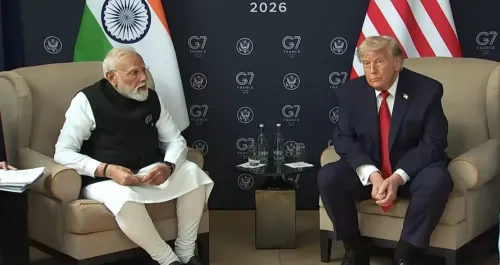
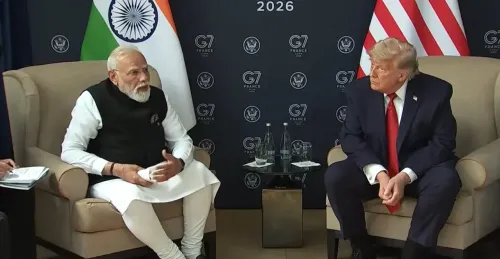
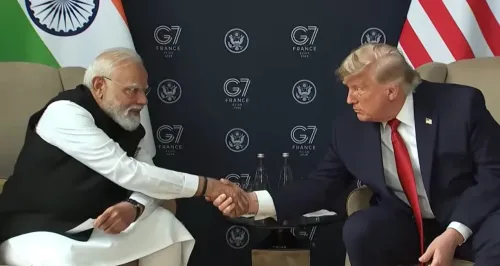
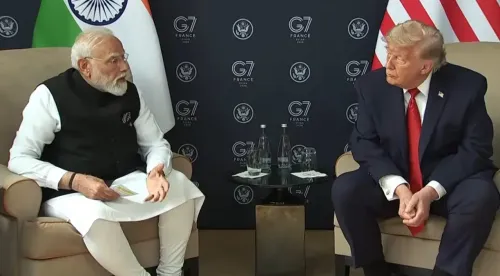
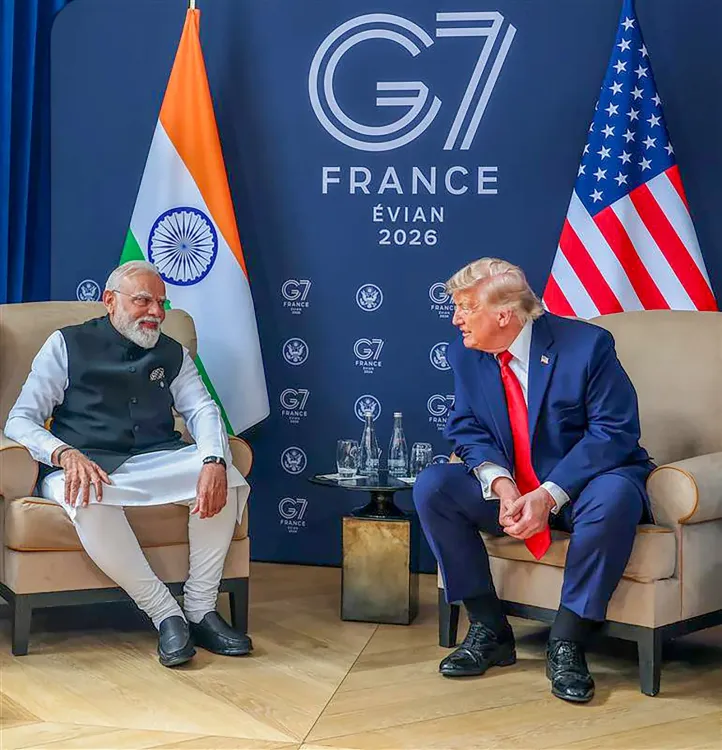
US President Donald Trump confirmed an extended bilateral with PM Narendra Modi at the G7 summit in Evian on 17 June .
Trump described the Iran agreement as the summit's centrepiece, saying it removed the 'greatest threat' facing the Middle East.
Trump spoke with leaders from Qatar , the UAE , Egypt , and Saudi Arabia , all of whom he said welcomed the Iran deal.
Expansion of the Abraham Accords was flagged as the next diplomatic priority; Lebanon's Hezbollah situation described as unresolved.
Lebanon's leadership is expected to visit Washington within 'the next week or two,' Trump said.
The G7 adopted its first-ever declaration on illegal immigration and agreed to secure access to critical minerals .
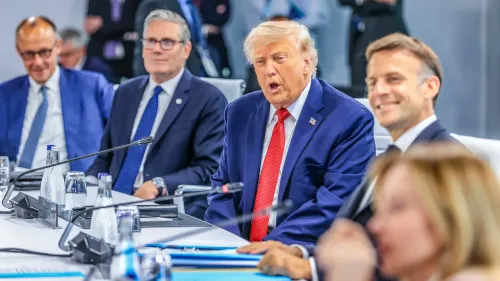
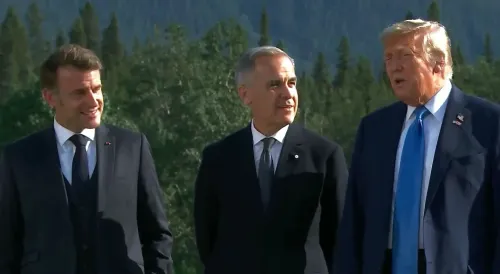
US President Donald Trump on Wednesday, 17 June revealed that he held an extended bilateral meeting with Prime Minister Narendra Modi on the sidelines of the G7 summit in Evian, as world leaders gathered to address the Iran nuclear agreement, the ongoing war in Ukraine, and escalating security challenges across the Middle East. The disclosure came during Trump's closing press conference, where he described the summit as a moment of rare multilateral unity.
Trump on Modi Meeting
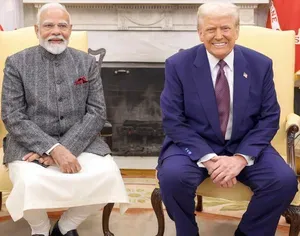
'PM Modi of India, we spent a long time together today,' Trump told reporters at the post-summit news conference. He indicated that consultations with visiting leaders — including Modi — had directly shaped discussions on the Iran accord and the broader security architecture of the Middle East. The nature of the agenda discussed between the two leaders was not detailed, but Trump framed the bilateral as substantive rather than ceremonial.
Iran Deal and Middle East Diplomacy
Trump described the agreement with Iran as the centrepiece of the summit's diplomatic output, arguing it had neutralised what he called the region's greatest threat. 'Think of what Israel is getting, they're not going to be nuked,' he said. 'Very simple.' He also disclosed that he had spoken at length with several regional leaders, including Emir of Qatar Sheikh Tamim bin Hamad Al Thani, UAE President Sheikh Mohammed bin Zayed Al Nahyan, Egyptian President Abdel Fattah El-Sisi, and Saudi Crown Prince Mohammed bin Salman. 'They're all so happy about this deal,' Trump said, referring to the Iran agreement.
Abraham Accords, Lebanon, and Hezbollah
Beyond Iran, Trump signalled ambitions to expand the Abraham Accords — the normalisation agreements between Israel and several Arab nations, including the United Arab Emirates and Bahrain, brokered during his first term. 'The expansion of the Abraham Accords is the other thing that we hope we're going to get,' he said. On Lebanon, Trump acknowledged that the Hezbollah question remained unresolved. 'The Lebanon peace is something we'll have to work on a little bit,' he said. 'The big deal is the Iran deal. That's where the money is, where the power was. But they have Hezbollah, and we've got to get that done one way or the other.' He added that Lebanon's leadership — reportedly either the prime minister or president — would be visiting Washington 'over the next week or two.'
Ukraine, AI, and G7 Consensus
Trump said he held separate conversations with both Russian President Vladimir Putin and Ukrainian President Volodymyr Zelenskyy on the sidelines. 'We had a very good conversation with President Putin and a very, very good conversation with President Zelenskyy,' he said, adding, 'I think they both want to do something. They just don't know how to do it.' The summit also produced a first-of-its-kind G7 declaration on illegal immigration and agreement on strengthening cooperation against drug trafficking networks. Leaders additionally agreed to accelerate access to critical minerals and rare-earth resources, and discussed artificial intelligence and transnational crime. 'We found a great deal of unity here at the G-7,' Trump said.
What Comes Next
With Lebanon's leadership expected in Washington within weeks and the Iran deal's implementation still being worked out, the diplomatic momentum from Evian is set to continue. India's engagement — signalled by the Modi-Trump bilateral — positions New Delhi as a key interlocutor in the evolving Middle East security conversation, even as the full substance of that discussion remains undisclosed.
Point of View
If it holds, reshapes the regional order that India has carefully navigated for energy and diaspora reasons. New Delhi's silence on the bilateral's substance is itself a diplomatic signal worth watching. Meanwhile, Trump's breezy confidence that 'they both want to do something' on Ukraine papers over the fact that no concrete ceasefire framework has emerged — a gap that the G7's unity rhetoric does not fill.
NationPress
18 Sept 2026
Frequently Asked Questions
What did Trump say about his meeting with PM Modi at the G7?
Trump said he spent 'a long time together' with PM Modi on the sidelines of the G7 summit in Evian on 17 June. He indicated the meeting was substantive, though the specific agenda discussed was not disclosed publicly.
What was the main outcome of the G7 summit in Evian?
The G7 summit in Evian produced a consensus around the Iran nuclear agreement, a first-ever G7 declaration on illegal immigration, and commitments to secure critical minerals and rare-earth supply chains. Leaders also discussed AI, transnational crime, and the war in Ukraine.
What did Trump say about the Iran deal at the G7 press conference?
Trump described the Iran agreement as the 'big deal' that removed the greatest threat facing the Middle East. He said regional leaders including the Saudi Crown Prince and UAE President were 'all so happy about this deal.'
What is the current status of the Abraham Accords expansion?
Trump said expanding the Abraham Accords — the normalisation agreements between Israel and Arab nations brokered during his first term — is the next diplomatic priority. No specific new signatories were named at the summit.
What did Trump say about Ukraine at the G7?
Trump said he held 'very good' conversations with both Russian President Vladimir Putin and Ukrainian President Volodymyr Zelenskyy on the summit sidelines. He suggested both leaders want a resolution but have not yet determined how to achieve it.