Modi tells Trump at G7: Strait of Hormuz vital to global economy
Synopsis
On the sidelines of the G7 Summit in Evian, PM Modi delivered a pointed message to President Trump: the Strait of Hormuz must stay open — and India, as one of the world's biggest oil importers, has direct skin in the game. The exchange signals that West Asian maritime security is now a live agenda item in the India-US strategic partnership.
Key Takeaways
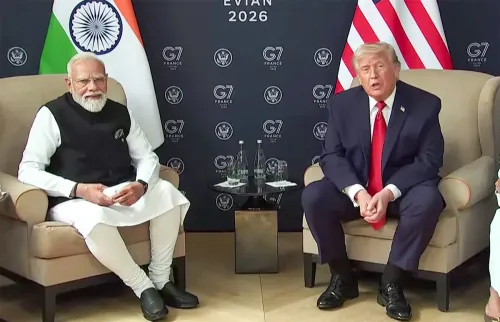
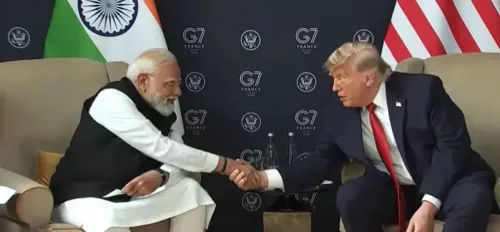
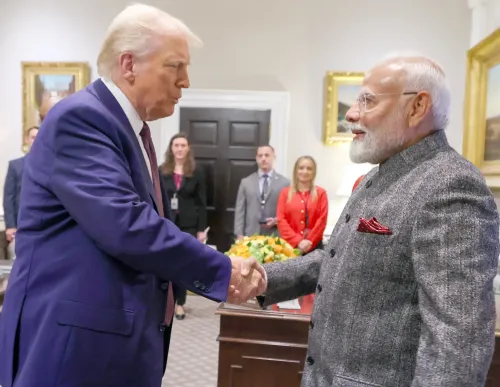
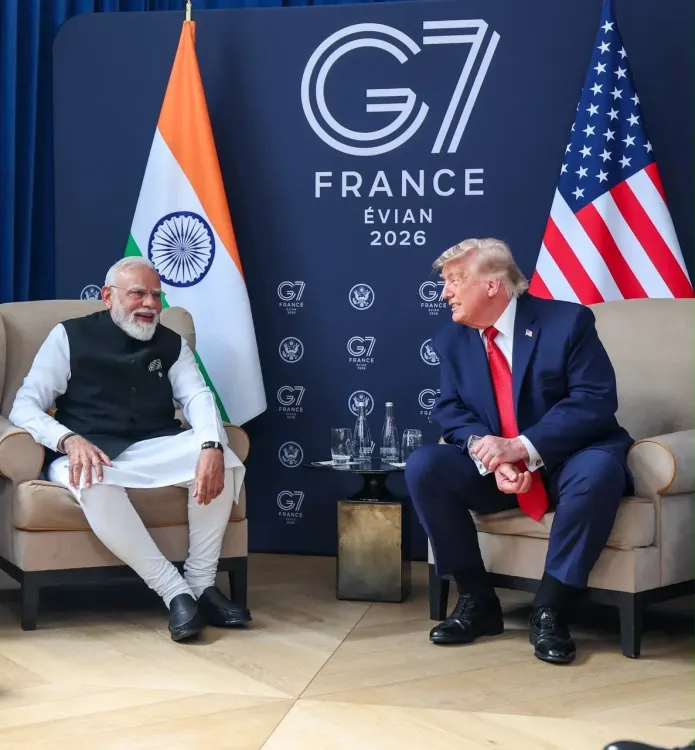
PM Narendra Modi met President Donald Trump on 17 June on the sidelines of the G7 Summit in Evian, France .
Modi stressed that keeping the Strait of Hormuz open is vital to the global economy.
He also reiterated the need to ensure safety of civilians and seafarers in West Asia .
The two leaders reviewed cooperation across trade, energy, defence, technology , and people-to-people ties.
The US has emerged as a significant energy supplier to India as New Delhi diversifies crude oil imports.
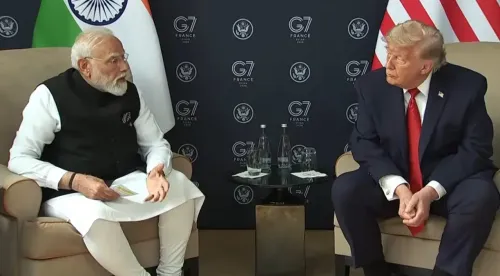
Prime Minister Narendra Modi on Wednesday, 17 June held talks with United States President Donald Trump on the sidelines of the G7 Summit in Evian, France, where the two leaders reviewed progress in bilateral cooperation spanning trade, energy, defence, technology, and people-to-people ties. Modi underscored that keeping the Strait of Hormuz open was critical to the stability of the global economy.
Key Developments from the Evian Meeting
During the bilateral, Modi conveyed that India appreciated the steps taken toward restoring peace and stability in West Asia. He specifically flagged the strategic importance of the Strait of Hormuz — a critical chokepoint through which a significant share of the world's seaborne oil passes — and reiterated the need to protect civilians, including seafarers, operating in the region.
The meeting comes at a moment of heightened attention on maritime security in the Persian Gulf, where tensions have periodically disrupted shipping lanes in recent years.
State of India-US Bilateral Ties
The Modi-Trump engagement at Evian reflects what both governments describe as deepening strategic convergence. Bilateral trade between India and the United States has expanded steadily, with the two sides working to resolve outstanding market access disputes and broaden cooperation in emerging technologies, clean energy, and defence production.
Energy security has emerged as a key pillar of the partnership. India has been diversifying its crude oil import sources, and the US has grown into a significant energy supplier to India in recent years. Defence ties have similarly deepened through joint exercises, technology transfer arrangements, and procurement agreements.
Why the Hormuz Signal Matters
India is among the world's largest importers of crude oil, making unhindered maritime trade a matter of direct economic concern. The Strait of Hormuz, which connects the Persian Gulf to the Gulf of Oman, is the transit route for roughly 20% of global oil supplies, according to energy analysts. Any disruption there would have immediate consequences for Indian energy costs and, by extension, domestic inflation.
Notably, India has consistently maintained that regional conflicts must not be allowed to choke global supply chains — a position Modi reiterated directly to Trump at Evian.
What Comes Next
The Evian interaction is expected to feed into ongoing diplomatic and trade negotiations between the two countries. Both sides have indicated intent to further consolidate cooperation across economic growth, regional security, and technology sectors. Formal outcomes from the broader G7 Summit are anticipated in the coming days.
Point of View
And any Gulf disruption translates almost immediately into pump-price pain at home. By raising the chokepoint directly with Washington, New Delhi is nudging the US toward a posture that protects open sea lanes even as American policy in West Asia remains in flux. What mainstream coverage underplays is the implicit ask: India wants US engagement in the Gulf to include maritime stability guarantees, not just geopolitical maneuvering. Whether Trump's team reads it that way is the open question.
NationPress
16 Sept 2026
Frequently Asked Questions
What did PM Modi tell President Trump about the Strait of Hormuz?
PM Modi told President Trump at the G7 Summit in Evian on 17 June that keeping the Strait of Hormuz open is vital to the global economy. He also stressed the need to protect civilians and seafarers in the West Asia region.
Where did the Modi-Trump meeting take place?
The meeting took place on the sidelines of the G7 Summit in Evian, France, on 17 June. It was a bilateral engagement on the margins of the multilateral summit.
Why is the Strait of Hormuz important for India?
The Strait of Hormuz is a critical chokepoint for global oil shipments, and India — one of the world's largest crude oil importers — depends heavily on unhindered maritime trade through the route. Any disruption there would directly impact India's energy costs and domestic inflation.
What areas did Modi and Trump discuss beyond West Asia?
The two leaders reviewed bilateral cooperation across trade, energy, defence, technology, and people-to-people ties. Topics included resolving market access issues, clean energy, defence production, joint exercises, and technology transfer agreements.
What is the current state of India-US relations?
India-US relations are marked by growing strategic convergence, according to both governments. Bilateral trade has expanded, the US has become a significant energy supplier to India, and defence ties have deepened through joint exercises and procurement agreements.