Trump-Modi G7 meet: Indian American lawmakers urge trade reset
Synopsis
On the sidelines of the G7 Summit in France, Indian American lawmakers delivered a pointed message to Trump: the tariffs and rhetoric that strained ties with New Delhi have real costs — for Virginia businesses, for Indian Americans, and for the US strategic position in Asia. The Trump-Modi bilateral is being framed less as a photo opportunity and more as a repair job.
Key Takeaways
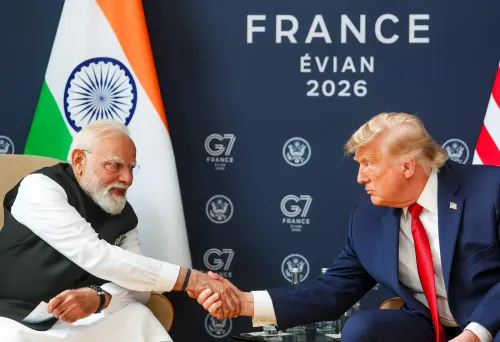
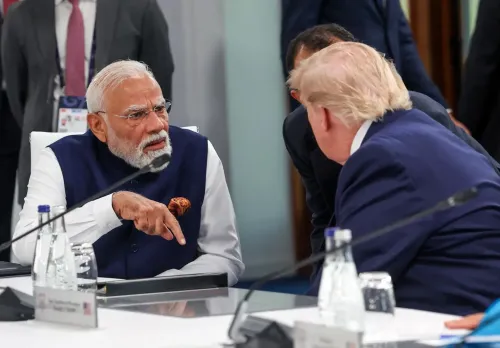
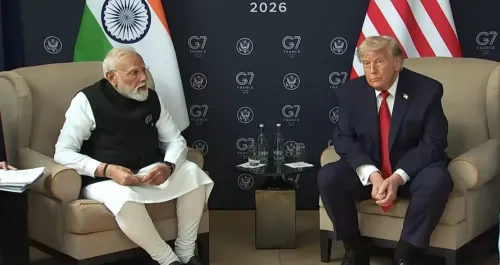
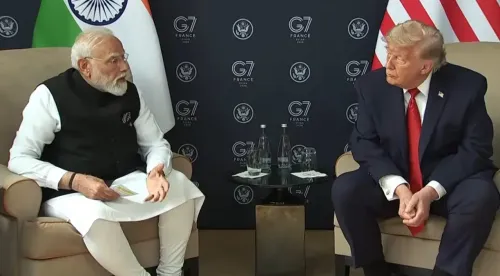
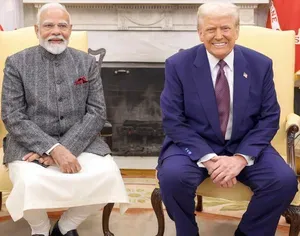
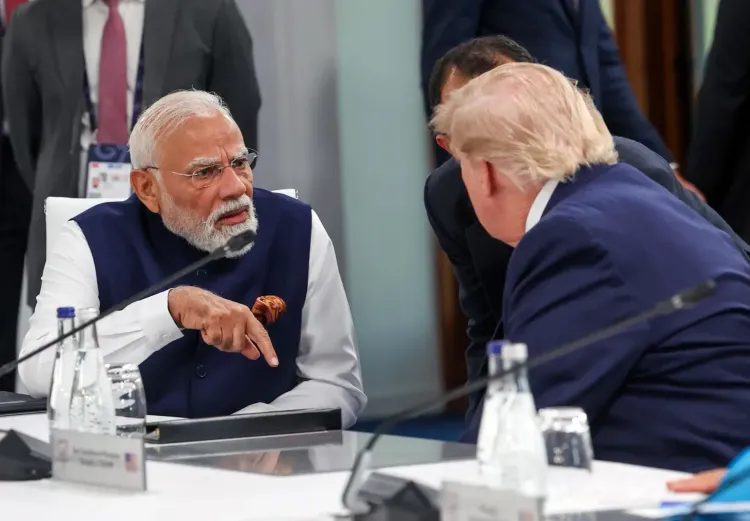
US President Donald Trump and PM Narendra Modi held bilateral talks on the sidelines of the G7 Summit in France on 17 June .
Congressman Suhas Subramanyam called on Trump to 'normalise relationships with India,' citing tariffs and strained rhetoric as key irritants.
Delegate Jas Jeet Singh warned that unilateral tariffs 'make things more expensive' domestically and 'upset our trading partners.' South Asians make up roughly 40 per cent of Singh's district in Loudoun County , Virginia, underscoring the domestic political stakes.
Rustagi of Howard University expressed confidence the relationship would strengthen, calling the two nations 'natural allies.' No joint statement had been issued at the time of reporting; trade negotiators from both sides are expected to resume bilateral trade deal talks in the coming weeks.
US President Donald Trump and Prime Minister Narendra Modi met on the sidelines of the G7 Summit in France on 17 June, with Indian American lawmakers and policy experts calling on Washington to treat the bilateral as an opportunity to repair strained ties. The meeting drew particular attention from the Indian American community, which has closely watched the turbulence in relations since Trump's return to office.
The Case for a Reset
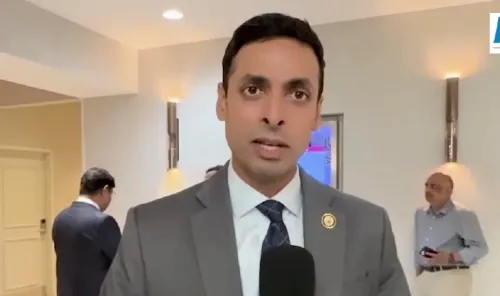
Congressman Suhas Subramanyam, a Virginia Democrat, said the moment called for normalisation rather than escalation. 'The expectation would be for President Trump to normalise relationships with India,' he said ahead of the meeting. 'He has strained the relationship with some of his actions, for instance, the tariffs and other you know, words that he said about Modi himself and India.'
Subramanyam argued that the bilateral has been set back by decisions that have already had tangible economic consequences. 'There's a lot of business people in Virginia who rely on the trade between India and the United States and have seen their businesses suffer and seen prices go up because of that,' he said. Some of the tariffs imposed earlier have since been rolled back, but the damage to business confidence, he suggested, lingers.
Trade at the Centre of Concerns
Delegate Jas Jeet Singh of the Virginia House of Representatives echoed those concerns, warning against what he called irrational economic policy. 'We have to make sure that we do not harm our trading allies by imposing unilateral tariffs that don't necessarily make our country better off,' Singh said. 'In fact, they make things more expensive here and they upset our trading partners.'
Singh called for 'a rational economic policy that doesn't impose unilateral tariffs' and said cooperation, not confrontation, should guide the relationship. Asked what message he would send to Trump ahead of the meeting, Singh replied: 'I hope that he fosters strong ties with our partners to build and create more good jobs in the United States.'
Singh also highlighted the stakes for Indian Americans, noting that South Asians account for roughly 40 per cent of his district in Loudoun County, Virginia. 'Indian Americans are some of the backbone that makes Virginia great,' he said.
Strategic Dimension: China Factor
Both lawmakers framed stronger India-US economic ties as inseparable from the broader strategic challenge posed by China. Subramanyam argued that the two democracies needed to deepen their economic bond to 'counter what's happening as China continues to exude its influence over Asia.' This framing — trade as strategic glue — has been a consistent thread in Indian American advocacy circles, and it reflects a wider consensus in Washington think tanks that New Delhi is too important a partner to alienate over tariff disputes.
Academic View: Long-Term Optimism
Dr Narendra K. Rustagi, Professor and Director of the Center for Global Business Studies at Howard University, offered a longer-term perspective. 'I think the India-US relationship would improve because I believe the two are natural allies,' he said. Rustagi acknowledged current policy differences but argued that structural complementarities — India's large educated workforce and America's global economic weight — would ultimately pull the two countries closer. 'I see the relationship would grow and evolve further because both countries... it's in the interest of both countries to have each other,' he said.
What to Watch Next
The G7 sideline meeting between Trump and Modi is being watched as a bellwether for whether the two sides can agree on a framework to reduce tariff friction and advance defence and technology cooperation. No joint statement had been issued at the time of reporting. Analysts say the real test will come in the weeks following the summit, when trade negotiators from both sides are expected to resume talks on a bilateral trade deal that has been in progress for several months.
Point of View
Pointing to Virginia businesses that have already absorbed the cost of tariff volatility. That is a politically durable argument in a swing-state context, and it suggests the India-US relationship has domestic US political salience that the White House may be underweighting. The deeper irony is that both sides claim to see China as the central strategic challenge in Asia, yet the tariff friction has pushed New Delhi to hedge its bets rather than deepen alignment. A G7 sideline handshake will not resolve that — only a credible trade framework will.
NationPress
21 Sept 2026
Frequently Asked Questions
What happened at the Trump-Modi bilateral at the G7 Summit?
US President Donald Trump and Prime Minister Narendra Modi met on the sidelines of the G7 Summit in France on 17 June to discuss bilateral ties. Indian American lawmakers and experts had urged the meeting be used to repair relations strained by US tariffs and tensions in recent months.
Why have India-US relations been under strain?
Relations have been strained primarily by US tariffs imposed on Indian goods and, according to Congressman Suhas Subramanyam, by remarks Trump made about Prime Minister Modi and India. Some tariffs have since been rolled back, but business confidence has been affected.
What did Indian American lawmakers ask for ahead of the meeting?
Congressman Suhas Subramanyam and Delegate Jas Jeet Singh both called for a reset centred on trade, urging Washington to pursue a rational economic policy without unilateral tariffs. They argued that stronger India-US economic ties would benefit both countries and help counter China's growing influence in Asia.
How does the India-US relationship affect Indian Americans?
Delegate Jas Jeet Singh noted that South Asians account for roughly 40 per cent of his district in Loudoun County, Virginia, and described Indian Americans as 'some of the backbone that makes Virginia great.' Congressman Subramanyam said Virginia businesses that depend on India-US trade have seen prices rise and revenues fall due to tariff disruptions.
What is the long-term outlook for India-US ties?
Dr Narendra K. Rustagi of Howard University expressed confidence that the relationship would improve, calling the two countries 'natural allies' whose strengths — India's educated workforce and America's global economic power — are structurally complementary. Trade negotiators from both sides are expected to resume bilateral trade deal discussions in the weeks following the G7 summit.