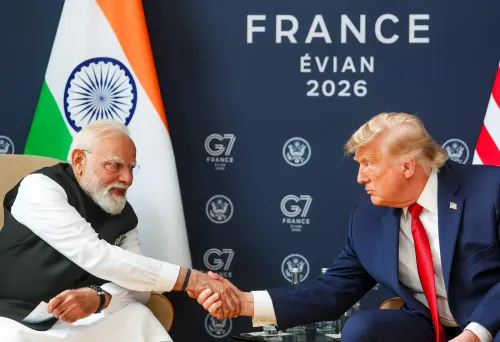
Modi-Trump G7 meet: India-US ties at crossroads after 16 months of friction
Synopsis
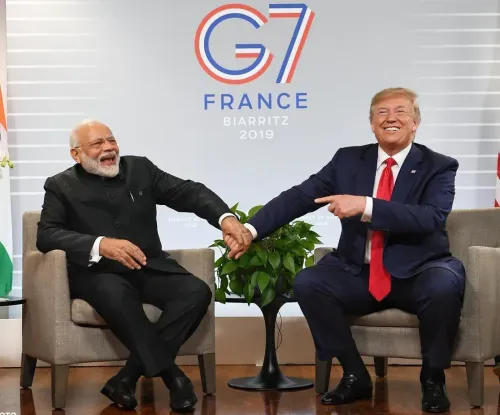
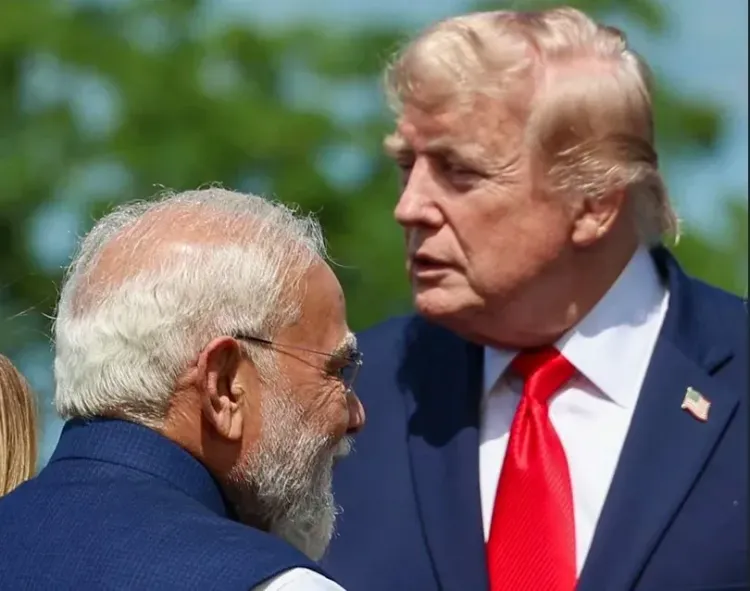
Modi and Trump shook hands in France after 16 months of friction — tariffs, sailor deaths, visa curbs, and Moscow optics. With a trade deal reportedly one per cent away from closure and a $500 billion bilateral target on the line, the G7 sideline meeting may be the reset both sides badly need.
Key Takeaways
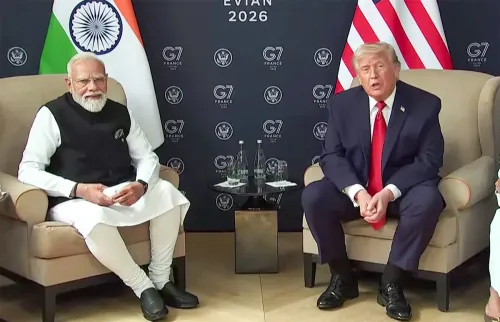
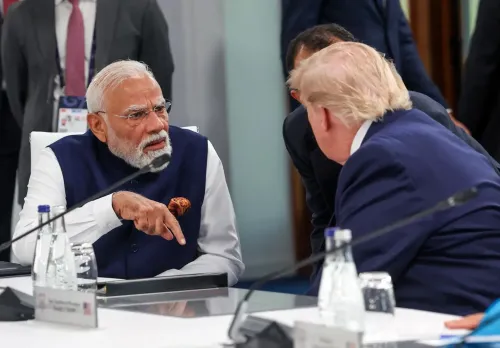
PM Modi and President Trump met at the G7 Summit in France on 17 June — their first meeting in 16 months .
The two nations are on the verge of an interim trade agreement , with reports of only 'one per cent of sticking points' remaining.
Washington previously imposed reciprocal tariffs of up to 50 per cent on Indian goods; the US Supreme Court struck these down, replacing them with a uniform 10 per cent until 24 July 2026 .
Deaths of three Indian sailors in US military strikes near Oman were raised directly by PM Modi with Trump .
Both nations target $500 billion in bilateral trade by 2030 , with energy — hydrocarbons and clean energy — identified as a key driver.
US Trade Representative Jamieson Greer and Commerce Minister Piyush Goyal are expected to finalise the interim deal later this month.
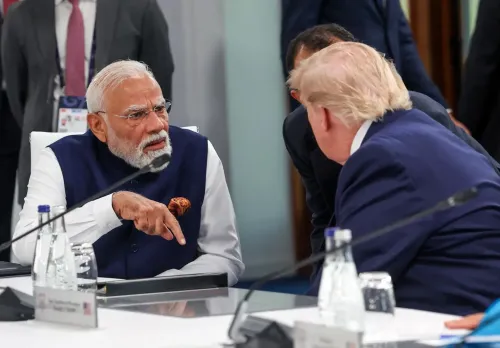
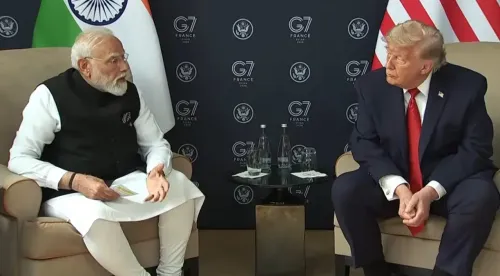
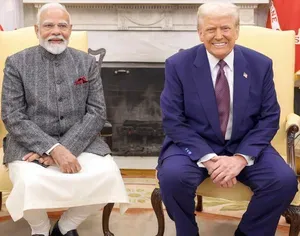
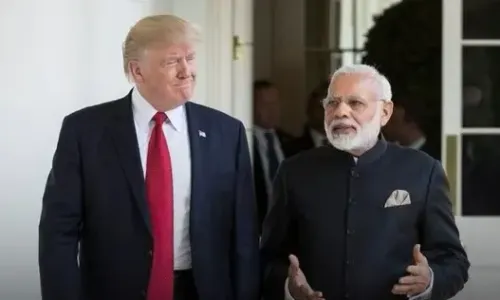
Prime Minister Narendra Modi and United States President Donald Trump met on the sidelines of the G7 Summit in France on 17 June, their first face-to-face engagement in 16 months — a period marked by tariff disputes, immigration friction, and the deaths of three Indian sailors in recent US military strikes. The meeting arrives at a pivotal moment, with both nations on the verge of signing an interim trade agreement that could reshape bilateral economic ties.
What Brought the Two Leaders Together
Modi and Trump last met in February 2025. The intervening months were far from smooth: Washington imposed punitive reciprocal tariffs of up to 50 per cent on Indian goods, partly citing India's Russian oil purchases and concerns over BRICS members allegedly working on de-dollarisation. The US Supreme Court later intervened in February, striking down the 50 per cent reciprocal tariff regime and replacing it with a uniform 10 per cent on all countries until 24 July 2026. The reset narrowed India's competitive advantage over rivals such as Pakistan and Sri Lanka, forcing a renegotiation of terms.
The deaths of three Indian sailors in US strikes near Oman further strained the relationship, compelling Prime Minister Modi to raise the matter directly with President Trump at the summit.
The Trade Deal Taking Shape
US Trade Representative Jamieson Greer and Commerce Minister Piyush Goyal are expected to finalise the interim agreement later this month, with reports suggesting only 'one per cent of sticking points' remain unresolved. Under the framework agreed in February, India committed to reducing tariffs on US industrial and agricultural goods — including sorghum, soybean oil, and wine. In return, Washington set reciprocal tariffs at 18 per cent on Indian textiles, leather, chemicals, and machinery, with plans to eliminate tariffs on pharmaceuticals, gems, and aircraft parts once the deal is finalised.
High-level negotiations are also under way for a comprehensive Bilateral Trade Agreement covering supply chains, ICT goods, and medical devices. Both sides have set an ambitious bilateral trade target of $500 billion by 2030.
Energy as a Strategic Stabiliser
Amid the diplomatic turbulence, energy cooperation has emerged as a key stabilising force. The US-India Business Council (USIBC), in collaboration with Grant Thornton Bharat, recently released a report titled 'Strengthening the India-US Energy Partnership: Unlocking Hydrocarbon Opportunities through Investment and Collaboration'. The report identified hydrocarbons as a critical driver of the $500 billion trade target and described the bilateral energy relationship as evolving from a traditional buyer-seller model into a strategic partnership spanning trade, investment, technology, and infrastructure.
Under the Strategic Clean Energy Partnership (SCEP), the two countries are collaborating on hydrogen, energy storage, renewables, and sustainable aviation fuels. US cooperation also supports Indian Railways' goal of achieving Net Zero Carbon emissions by 2030.
Geopolitical Fault Lines
Several geopolitical irritants have complicated the relationship. Prime Minister Modi's visit to Moscow in 2024, which coincided with a NATO summit, reportedly drew disapproval in Washington. The Pakistan factor also resurfaced, with President Trump engaging directly with Pakistan Army Chief Asim Munir — at times appearing to bypass civilian leadership. US tightening of H-1B visas disproportionately affected Indian professionals, adding another layer of strain.
Since 2018, US tariffs on Indian steel and aluminium, later broadened to other goods, have periodically disrupted trade flows. Critics argue that Washington's approach has at times conflated strategic concerns with transactional trade pressure.
What the France Meeting Could Unlock
Despite the friction, both governments have consistently underscored the strategic importance of the partnership — particularly in Indo-Pacific security, energy cooperation, and technology. The G7 meeting is seen as an opportunity to reset the tone and accelerate the finalisation of the trade framework. The relationship, according to officials on both sides, is shifting toward deeper strategic integration encompassing investment, technology, infrastructure, and supply chain resilience. Whether the handshake in France translates into durable forward momentum will become clearer when Greer and Goyal conclude negotiations later this month.
Point of View
Visa friction, and the politically charged deaths of Indian sailors have eroded the goodwill that defined the early years of the strategic partnership. The interim trade deal — reportedly near-final — is necessary but insufficient: it papers over deeper disagreements on Russia, BRICS, and Pakistan that neither side has resolved. The $500 billion trade target by 2030 is achievable in arithmetic, but the geopolitical variables — Moscow, Islamabad, de-dollarisation anxieties — are not going away. The real question is whether this handshake produces a durable framework or merely buys time until the next friction point.
NationPress
26 Sept 2026
Frequently Asked Questions
Why did Modi and Trump meet at the G7 in France?
Prime Minister Modi and President Trump met on the sidelines of the G7 Summit in France on 17 June for their first in-person engagement in 16 months. The meeting was aimed at stabilising bilateral ties strained by tariff disputes, immigration friction, and the deaths of three Indian sailors in US military strikes near Oman.
What is the India-US interim trade agreement?
The interim trade agreement is a framework under negotiation between India and the US that would reshape tariffs and market access for both sides. Under terms agreed in February, India would reduce tariffs on US agricultural and industrial goods, while Washington would set an 18 per cent reciprocal tariff on Indian textiles, leather, chemicals, and machinery, with tariffs on pharmaceuticals, gems, and aircraft parts to be removed upon finalisation.
What happened with US tariffs on India?
Washington imposed reciprocal tariffs of up to 50 per cent on Indian goods in 2025, partly citing India's Russian oil purchases and de-dollarisation concerns. The US Supreme Court later struck down the 50 per cent regime, replacing it with a uniform 10 per cent on all countries until 24 July 2026.
How does energy factor into India-US relations?
Energy has emerged as a key stabilising pillar. Both nations are deepening cooperation in hydrocarbons and clean energy under the Strategic Clean Energy Partnership (SCEP), covering hydrogen, energy storage, renewables, and sustainable aviation fuels. Hydrocarbons have been identified as a critical driver of the shared $500 billion bilateral trade target by 2030.
What are the main friction points between India and the US?
Key friction points include US tariffs on Indian goods, H-1B visa tightening that disproportionately affected Indian professionals, the deaths of three Indian sailors in US military strikes near Oman, PM Modi's 2024 Moscow visit coinciding with a NATO summit, and US outreach to Pakistan's Army Chief. Both sides, however, continue to emphasise the strategic importance of the partnership.