CM Rekha Gupta extends Hariyali Amavasya greetings
Synopsis
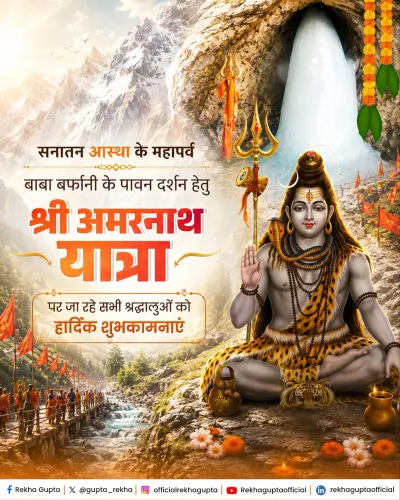
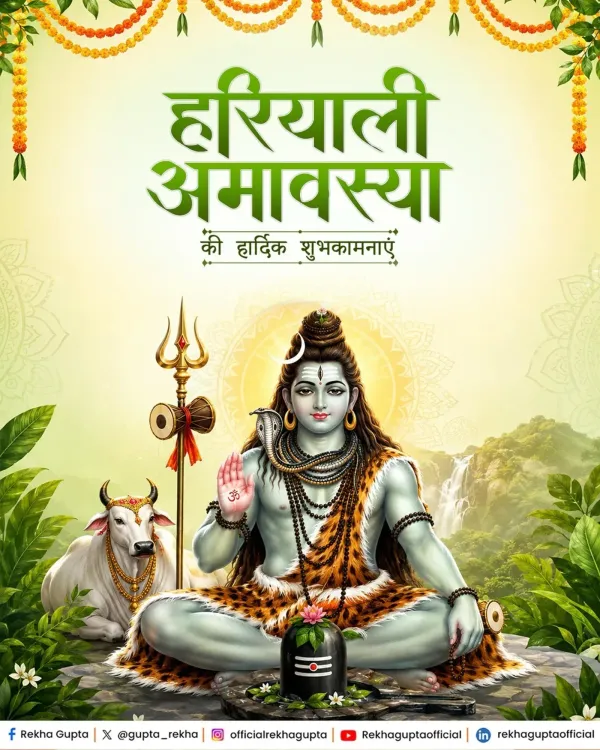
Delhi Chief Minister Rekha Gupta marked Hariyali Amavasya by invoking Mahadev and Mata Parvati, praying for happiness, prosperity, peace, and a greener earth for all, in a public message on the sacred Shravan new moon.
Key Takeaways
Delhi CM Rekha Gupta extended greetings for Hariyali Amavasya on 12 August 2026 .
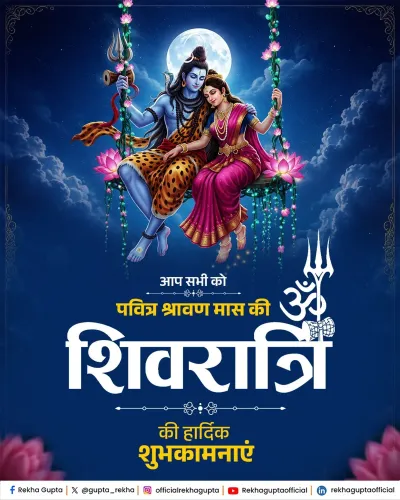
She invoked Mahadev (Lord Shiva) and Mata Parvati , praying for happiness, prosperity, and peace in every life.
Hariyali Amavasya falls on the new moon of the Hindu month of Shravan , combining nature gratitude with Shiva worship.
The festival traditionally involves tree planting, temple visits, and rituals near water, linking religion with environmental awareness.
Chief ministers across India routinely issue such festival greetings, acknowledging cultural traditions observed by their constituents.
On a morning when millions of Hindu devotees observe the sacred new moon of Shravan, Delhi Chief Minister Rekha Gupta offered her greetings for Hariyali Amavasya, invoking the blessings of Mahadev and Mata Parvati for peace, prosperity, and a greener earth.
In her post, the Chief Minister wrote: 'हरियाली अमावस्या प्रकृति के प्रति कृतज्ञता, शिव आराधना और सृष्टि के मंगल का पावन पर्व है' — 'Hariyali Amavasya is a sacred festival of gratitude to nature, worship of Shiva, and the well-being of creation.' She prayed that every life be filled with happiness, prosperity, and peace, and that the earth remain forever lush and abundant.
What Hariyali Amavasya marks
Hariyali Amavasya falls on the new moon day of the Hindu month of Shravan, one of the most spiritually significant months in the calendar. The festival centres on gratitude toward nature, the worship of Lord Shiva — known as Mahadev or Devadideva, the god of gods — and prayers offered alongside his consort Mata Parvati. Devotees traditionally plant saplings, visit temples, and observe rituals near water bodies, weaving environmental consciousness into religious practice.
The occasion carries particular resonance during Shravan, when Shiva worship intensifies across North India. Temples in Delhi typically see heightened footfall, and parks and green spaces become sites of quiet community observance.
A ritual of public outreach on festival days
Chief ministers across Indian states routinely mark major religious and cultural festivals with public messages — a practice that bridges administrative office with the cultural rhythms of their constituents. CM Gupta's greeting follows that tradition, emphasising themes of nature and collective well-being rather than policy directives. The message carries no administrative content; its weight is symbolic and communal.
As Delhi's temples and green spaces fill with devotees this Hariyali Amavasya, the Chief Minister's prayer for a 'hariyal aur samridh dharti' — a green and prosperous earth — lands as both a cultural salutation and a quiet nod to the environmental spirit the festival embodies.
Point of View
Signalling cultural attunement to majority religious sentiment. For CM Rekha Gupta, leading a BJP government in the national capital, marking Shravan observances publicly reinforces the party's consistent positioning around Hindu cultural identity. The message is deliberately non-partisan in tone — nature, well-being, and divine blessing are unifying themes — making it broadly accessible rather than divisive. In the broader arc of Delhi politics, such outreach on religious occasions forms part of a sustained effort to embed the administration within the city's cultural fabric.
NationPress
12 Aug 2026
Frequently Asked Questions
What is Hariyali Amavasya?
Hariyali Amavasya is a Hindu festival observed on the new moon day of the month of Shravan. It is dedicated to gratitude toward nature, worship of Lord Shiva, and prayers for prosperity and greenery. Devotees often plant trees and visit temples on this day.
Why is Shravan considered sacred in Hinduism?
Shravan is considered one of the holiest months in the Hindu calendar, especially for the worship of Lord Shiva. Devotees observe fasts, visit Shiva temples, and perform rituals throughout the month, with the new moon and Mondays holding special significance.
What did Delhi CM Rekha Gupta say on Hariyali Amavasya?
Delhi Chief Minister Rekha Gupta posted a message describing Hariyali Amavasya as a sacred festival of gratitude to nature and Shiva worship. She prayed to Mahadev and Mata Parvati for happiness, prosperity, and peace in every life, and for the earth to remain forever green and abundant.
Who are Mahadev and Mata Parvati?
Mahadev is another name for Lord Shiva, one of the principal deities in Hinduism associated with regeneration, destruction of evil, and cosmic balance. Mata Parvati is his consort and a mother goddess figure, widely worshipped alongside Shiva especially during Shravan.
Is Hariyali Amavasya a public holiday in Delhi?
Hariyali Amavasya is a religious observance rather than a gazetted public holiday in Delhi, though devotees mark it through temple visits, tree planting, and fasting. Specific local arrangements for 2026 have not been confirmed by official sources.