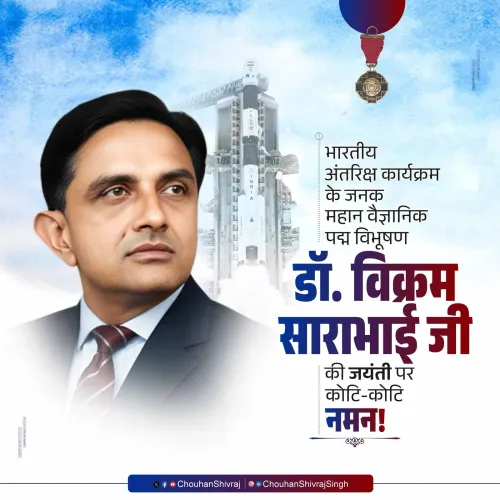
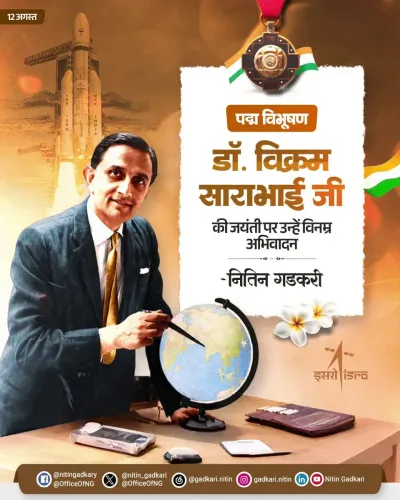
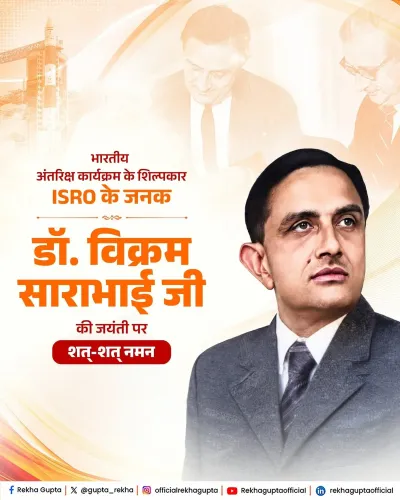
Jitendra Singh pays tribute to ISRO founder Vikram Sarabhai
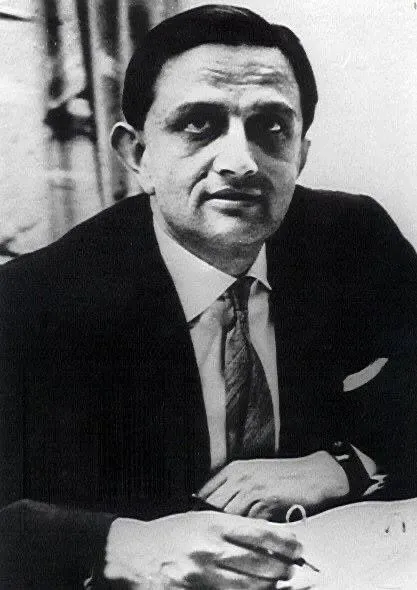
Synopsis
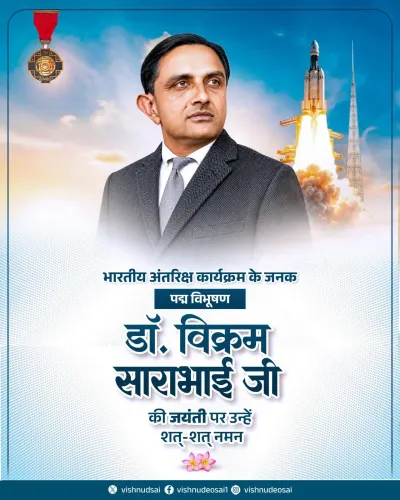
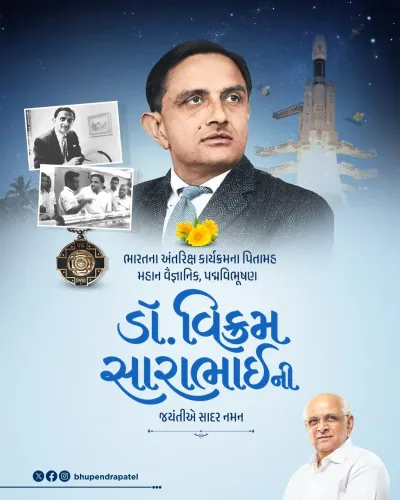
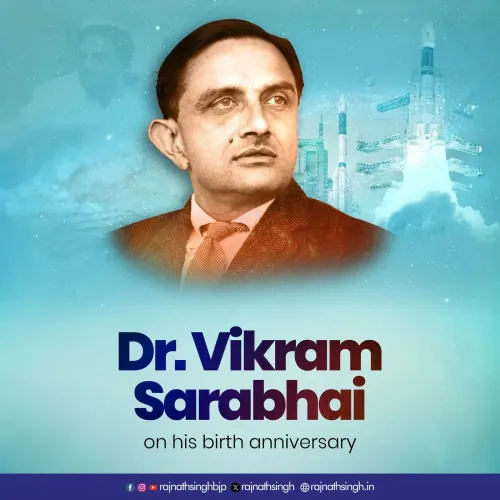
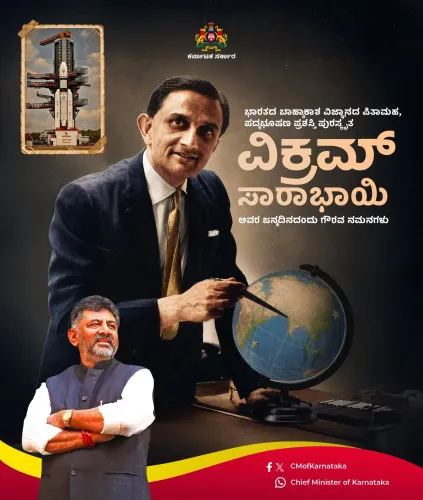
On Vikram Sarabhai's birth anniversary, Union Minister Dr. Jitendra Singh paid tribute to ISRO's first Chairman, honouring the physicist who built India's space programme from a modest coastal setup into a globally recognised agency.
Key Takeaways
Vikram Sarabhai is honoured as the first Chairman of ISRO and the founding father of India's space programme.
Sarabhai established the Indian National Committee for Space Research (INCOSPAR) in 1962 , the precursor to ISRO.
ISRO was formally constituted in 1969 , with Sarabhai serving as Chairman until his death in 1971 .
India's earliest rocket launches were conducted from Thumba, Kerala , using converted civilian buildings as facilities.
Jitendra Singh called Sarabhai's ambitious vision for India 'gloriously vindicated today.'
From a primitive coastal rocket-launching site in Kerala to the surface of the Moon — India's space journey began with one man's audacious conviction. On the birth anniversary of Dr Vikram Sarabhai, Union Science and Technology Minister Dr. Jitendra Singh paid tribute to the physicist widely regarded as the father of India's space programme, calling him 'one of the founding fathers of India's Space programme' whose ambitious dream 'stands gloriously vindicated today.'
The man who conjured a space agency from scratch
Vikram Sarabhai was not working with the resources of a superpower. In the early 1960s, he ran India's nascent space effort out of a modest scientific setup — a converted church and a fishermen's hut in Thumba, Kerala served as the first rocket launch facility. Yet in 1962, he persuaded the government to establish the Indian National Committee for Space Research (INCOSPAR), the institutional seed from which everything else would grow.
When ISRO was formally constituted in 1969, Sarabhai became its first Chairman, anchoring his vision in a clear argument: space technology was not a luxury for a developing nation — it was a necessity for delivering education, weather forecasting, and communications to a vast, underserved population. He held that post until his death in 1971, leaving behind a blueprint that successive generations of Indian scientists would execute with increasing ambition.
A dream measured in missions, not just milestones
The arc from those sounding rocket launches at Thumba to India's satellite deployment capability, lunar orbiters, and Mars mission is precisely the vindication Minister Singh invokes. India's space programme today includes a growing private-sector ecosystem operating under liberalised policy frameworks — a structural shift that Sarabhai's foundational philosophy of using space for national development directly anticipated.
Every major ISRO mission is, in a sense, a posthumous argument that Sarabhai won. The 'primitive scientific set up' the Minister references was never a limitation — it was a starting line.
On a birth anniversary that India's scientific community marks with quiet pride, the tribute is a reminder that the country's most consequential technological bets were placed not from a position of strength, but of belief.
Point of View
But they carry added weight in the current era of space-sector liberalisation, where the government has opened ISRO's ecosystem to private players — a move framed explicitly as fulfilling Sarabhai's utilitarian vision. Dr. Jitendra Singh's invocation of the 'primitive scientific set up' is a deliberate contrast with present-day ambitions such as the Gaganyaan crewed mission, reinforcing the ruling dispensation's narrative of technological self-reliance with a founding-era pedigree. The tribute also signals continuity: successive governments have found Sarabhai's non-partisan, development-first philosophy a safe and powerful anchor for space policy messaging.
NationPress
26 Sept 2026
Frequently Asked Questions
Who was Vikram Sarabhai and why is he important to India?
Dr. Vikram Sarabhai was an Indian physicist and astronomer who founded India's space programme. He established INCOSPAR in 1962 and became ISRO's first Chairman in 1969, arguing that space technology was essential for national development — not a luxury.
When is Vikram Sarabhai's birth anniversary?
Vikram Sarabhai was born on 12 August 1919 . His birth anniversary is observed annually on 12 August and is marked by tributes from India's scientific and political communities.
Who was the first Chairman of ISRO?
Dr. Vikram Sarabhai was the first Chairman of ISRO, serving from the agency's formal establishment in 1969 until his death in December 1971.
What did Jitendra Singh say about Vikram Sarabhai?
Union Minister Dr. Jitendra Singh called Sarabhai 'one of the founding fathers of India's Space programme' and said the ambitious dream Sarabhai saw 'sitting in his primitive scientific set up, stands gloriously vindicated today.'
Where did India launch its first rockets under Vikram Sarabhai?
India's earliest sounding rocket launches were conducted from Thumba, near Thiruvananthapuram in Kerala , where a converted church and fishermen's facilities served as the first launch infrastructure under Sarabhai's direction.