CM Rekha Gupta Pays Tribute to Vikram Sarabhai on Birth Anniversary
Synopsis
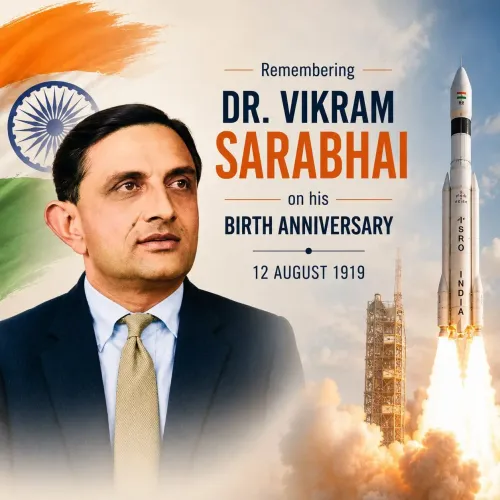
Delhi Chief Minister Rekha Gupta marked the birth anniversary of Dr. Vikram Sarabhai on 12 August, honouring the Padma Vibhushan physicist credited as the founder of India's space programme and the institutional architect of ISRO.
Key Takeaways
Delhi CM Rekha Gupta paid tribute to Dr.
Vikram Sarabhai on his birth anniversary, 12 August .
Sarabhai is widely recognised as the founder of India's space programme and was awarded the Padma Vibhushan .
He established the Indian National Committee for Space Research in 1962 , which evolved into ISRO in 1969 .
His founding philosophy — using space technology to address development challenges — continues to guide ISRO's mission priorities.
Tributes to Sarabhai on his birth anniversary come from leaders across party lines, reflecting a rare bipartisan consensus on scientific legacy.
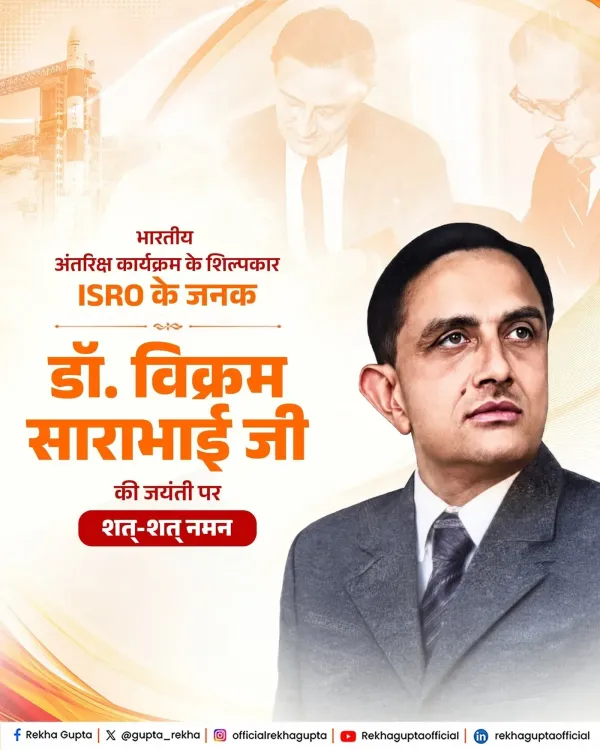
Before India had satellites, it had a dreamer with a fishing net for a launch pad. On the birth anniversary of Dr. Vikram Sarabhai, Delhi Chief Minister Rekha Gupta joined the nation in honouring the physicist who turned that dream into a space programme that now circles the Moon.
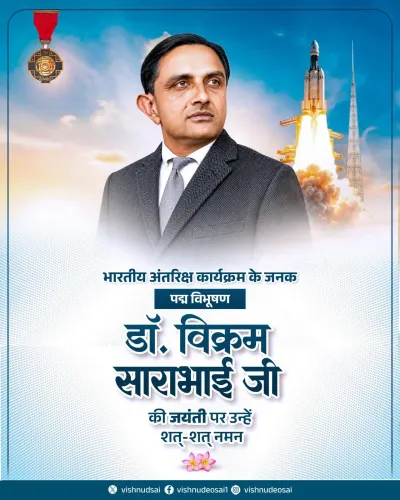
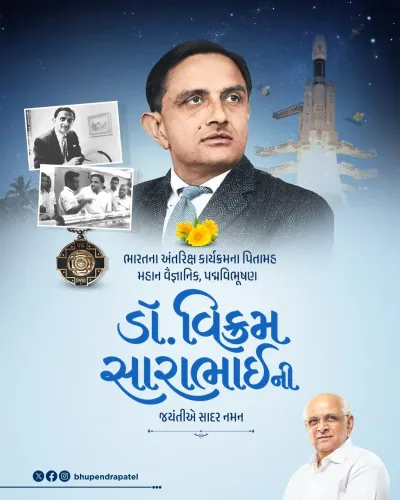
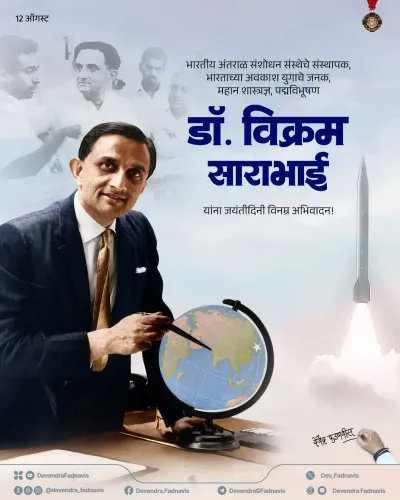
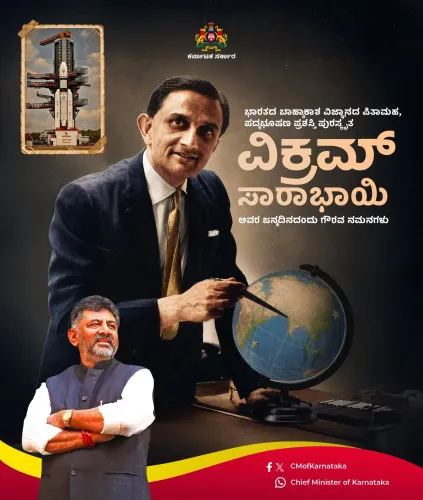
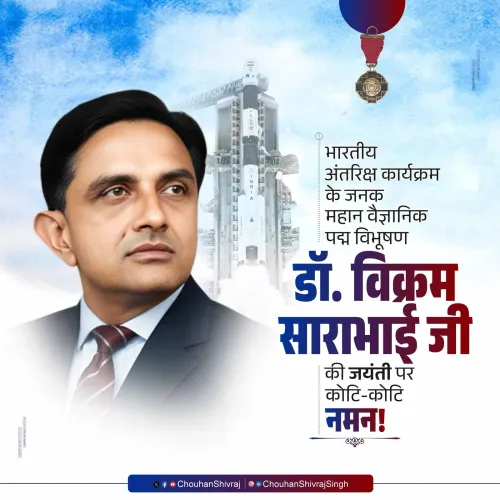
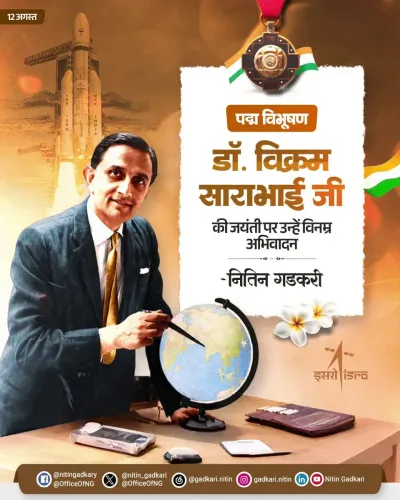
In her post on 12 August, CM Gupta offered her tribute in Hindi — 'शत-शत नमन' (a hundred salutations) — to the man she described as the 'father of India's space programme' and a 'great scientist', referencing his Padma Vibhushan honour.
The man who built India's launchpad from scratch
Dr. Vikram Sarabhai was a physicist who understood, decades before it became obvious, that space was not a luxury for rich nations — it was infrastructure for developing ones. He founded the Indian National Committee for Space Research in 1962, the direct institutional ancestor of the Indian Space Research Organisation (ISRO), which he helped establish in 1969. His vision: use satellites not for prestige, but to solve problems of agriculture, communication, and education across a vast, uneven country.
That founding logic still runs through every ISRO mission today — from remote-sensing satellites tracking crop yields to lunar orbiters mapping the south pole. The institution he seeded has become one of the most cost-efficient space agencies on Earth.
A pattern of political tribute, a reminder of scientific legacy
Sarabhai's 12 August birth anniversary draws tributes from leaders across party lines every year — a rare instance of bipartisan consensus in Indian public life. The consistency of this pattern reflects something real: foundational scientists occupy a category of national memory that transcends electoral cycles. CM Gupta's post fits squarely within that tradition, invoking Sarabhai's legacy at a moment when India's space ambitions are more visible than ever.
With the Department of Space periodically marking National Space Day observances, anniversaries like this one carry fresh resonance — a prompt to measure how far the programme has travelled from a coconut-grove launch site in Thumba, Kerala, to missions at the lunar south pole.
Sarabhai did not live to see the full arc of what he started — he died in 1971. But the organisation he built has long since outgrown every limit he could have imagined. That is the tribute no post can fully contain.
Point of View
But the ritual carries genuine weight: Sarabhai represents a founding-era scientific ambition that modern India's space achievements have vindicated. For a Delhi CM, invoking his legacy connects local political identity to a national technological narrative that enjoys broad public pride. The consistency of cross-party commemoration also signals how scientific nation-building has become a stable, uncontested frame in Indian politics — one that leaders reach for precisely because it is safe from partisan contestation. As ISRO's profile rises globally, these anniversaries function as quiet reminders of the institutional depth behind each headline mission.
NationPress
26 Sept 2026
Frequently Asked Questions
Who was Vikram Sarabhai and why is he famous?
Dr. Vikram Sarabhai was an Indian physicist who founded the Indian National Committee for Space Research in 1962 and is widely credited as the father of India's space programme. He was instrumental in establishing ISRO in 1969 and was awarded the Padma Vibhushan for his contributions.
When is Vikram Sarabhai's birth anniversary?
Vikram Sarabhai's birth anniversary falls on 12 August . The day is marked annually by tributes from scientists, institutions, and political leaders across India.
What did Vikram Sarabhai contribute to ISRO?
Sarabhai laid the institutional groundwork for ISRO by first establishing the Indian National Committee for Space Research in 1962. He championed the use of space technology for practical development goals — communication, agriculture, and education — a philosophy that still shapes ISRO's mission design.
Why did Delhi CM Rekha Gupta post about Vikram Sarabhai?
CM Rekha Gupta posted a tribute on 12 August to mark Vikram Sarabhai's birth anniversary, offering homage to the scientist she described as the father of India's space programme. Such tributes are a consistent practice among Indian political leaders on this date.
What is the Padma Vibhushan awarded to Vikram Sarabhai for?
Vikram Sarabhai received the Padma Vibhushan — India's second-highest civilian honour — in recognition of his exceptional contributions to science and his foundational role in building India's space research infrastructure.