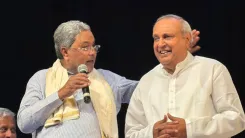
CM Pema Khandu Remembers Vikram Sarabhai on Birth Anniversary
Synopsis
Arunachal Pradesh CM Pema Khandu marked the birth anniversary of Dr. Vikram Sarabhai on August 12, 2026, honouring the ISRO founder whose early vision of space science took India from sounding rockets to the Moon and Mars.
Key Takeaways
Arunachal Pradesh Chief Minister Pema Khandu paid tribute to Dr.
Vikram Sarabhai on his birth anniversary, August 12, 2026 .
Vikram Sarabhai is regarded as the father of India's space programme and founded ISRO in 1969 .
India's space journey began with sounding rockets in the 1960s and has since extended to the Moon, Mars, and beyond.
Sarabhai championed space technology as essential infrastructure for a developing nation — for communications, weather, and resource mapping.
Political tributes to Sarabhai on his birth anniversary are a recurring feature of India's national scientific remembrance calendar.
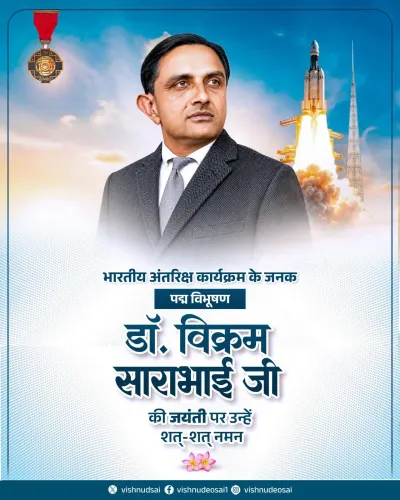
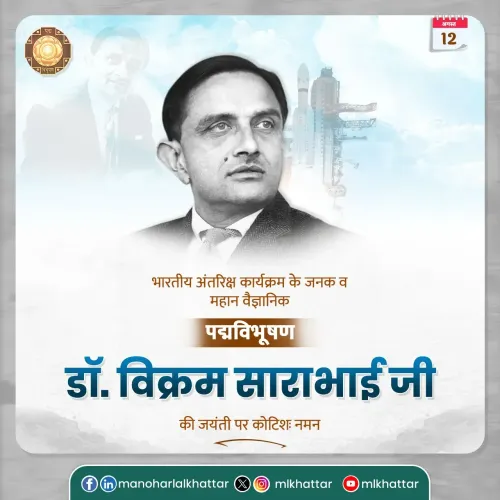
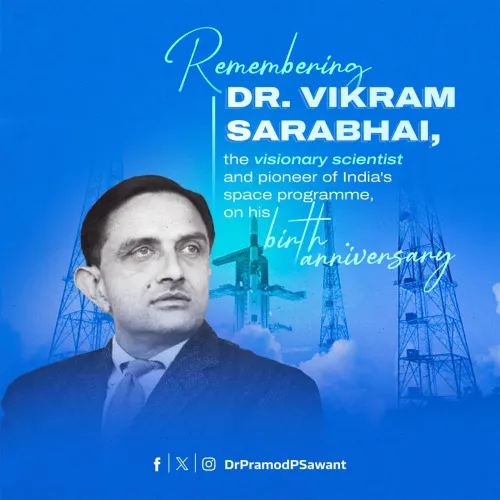
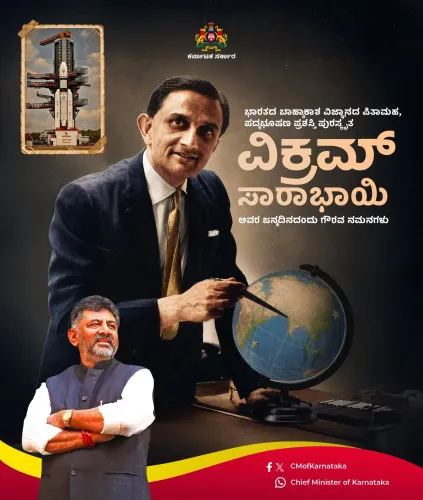
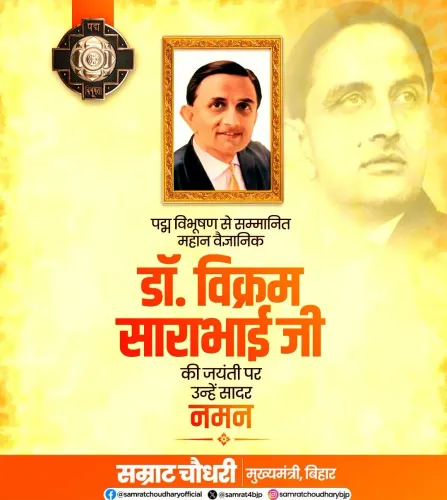
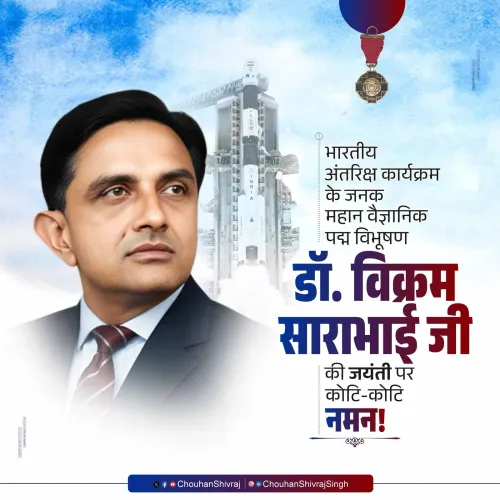
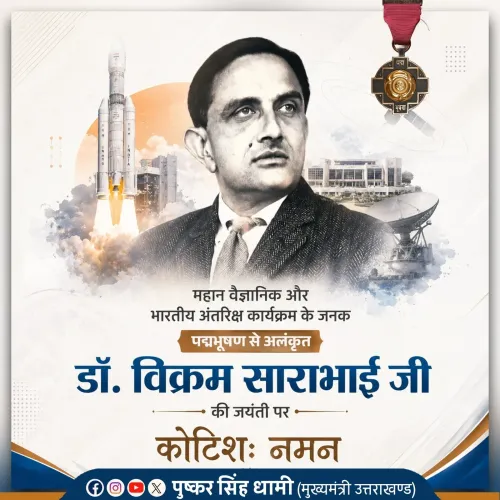
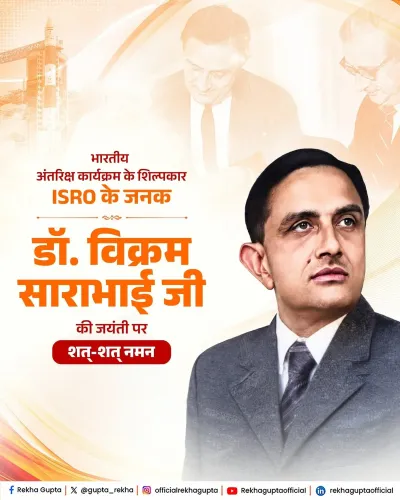
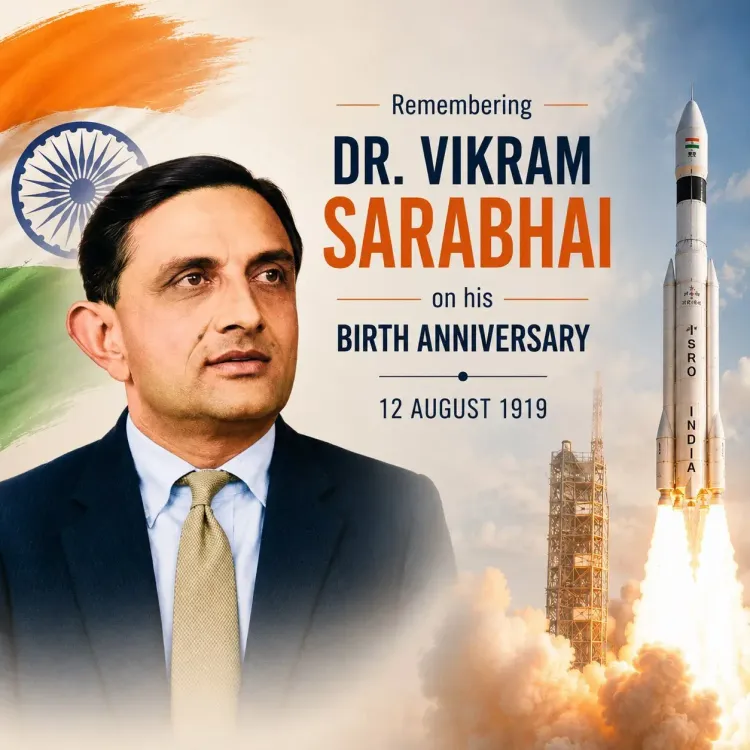
The man who launched India's space dreams from a church in Kerala — with no rocket facility, no budget to speak of, and a vision that confounded skeptics — turns 107 this year. Arunachal Pradesh Chief Minister Pema Khandu marked the birth anniversary of Dr. Vikram Sarabhai on Wednesday, August 12, 2026, paying tribute to the physicist widely regarded as the father of India's space programme.
Khandu wrote: 'At a time when our space programme was only beginning, he saw possibilities where others saw limitations. That vision became the foundation of a journey that has taken India from its early experiments in space science to the Moon, Mars and beyond.'
From Sounding Rockets to the Solar System
Sarabhai's story is one of the great leaps of faith in modern science. In the early 1960s, India was launching sounding rockets from Thumba near Thiruvananthapuram — a coastal village chosen for its proximity to the magnetic equator — using a converted church as the launch facility. Sarabhai argued, against considerable scepticism, that a developing nation had every reason to invest in space technology: for communications, for weather forecasting, for resource mapping across a vast and underserved subcontinent. He did not live to see the organisation he championed reach its full stature. Dr. Vikram Sarabhai passed away in 1971, just two years after founding the Indian Space Research Organisation (ISRO) in 1969. But the architecture he built — the institutional culture, the scientific ambition, the insistence on indigenous capability — endured.The Legacy That Reached the Moon and Mars
The journey Sarabhai set in motion has since carried India to the lunar surface and to Martian orbit. ISRO has grown into one of the world's most cost-efficient space agencies, conducting missions that drew global attention for their scale of ambition relative to their budgets. Political leaders across party lines mark his birth anniversary as a moment of national scientific pride — a tradition that reflects how thoroughly Sarabhai's legacy has been woven into India's self-image as an emerging space power. For a Chief Minister governing a state on India's northeastern frontier — a region where connectivity and satellite-based services carry particular strategic weight — the tribute carries its own quiet resonance. The possibilities Sarabhai once saw in the sky above Thumba are, today, infrastructure.Point of View
Reflecting a broader consensus that India's space programme is a rare domain of national pride untouched by partisan contest. For BJP leaders like Pema Khandu, invoking Sarabhai also reinforces the ruling party's ongoing narrative around scientific nationalism — a thread running from ISRO's recent missions to the government's push for a private space sector. The tribute signals that space achievement is being consciously positioned as a pillar of India's emerging global identity, not merely a technical milestone.
NationPress
26 Sept 2026
Frequently Asked Questions
Who is Vikram Sarabhai and why is he important?
Dr. Vikram Sarabhai was an Indian physicist and astronomer who founded ISRO in 1969 and is widely regarded as the father of India's space programme. He championed space technology as essential for national development at a time when such investment was considered beyond India's means.
When is Vikram Sarabhai's birth anniversary?
Dr. Vikram Sarabhai was born on August 12, 1919 . His birth anniversary is observed annually on August 12 .
What did Pema Khandu say about Vikram Sarabhai?
Arunachal Pradesh CM Pema Khandu said Sarabhai 'saw possibilities where others saw limitations' and that his vision became the foundation of India's journey from early space experiments to the Moon, Mars, and beyond.
When was ISRO founded and by whom?
ISRO — the Indian Space Research Organisation — was founded in 1969 , largely through the efforts and recommendations of Dr. Vikram Sarabhai , who served as its first chairman.
Where did India's first space launches take place?
India's earliest rocket launches were conducted from Thumba , near Thiruvananthapuram in Kerala, a site chosen for its proximity to the magnetic equator. The facility initially operated out of a converted church.