India-US ties entering positive phase after Trump-era strain: Ajay Bisaria
Synopsis
A seasoned Indian diplomat who served in both Islamabad and Ottawa says the India-US relationship is turning a corner — but the reset is fragile. The Rubio visit bought goodwill, yet Washington's transactional tilt toward Pakistan, especially after Operation Sindoor, remains a live irritant that New Delhi has not yet resolved.
Key Takeaways
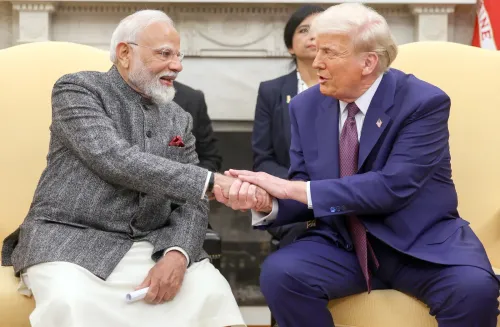
Former diplomat Ajay Bisaria says India-US ties are entering a 'very positive phase' after months of strain under President Trump's second term.
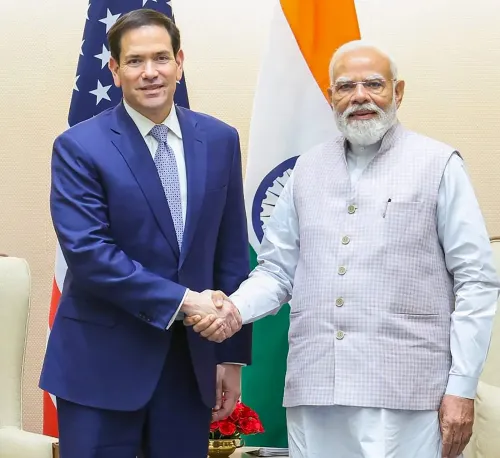
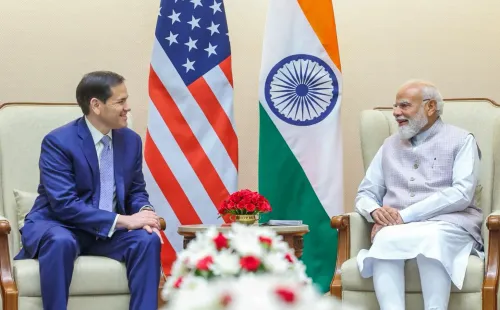
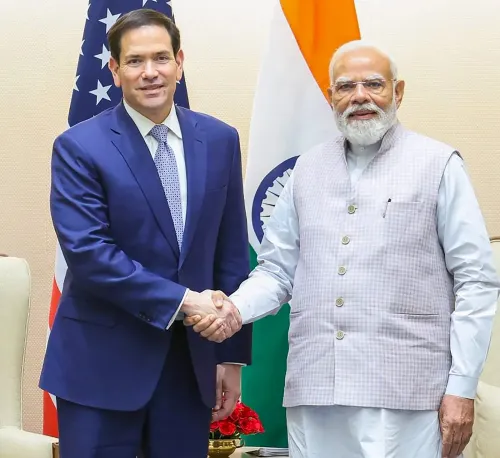
Secretary of State Marco Rubio's India visit was described as both a strategic reset and a damage control exercise.
Bisaria identified three irritants : Trump-era tariffs, US engagement with Pakistan, and Washington's transactional framing of the Islamabad relationship.
US-Pakistan outreach — driven by critical minerals , crypto , and counter-terrorism — has raised fresh concerns in New Delhi, particularly after Operation Sindoor .
Bisaria cited defence and technology cooperation and US Ambassador Sergio Gor as key positive drivers of the bilateral relationship.
India-Canada ties have seen a significant reset under Prime Minister Mark Carney , with security issues moved into a dedicated professional dialogue channel.
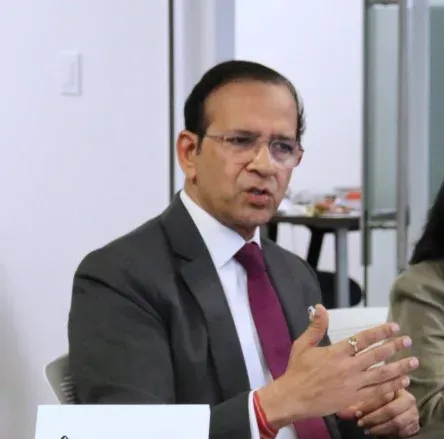
Former Indian High Commissioner to Pakistan and Canada Ajay Bisaria has said the India-US relationship is entering a 'very positive phase' following months of bilateral strain during President Donald Trump's second term, even as New Delhi retains concerns over Washington's handling of Pakistan and its rhetoric toward India. Bisaria made the remarks in an interview conducted in Washington on 24 May.
Rubio Visit: Reassurance and Damage Control
Bisaria described US Secretary of State Marco Rubio's visit to India as both a strategic reset and a reassurance exercise. He characterised the preceding period — from August to February — as a 'bad dream' defined by Trump-era tariffs that destabilised the bilateral relationship.
'But the Rubio visit is partially also a damage control visit,' Bisaria said. 'Because I think it was overdue in the sense of some signals of reassurance politically of reassurance from the US were required.'
He added that once those tariffs were rolled back, the relationship began to stabilise. 'The way I look at the 16 month Trump period is that we went through a bad dream from August till February of the Trump tariffs,' he said. 'Once those tariffs were rolled back, things began to get better.'
Three Irritants in the Trump 2.0 Era
Bisaria identified three major irritants that strained India-US ties during Trump's second term. The first was the tariff dispute. The second was Washington's evolving engagement with Pakistan, which he said intensified following Operation Sindoor.
'Particularly after Operation Sindoor, this is a matter of concern in India,' he said, arguing that New Delhi felt the US had become 'insensitive to India's concerns about the perpetrators of that terrorism.'
He noted that successive US presidents since Bill Clinton had largely de-hyphenated India and Pakistan in American foreign policy. However, the Trump White House's renewed engagement with Pakistan's military establishment has raised fresh anxieties in New Delhi.
According to Bisaria, the third irritant was the transactional framing of the US-Pakistan relationship, driven by crypto-linked business interests, critical minerals cooperation, and counter-terrorism coordination. 'The Pakistanis have been good at helping in the counter-terrorism in the sense they periodically deliver some high value terrorists to the Americans,' he said.
Positive Drivers: Defence, Technology, and Diplomacy
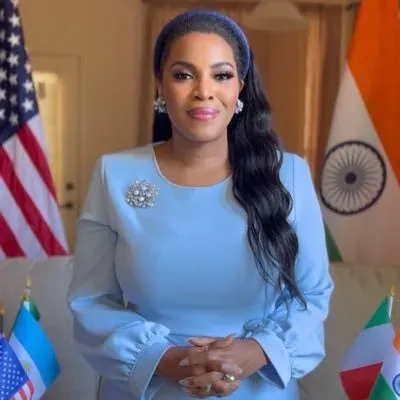
Despite the friction, Bisaria said the broader India-US partnership remained on an upward trajectory, underpinned by deepening cooperation in defence and technology. He also pointed to the role of US Ambassador to India Sergio Gor as a constructive force in the relationship.
'Overall the sense is that the relationship is still headed in a positive direction because defence technology and a very positive ambassador that the US has, Sergio Gor, all these are positive drivers of the relationship as well,' he said.
India-Canada Reset Under Carney
Bisaria also highlighted a significant improvement in India-Canada ties following the election of Prime Minister Mark Carney, contrasting the current warmth with the deep freeze that characterised ties under Justin Trudeau.
'That turnaround really started last year in Cannes when soon after being elected, Mark Carney invited PM Modi for the meeting,' he said. Both sides have since moved sensitive security issues into a professional security dialogue led by national security advisers, effectively depoliticising the channel and allowing trade and political discussions to advance separately.
'What both sides have done is depoliticised the security dialogue,' Bisaria said. 'And said, you guys manage it and the politicians will stay out of it.'
Bisaria, who served as India's High Commissioner to Pakistan from 2017 to 2020 and subsequently as High Commissioner to Canada, is also a published author. His remarks come as India recalibrates its ties with major global powers amid ongoing geopolitical pressures involving China, Iran, and the broader Indo-Pacific region. The Quad grouping — comprising India, the US, Japan, and Australia — continues to serve as a key pillar of regional strategic coordination.
Point of View
But the subtext is pointed: Washington's Pakistan pivot — however transactional — has reopened a hyphenation that Indian diplomacy spent two decades trying to close. The Rubio visit may have steadied optics, but it has not resolved the structural tension that Operation Sindoor exposed. The real test is whether the US can credibly reassure India on cross-border terrorism accountability while simultaneously cutting deals with Islamabad on minerals and crypto. That is a difficult balance, and New Delhi knows it. The India-Canada reset, by contrast, is a rare diplomatic win — one that Bisaria's own institutional knowledge helped shape — and it offers a model: depoliticise the friction, let professionals manage it, and let trade follow.
NationPress
7 Oct 2026
Frequently Asked Questions
What did Ajay Bisaria say about India-US relations?
Bisaria said the India-US relationship is entering a 'very positive phase' after months of strain caused by Trump-era tariffs and Washington's engagement with Pakistan. He credited the rollback of tariffs and Secretary of State Marco Rubio's India visit as key turning points.
Why did Bisaria call the Rubio visit a 'damage control' exercise?
Bisaria said the visit was overdue and served as a reassurance exercise after the political strain of Trump-era tariffs and US outreach to Pakistan. He argued that India needed clear political signals from Washington, and the Rubio visit partially provided them.
What are India's concerns about US-Pakistan ties?
India is concerned that Washington has become 'insensitive' to its concerns about cross-border terrorism, particularly after Operation Sindoor. Bisaria said the US-Pakistan relationship is being driven by transactional factors — critical minerals, crypto interests, and counter-terrorism cooperation — rather than a strategic realignment.
What is driving the improvement in India-Canada relations?
India-Canada ties improved significantly after Prime Minister Mark Carney was elected, with Carney inviting PM Modi to meet shortly after taking office. Both sides have since moved sensitive security issues into a professional dialogue led by national security advisers, depoliticising the relationship and allowing trade talks to advance.
Who is Ajay Bisaria?
Ajay Bisaria is a former Indian diplomat and author who served as India's High Commissioner to Pakistan from 2017 to 2020 and later as High Commissioner to Canada. He is considered one of India's foremost experts on South Asian diplomacy and India-Pakistan relations.