Rubio's Delhi visit signals mature India-US ties and Quad's operational shift
Synopsis
Rubio's Delhi trip was more than a courtesy call — former Foreign Secretary Nirupama Rao reads it as strategic reassurance delivered days after Trump's Beijing summit with Xi. The Quad, meanwhile, is quietly shedding its signalling-forum image for something more operational and geo-economic, a shift that suits India's allergy to hard alliances.
Key Takeaways
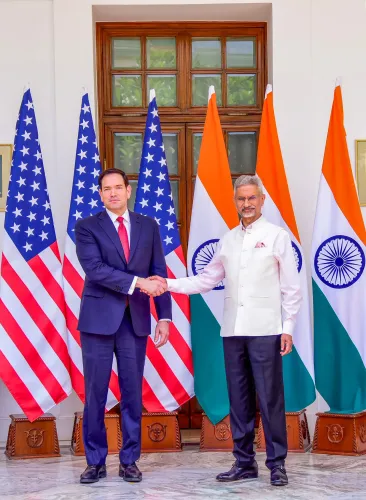
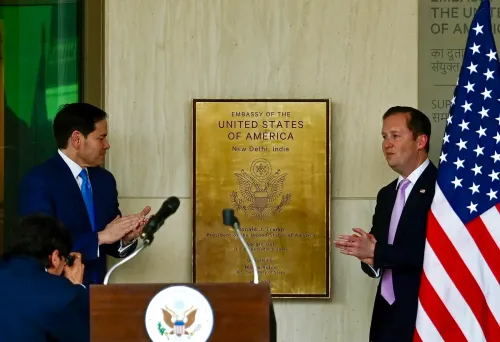
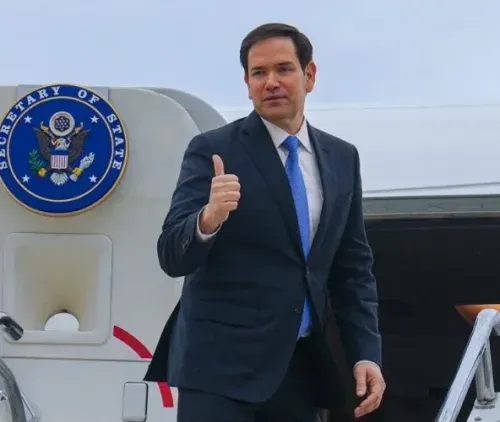
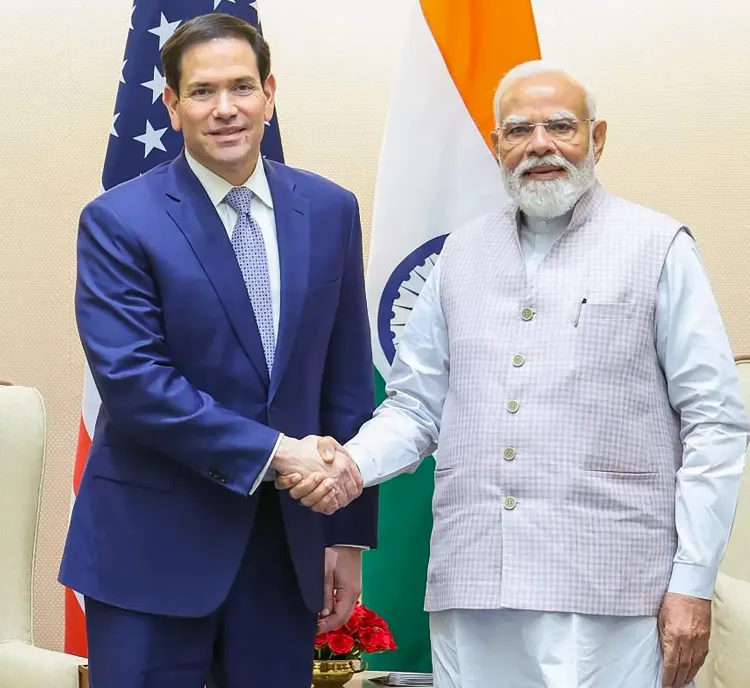
US Secretary of State Marco Rubio visited New Delhi from 23–26 May , days after President Trump's summit with Xi Jinping in Beijing .
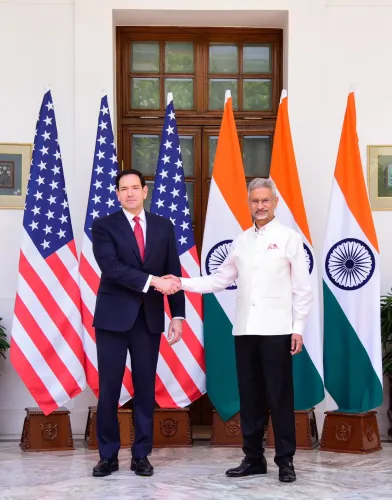
Former Foreign Secretary Nirupama Rao described the visit as 'an exercise in strategic reassurance amid growing geopolitical uncertainty.' PM Modi received an invitation to visit Washington ; Rubio and EAM Jaishankar reviewed trade, defence, semiconductors, AI, energy, and nuclear cooperation.
The Quad Foreign Ministers' Meeting on 26 May signalled the grouping's shift toward an operational, geo-economic framework built on four explicit pillars.
Rao argues the Quad's current focus on energy security, maritime awareness, and critical minerals aligns with India's preference for flexible coalitions over rigid alliances.
US Secretary of State Marco Rubio's visit to New Delhi from 23–26 May reflected a more mature phase in India-US relations, where strategic convergence coexists with frank discussions on trade frictions, divergent geopolitical priorities, and questions about American consistency, according to an analysis by former Indian Foreign Secretary Nirupama Rao in India Narrative. The visit also underscored the Quad's evolution from a diplomatic signalling forum into an operational framework built for an era of fractured globalisation.
A Visit Designed for Reassurance
Rao described Rubio's Delhi trip as a 'restrained affair' that nonetheless carried strategic weight. She characterised it as 'an exercise in strategic reassurance amid growing geopolitical uncertainty,' noting that timing was central to its significance.
'In diplomacy, timing matters. Rubio arrived in India just days after President Donald Trump's summit with Xi Jinping in Beijing, a meeting that produced language about a 'constructive relationship of strategic stability' between the US and China,' Rao wrote. She added that the continuing conflict involving Iran and resulting instability in the Gulf and around the Strait of Hormuz had simultaneously pushed energy security and maritime vulnerability to the forefront of global politics.
These developments, she argued, formed a multi-layered backdrop to both the bilateral visit and the Quad Foreign Ministers' Meeting held on 26 May.
What the Bilateral Leg Covered
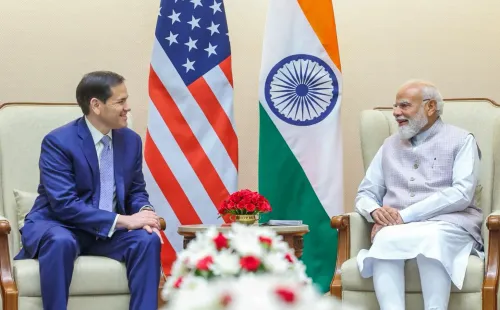
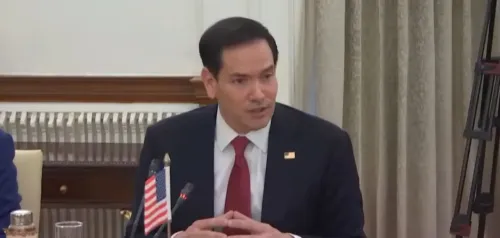
According to Rao, the bilateral component was explicitly aimed at reassurance. Rubio repeatedly described India as central to America's Indo-Pacific strategy and called the Quad 'a cornerstone of regional stability.' Prime Minister Narendra Modi received an invitation to visit Washington.
Rubio and External Affairs Minister S. Jaishankar reviewed what Rao called 'the now-familiar agenda' — covering trade, defence, critical technologies, semiconductors, artificial intelligence, energy, nuclear cooperation, and mobility. 'The atmospherics were good, although reassurance is not reset,' she noted, drawing a careful distinction between goodwill and a fundamental recalibration of ties.
Rao identified two core objectives behind the visit: reaffirming the India-US partnership, and signalling to the broader Indo-Pacific that Washington's engagement with Beijing would not come at the expense of regional relationships.
The Quad's Operational Turn
The official statement released after the Delhi meeting of the four foreign ministers pointed, in Rao's reading, to a grouping that is 'increasingly operational, geo-economic, and systemic in its approach.' She highlighted that the Quad's agenda now rests explicitly on four pillars: maritime and transnational security; economic prosperity and security; critical and emerging technologies; and humanitarian assistance and emergency response.
The key challenge ahead, she argued, lies in strengthening the Quad's sustainability while maintaining strategic coherence among its member nations.
India's Strategic Culture and the Quad Fit
Rao emphasised India's longstanding preference for flexible strategic coalitions over rigid military alliances. 'A Quad focused on energy security, maritime awareness, critical minerals, infrastructure and technological resilience aligns far more naturally with Indian strategic culture than an overtly militarised bloc would,' she wrote.
This framing positions the Quad's current trajectory — geo-economic rather than purely security-driven — as broadly compatible with New Delhi's strategic instincts, even as questions about the durability of US commitments remain open. How the grouping manages those tensions will define its relevance in the years ahead.
Point of View
Maritime awareness, and technology resilience — is precisely the kind of non-alliance coalition India has always been more comfortable inside. The real test will come when US-China engagement deepens and Washington must choose between managing Beijing and sustaining Indo-Pacific credibility. Rubio's visit bought goodwill; it did not answer that question.
NationPress
19 Sept 2026
Frequently Asked Questions
What was the purpose of Marco Rubio's visit to New Delhi in May 2025?
Rubio's visit from 23–26 May was aimed at reaffirming the India-US strategic partnership and reassuring New Delhi that Washington's engagement with China would not come at the cost of Indo-Pacific relationships. It also coincided with the Quad Foreign Ministers' Meeting on 26 May.
What did Rubio and Jaishankar discuss during the bilateral meeting?
The two ministers reviewed trade, defence, critical technologies, semiconductors, artificial intelligence, energy, nuclear cooperation, and mobility — described by former Foreign Secretary Nirupama Rao as 'the now-familiar agenda.' PM Modi also received an invitation to visit Washington.
How has the Quad evolved according to Nirupama Rao's analysis?
Rao argues the Quad has shifted from a primarily diplomatic signalling platform to an increasingly operational and geo-economic framework. Its agenda now rests on four pillars: maritime and transnational security, economic prosperity and security, critical and emerging technologies, and humanitarian assistance and emergency response.
Why does Rao say the Quad's current direction suits India?
India has historically preferred flexible strategic coalitions over rigid military alliances. Rao argues that a Quad focused on energy security, maritime awareness, critical minerals, and technological resilience aligns more naturally with Indian strategic culture than an overtly militarised bloc would.
What was the geopolitical backdrop to Rubio's Delhi visit?
Rubio arrived days after President Trump's summit with Xi Jinping in Beijing, which produced language about a 'constructive relationship of strategic stability' between the US and China. Simultaneously, the Iran conflict and instability around the Strait of Hormuz had elevated energy security and maritime vulnerability as global concerns.