Rubio signals India-US trade deal weeks away, flags Quad summit by year-end
Synopsis
Marco Rubio's congressional testimony placed India at the centre of nearly every Trump-era foreign policy lever — a trade deal 'weeks away', a Quad leaders' summit by year-end, maritime domain awareness, rare-earths diplomacy, and a striking claim that Washington personally pulled India and Pakistan back from 'all-out war'. New Delhi is unlikely to endorse that last framing.
Key Takeaways
Marco Rubio told the House Foreign Affairs Committee on 4 June that an India-US trade deal is 'a few weeks away'.
A Quad leaders' summit is planned before year-end, following a foreign ministers' meeting in India last week.
The four Quad nations have agreed to pool resources on maritime domain awareness , covering shipping lanes and undersea cables.
A rare-earths ministerial drew 30+ countries ; 'Pax Silica' brings 14 nations together on AI supply chains.
Rubio claimed personal involvement in de-escalating an India-Pakistan conflict 'between two nuclear powers'.
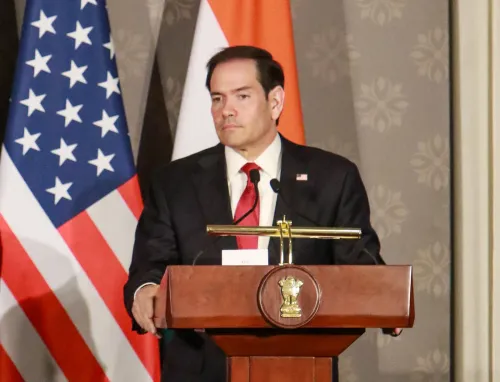
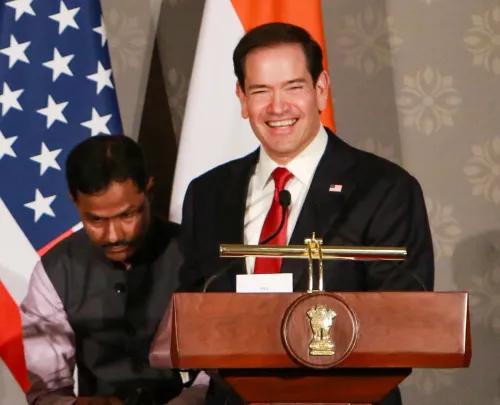
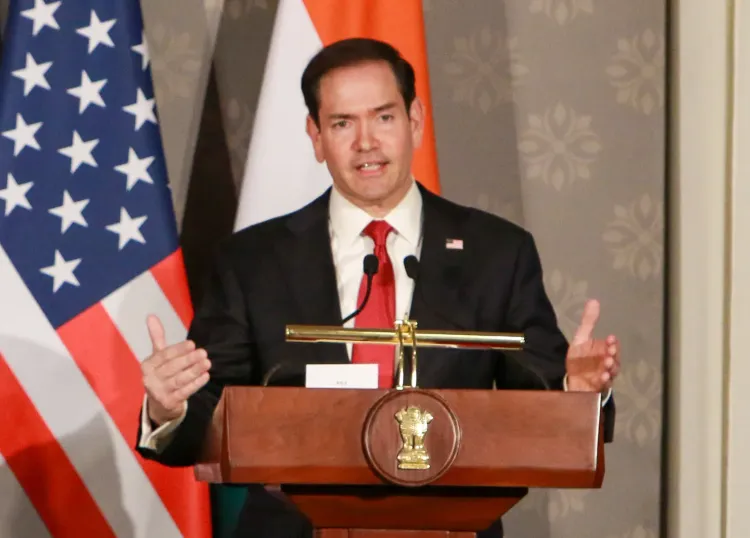
US Secretary of State Marco Rubio on 4 June told Congress that Washington and New Delhi are 'a few weeks away' from concluding a bilateral trade agreement, as India emerged as one of the most frequently invoked countries across his testimony on the Trump administration's Indo-Pacific strategy. Appearing before the House Foreign Affairs Committee to defend the State Department's Fiscal Year 2027 budget request, Rubio cited India across trade, the Quad, maritime security, critical minerals, and South Asian de-escalation.
Trade deal in the final stretch
Responding to Rep. Bill Huizenga on his recent India visit, Rubio said negotiators were closing in on a pact. “The hopes that we can wrap up the negotiations on our trade agreement, which we think were a few weeks away from being able to conclude,” he said, adding that “both sides want to see it done.”
The disclosure marks the most concrete public timeline yet from a senior US official on a deal that has been under discussion through multiple rounds this year.
Quad cooperation moves to operational phase
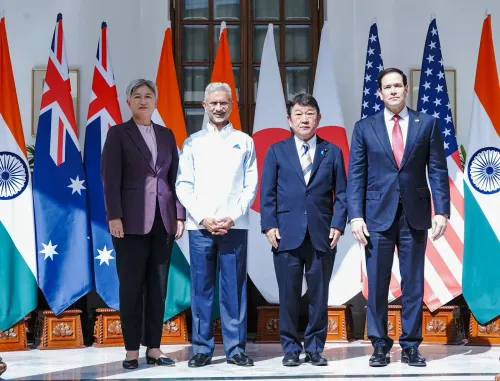
Rubio confirmed that Quad foreign ministers — from India, the United States, Japan, and Australia — met in India last week, with a follow-up scheduled later in the year. Pressed by Rep. Ami Bera, he said the administration hoped to host a Quad leaders' summit before year-end, possibly on the margins of another international gathering.
Beyond dialogue, Rubio said the four countries had agreed to pool resources on maritime domain awareness. “One of the things we've agreed to work on is domain awareness, working together and pooling our resources so that we can have domain awareness about what's happening out in the sea,” he said, citing shipping lanes, undersea cables, and sanctions evasion as monitoring priorities.
Rare earths and 'Pax Silica' push
India also figured in Rubio's account of efforts to reduce strategic dependence on China. He pointed to a recent rare-earths ministerial attended by over 30 countries, describing it as 'an American-led effort' to secure critical mineral supply chains for emerging economies.
He also flagged 'Pax Silica', a 14-country initiative aimed at protecting supply chains underpinning artificial intelligence — a domain where India is reportedly seeking a larger global footprint.
Claim on India-Pakistan de-escalation
In his opening statement, Rubio made his most striking India-related claim, asserting that Washington had helped avert a wider conflict between India and Pakistan. “India and Pakistan were on the verge of an all-out war. The State Department and I personally were involved in de-escalating that conflict and bringing it to an end, a war between two nuclear powers,” he said. Indian officials have publicly maintained that the cessation of hostilities was bilateral; Rubio's framing is likely to draw scrutiny in New Delhi.
Why it matters
The testimony underscores how India now cuts across nearly every pillar of US foreign policy — trade, technology, security, and supply-chain resilience. Over the past decade, the two sides have layered defence agreements, semiconductor initiatives, and the Quad framework onto a broader strategic convergence. With a trade deal reportedly near and a Quad leaders' summit penciled in, the next six months could lock in the most consequential phase of the partnership yet.
Point of View
Quad, minerals, AI. But the India-Pakistan de-escalation claim is the line New Delhi will quietly push back on; India's official position has been that the halt to hostilities was bilateral, not US-brokered. The pattern of US officials repeatedly volunteering personal credit risks creating diplomatic friction even as the broader partnership deepens. Watch whether the trade deal actually lands in 'weeks' — past timelines from both capitals have slipped.
NationPress
18 Oct 2026
Frequently Asked Questions
What did Marco Rubio say about the India-US trade deal?
Rubio told the House Foreign Affairs Committee on 4 June that the two sides are 'a few weeks away' from concluding a bilateral trade agreement. He added that 'both sides want to see it done', signalling the most concrete timeline yet from a senior US official.
When is the next Quad leaders' summit?
Rubio said the Trump administration hopes to host a Quad leaders' summit before the end of the year, possibly on the sidelines of another international gathering. Quad foreign ministers met in India last week, with a follow-up planned later this year.
What did Rubio claim about India and Pakistan?
Rubio claimed that India and Pakistan were 'on the verge of an all-out war' and that the State Department, and he personally, were involved in de-escalating the conflict. Indian officials have publicly maintained that the cessation of hostilities was bilateral, not US-mediated.
What is 'Pax Silica' and how does India fit in?
'Pax Silica' is a 14-country initiative cited by Rubio to protect supply chains critical to artificial intelligence. India is reportedly seeking a larger role in global AI supply chains, making it a natural participant in such frameworks.
Why is India featuring so prominently in US foreign policy testimony?
India now intersects nearly every pillar of US strategy in the Indo-Pacific — trade, the Quad, maritime security, critical minerals, and AI supply chains. Over the past decade, defence agreements, semiconductor partnerships, and Quad cooperation have steadily expanded the relationship.