Is India Key to the US Pax Silica and Critical Minerals Strategy?

Synopsis
As India prepares to join the US Pax Silica initiative, experts highlight the nation's potential to reshape global mineral supply chains. This pivotal collaboration promises to enhance both nations' economic security and technological advancements, making it a critical development in today's evolving geopolitical landscape.
Key Takeaways
India is set to join the Pax Silica initiative, enhancing US-India collaboration.
The partnership aims to diversify global mineral supply chains.
India's existing processing capabilities are crucial for mutual benefit.
The initiative addresses the growing demand for critical minerals driven by technology.
Strengthened supply chains contribute to regional and global economic security.
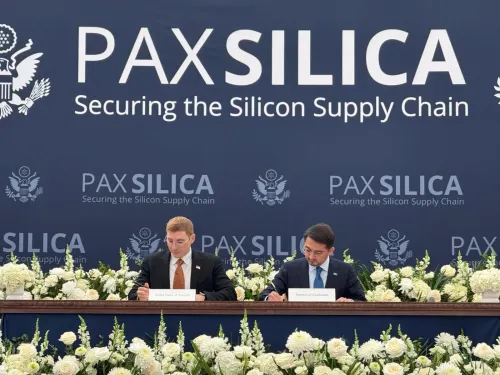
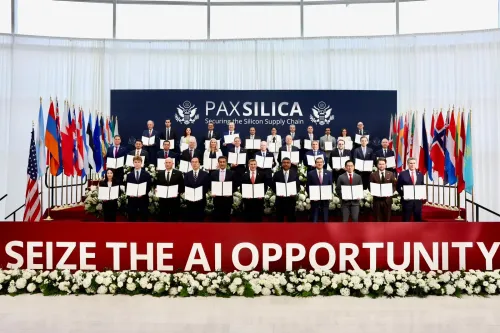
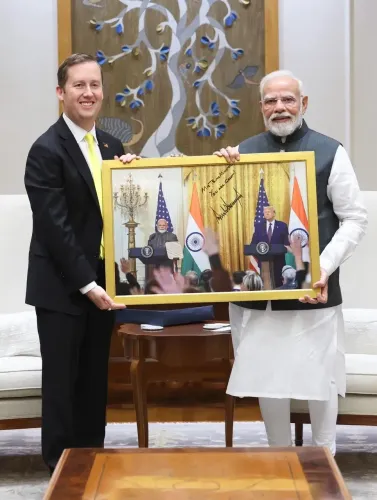
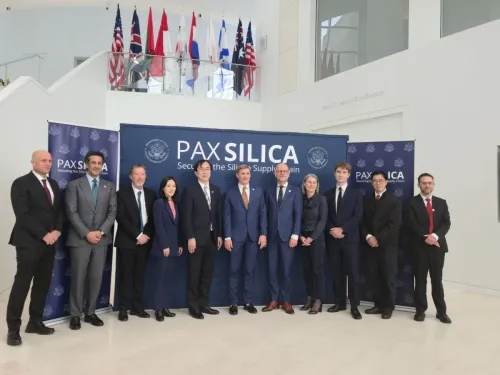
Washington, Feb 5 (NationPress) India is set to become a pivotal player in the United States’ Pax Silica initiative and its overarching strategy for critical minerals, according to a senior US official. This statement underscores Washington's ambition to enhance collaboration with Indo-Pacific allies to secure and diversify global mineral supply chains.
“India is expected to officially join Pax Silica later this month,” stated Under Secretary of State for Economic Affairs Jacob Helberg in an interview with IANS. This announcement coincides with Secretary of State Marco Rubio hosting a critical minerals ministerial attended by representatives from 50 nations, including India, which is being represented by External Affairs Minister (EAM) S. Jaishankar.
Helberg expressed enthusiasm about India's forthcoming participation in Pax Silica, emphasizing the initiative's strong appeal in India. He highlighted India's substantial technical expertise, noting that it is “likely the only country besides China that can match its breadth and depth of human capital.”
The US official remarked that India's involvement would foster greater collaboration between the two nations on projects that are “genuinely mutually beneficial and self-reinforcing.” This partnership could facilitate the acceleration of American reindustrialization while capitalizing on India's competitive advantages.
“The prosperity of everyday Americans is interconnected with the Indo-Pacific,” Helberg noted, emphasizing that by collaborating with allies in the region, the United States aims to secure dependable access to critical minerals through diversified and reliable supply chains, as well as transparent and fair markets.
He pointed out that Washington is engaging with Indo-Pacific nations to form supply chains “that are devoid of dependencies on unreliable single points of failure, market manipulation, price coercion, and abrupt disruptions.” This initiative is designed to avert industrial shutdowns and escalating costs that could jeopardize regional security and prosperity.
In response to inquiries about India's specific role in the critical minerals sector, Helberg noted that India already possesses considerable strengths. “I understand that India has substantial processing and refining capabilities,” he said, adding that this existing infrastructure could be utilized as part of a more profound collaboration between the two countries.
He contrasted India's current capabilities with what he described as a “warp speed effort” in the United States to enhance domestic processing and refining capacity, driven by coordinated initiatives across various US agencies, including commerce and trade-related departments.
Helberg indicated that the ministerial convenes nations that have entered into bilateral critical minerals memoranda of understanding with the United States, along with participants in Pax Silica and the Mineral Security Partnership.
He characterized the gathering as “the largest ministerial in the State Department’s history,” reflecting an increasing consensus that “economic security is indeed national security.”
Helberg argued that the current global supply chain model is “no longer adequate” and emphasized the need for measures to guarantee fair, transparent, and reliable access to mineral security.
He also highlighted the surging global demand spurred by what he termed the AI revolution, which has led to exceptional demand for minerals like cobalt, copper, and nickel, as well as products ranging from smartphones to data centers.
This rising demand presents opportunities for partner nations to achieve economic growth as supply chains become more geographically diverse.
In recent years, India and the United States have enhanced collaboration on critical and strategic minerals as part of a broader initiative to bolster supply chain resilience, support clean energy transitions, and mitigate vulnerabilities associated with concentrated global production.
Pax Silica focuses on downstream manufacturing and fabrication ecosystems, particularly in advanced technologies such as semiconductors, while the critical minerals ministerial centers on upstream mineral security and access across global supply chains.
Point of View
The collaboration between the US and India in the realm of critical minerals is not just strategic; it is essential for fortifying supply chains in a rapidly changing global economy. This partnership recognizes India's strengths while addressing the urgent need for diversified mineral sources, thus ensuring a more secure and resilient future for both nations.
NationPress
19 Sept 2026
Frequently Asked Questions
Why is India's role important in critical minerals?
India possesses significant processing and refining capabilities, vital for diversifying global mineral supply chains and enhancing economic collaboration with the US.
What are critical minerals?
Critical minerals are essential resources required for various technologies, including renewable energy systems and advanced electronics, such as cobalt, copper, and nickel.
How will this partnership impact the global economy?
The US-India partnership in critical minerals aims to secure reliable supply chains, mitigate risks associated with concentrated production, and boost economic growth for both countries.
What is the significance of the critical minerals ministerial?
The critical minerals ministerial is a gathering of countries that have signed agreements with the US to enhance cooperation on mineral security and address supply chain challenges.