Rubio warns US lead in AI over China 'not irreversible', cites supply chain risk
Synopsis
Marco Rubio's Senate testimony marks the sharpest Trump-era framing yet of AI as a national security frontline. His warning that America's AI lead is 'not irreversible', paired with the unveiling of a 'Pax Silica' coalition, signals a shift from defensive export controls to coalition-building across critical minerals, chips, and AI supply chains.
Key Takeaways
Marco Rubio testified before the Senate Foreign Relations Committee on 2 June that the US AI lead over China is 'not irreversible'.
He warned against dependence on any single country for 90% of critical inputs, citing minerals, pharmaceuticals, and advanced tech.
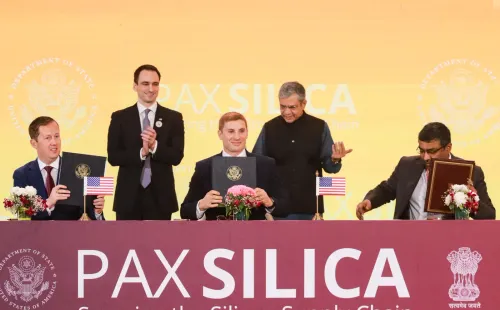
Rubio unveiled 'Pax Silica' , a State Department initiative to align allies across the AI supply chain.
He cautioned that AI would impact white-collar jobs and could destabilise societies politically.
Rubio said US-China strategic competition would persist 'not just for years, but perhaps for decades'.
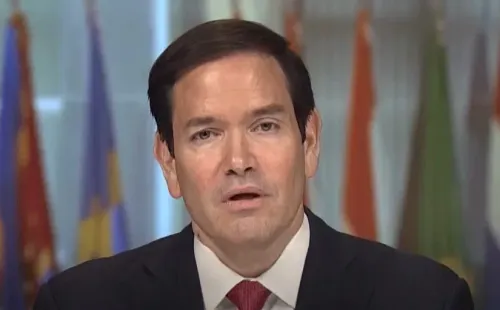
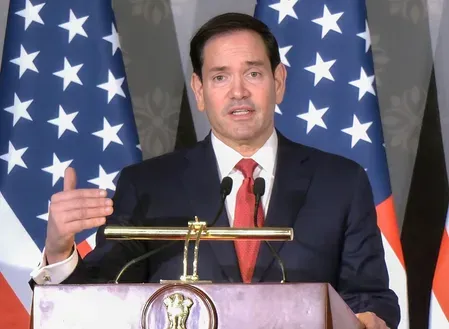
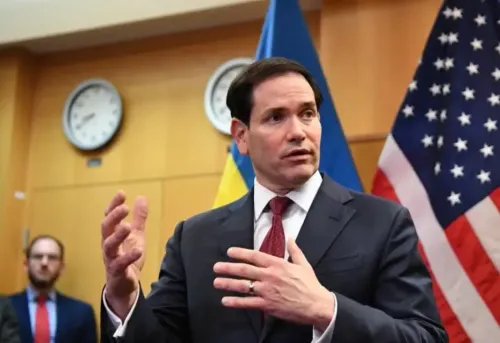
US Secretary of State Marco Rubio on Tuesday, 2 June, warned that the United States cannot afford to cede its technological edge to China, telling lawmakers in Washington that sustaining American leadership in artificial intelligence has become a critical national security priority. Testifying before the Senate Foreign Relations Committee, Rubio cautioned that while Washington currently leads globally on AI, the advantage is 'not irreversible'.
Key Remarks at the Senate Hearing
Rubio framed the US-China relationship as one of enduring strategic competition, even as diplomatic channels stay open. 'China and the United States are the two largest economies in the world, the two most powerful militaries in the world,' he said. 'The Chinese government and the U.S. government have to speak.'
He added that frictions would persist across multiple fronts. 'There are areas of our relationship in which we are going to have struggles not just for years, but perhaps for decades,' Rubio told the panel.
Supply Chain Dependence Flagged as Strategic Risk
The Secretary said reducing reliance on Chinese supply chains had become a central plank of US policy, singling out critical minerals, pharmaceuticals, and advanced technologies as vulnerable sectors. 'The United States, and I would argue the world, cannot depend on one country for 90 per cent of anything, especially 90 per cent of things that are critical to our economies,' he said.
'We just can't live in a world in which we rely on anybody for 90 per cent of what we get in one sole source that could be cut off at any time as leverage against us or punishment, or in a time of conflict,' Rubio added.
AI Race and the 'Pax Silica' Initiative
The exchange sharpened when Senator Pete Ricketts argued that Beijing is aggressively pursuing dominance in AI and advanced semiconductor manufacturing, warning that a Chinese lead would harm both Washington and its allies. Rubio agreed and pointed to a State Department initiative dubbed 'Pax Silica', designed to align countries across the AI supply chain — from critical minerals to advanced chips.
'I think it is safe to say the United States right now is a global leader on AI,' Rubio said. 'I think it is also wise to say that the lead is not irreversible.'
Warning on Labour Market Disruption
Rubio also flagged broader societal risks from AI adoption, cautioning that the technology could reshape labour markets and squeeze white-collar workers worldwide. 'There will be white-collar jobs in this country that will be impacted,' he said, adding that the fallout was 'a political issue that, over time, could destabilise societies all over the world'.
Why It Matters
The testimony came during a hearing on President Donald Trump's proposed State Department budget, where lawmakers from both parties pressed on China's expanding technological footprint. The Trump administration has increasingly cast the China challenge as a multi-decade contest spanning trade, technology, defence, and supply chains. Notably, the 'Pax Silica' framing suggests a coalition-building approach reminiscent of past US-led technology blocs, though specifics on partner countries and timelines remain undisclosed.
What happens next will hinge on whether Washington can convert rhetorical alignment with allies into hard commitments on chip fabrication, critical mineral processing, and AI governance — areas where China currently holds significant structural leverage.
Point of View
Including the Chip 4 alliance, have struggled to convert announcements into binding commitments. The real question is whether allies, many of whom depend on Chinese rare earths and assembly capacity, can absorb the transition costs Washington is implicitly asking them to bear. Without that, 'Pax Silica' risks becoming another slogan in a crowded field of decoupling rhetoric.
NationPress
17 Oct 2026
Frequently Asked Questions
What did Marco Rubio say about US AI leadership over China?
Rubio told the Senate Foreign Relations Committee on 2 June that while the United States is currently a global leader in artificial intelligence, the advantage is 'not irreversible'. He framed maintaining the lead as a critical national security priority.
What is the 'Pax Silica' initiative?
'Pax Silica' is a State Department initiative described by Rubio that seeks to bring together countries involved across the AI supply chain, including access to critical minerals and advanced technologies. Specific partner nations and timelines have not been publicly detailed.
Why is Rubio concerned about supply chain dependence on China?
Rubio argued that depending on a single country for 90 per cent of critical inputs — including minerals, pharmaceuticals, and advanced technologies — creates strategic vulnerabilities. He warned such concentration could be used as leverage or punishment, particularly during conflict.
How could AI affect jobs, according to Rubio?
Rubio said AI would impact white-collar jobs in the United States and reshape labour markets globally. He warned the disruption could become a political issue that destabilises societies worldwide over time.
How does the Trump administration view competition with China?
The Trump administration has framed China as a long-term strategic challenge spanning trade, technology, defence, and supply chains. Officials from both US political parties have pushed to reduce dependence on Chinese manufacturing in sectors deemed vital to national and economic security.