CM Karnataka pays tribute to Jayachamarajendra Wodeyar on birth anniversary
Synopsis
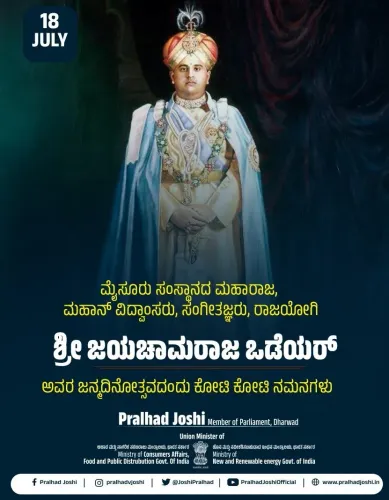
The Chief Minister's Office of Karnataka on 18 July 2026 paid tribute to Jayachamarajendra Wodeyar, the last Maharaja of Mysore, on his birth anniversary, calling him a visionary administrator who advanced education, arts, industry, and technology in the region.
Key Takeaways
The Chief Minister's Office of Karnataka issued an official tribute to Jayachamarajendra Wodeyar on his birth anniversary on 18 July 2026 .
Wodeyar (1919–1974) was the last ruling Maharaja of Mysore and signed the Instrument of Accession to India in 1947 .
He served as Rajpramukh of Mysore from 1947 until the States Reorganisation Act of 1956 created modern Karnataka.
The tribute credited him with advancing education, arts, industry, and technology in Mysore, calling him a rajayogi — philosopher-king.
Karnataka maintains a consistent practice of officially honouring the Wodeyar dynasty's developmental legacy on such anniversaries.
Heritage bodies and observers will watch for any related announcements around Rajyotsava 2026 in November.
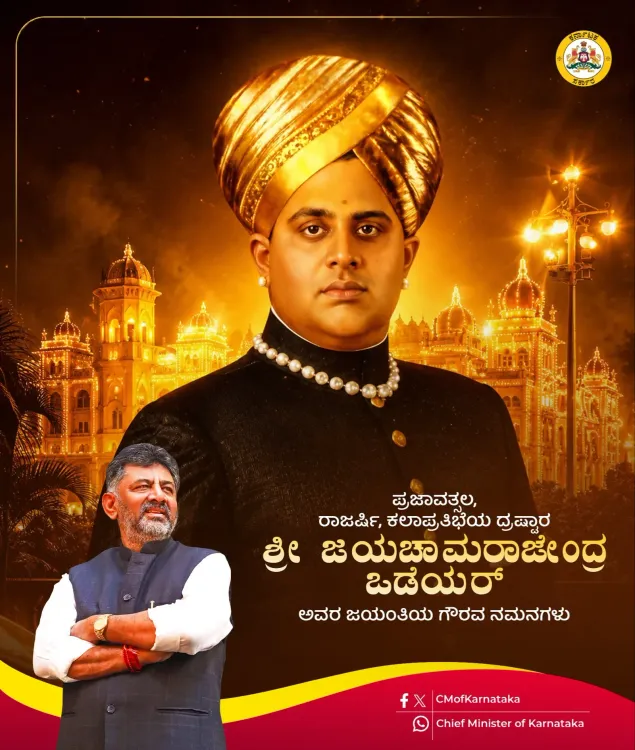
The Chief Minister's Office of Karnataka on Saturday, 18 July 2026, paid official tribute to Jayachamarajendra Wodeyar, the last ruling Maharaja of Mysore, on the occasion of his birth anniversary, honouring his contributions to the formation and development of modern Karnataka.
The post, shared in Kannada, described Wodeyar as a rajayogi — a philosopher-king — who 'not only adorned the throne but was a visionary administrator who brought Mysore to the forefront in education, arts, industry, and technology.' The tribute concluded with a respectful salutation to his memory.
Context
Jayachamarajendra Wodeyar (1919–1974) was the twenty-fifth and last ruling Maharaja of the Mysore princely state. He signed the Instrument of Accession to the Dominion of India in 1947, peacefully integrating one of the largest and most prosperous princely states into the Indian Union. Following accession, he served as Rajpramukh — the constitutional head — of Mysore until 1956, when the States Reorganisation Act reshaped the political map of southern India.Policy Backdrop
The States Reorganisation Act of 1956 merged the former Mysore territories with Kannada-speaking regions from neighbouring states to create the modern state of Karnataka. Wodeyar's decision to accede without conflict, and his continued role in the transitional administration, is widely credited with enabling a smooth democratic transition in the region. Under his reign and patronage, Mysore had emerged as a model princely state, investing in public education, classical music, cottage industries, and early industrialisation — a developmental record that Karnataka's successive governments have continued to reference in their heritage narratives.Stakeholders and Impact
The official tribute carries significance for Karnataka's citizens, heritage organisations, and the broader Kannada cultural community, for whom the Wodeyar dynasty represents a foundational chapter in the state's identity. State governments across India have maintained a practice of formally acknowledging former princely rulers who facilitated integration and supported public institutions. For Karnataka, the Wodeyar legacy is particularly central to the annual Rajyotsava celebrations and heritage conservation efforts linked to Mysuru — one of the country's most prominent cultural and tourism destinations. The official acknowledgement from the Chief Minister's Office reinforces the state's position that monarchical modernisation and post-independence democratic governance are part of a continuous developmental arc.What's Next
Observers and heritage bodies will watch for any follow-up announcements connected to this commemoration — particularly around conservation of Wodeyar-era institutions, educational endowments, or heritage-site funding that may surface in the state's upcoming budget or during Rajyotsava programmes in November 2026. Karnataka's consistent practice of marking this anniversary at the official level suggests that the Wodeyar legacy will remain a touchstone in the state's cultural and governance discourse for the foreseeable future.Point of View
Arts, industry, and technology, the Chief Minister's Office reinforces a continuity argument — that the state's current developmental ambitions are rooted in a princely tradition of enlightened administration. This framing is politically significant in Karnataka, where Mysuru's cultural identity carries considerable electoral and symbolic weight. The tribute also signals the government's intent to sustain heritage diplomacy as a soft instrument of state identity, particularly ahead of the Rajyotsava season.
NationPress
16 Oct 2026
Frequently Asked Questions
Who was Jayachamarajendra Wodeyar?
Jayachamarajendra Wodeyar (1919–1974) was the last ruling Maharaja of Mysore who signed the Instrument of Accession to the Indian Union in 1947 and subsequently served as Rajpramukh of Mysore until 1956.
Why is Jayachamarajendra Wodeyar's birth anniversary significant for Karnataka?
His birth anniversary is significant because he peacefully integrated the Mysore princely state into India and is credited with advancing education, arts, industry, and technology in the region that later became Karnataka.
What did Karnataka's Chief Minister's Office say about Jayachamarajendra Wodeyar?
The Chief Minister's Office described him as a 'rajayogi' — a philosopher-king — who was a visionary administrator that brought Mysore to the forefront in education, arts, industry, and technology, not merely a ruler who occupied the throne.
What is the States Reorganisation Act 1956 and how does it relate to Mysore?
The States Reorganisation Act of 1956 reorganised Indian states along linguistic lines, merging the former Mysore territories with other Kannada-speaking regions to create the modern state of Karnataka.
When did Mysore accede to India?
Mysore signed the Instrument of Accession to the Dominion of India in 1947 under Maharaja Jayachamarajendra Wodeyar, making it one of the princely states that joined the Indian Union at independence.