Pralhad Joshi pays tribute to Mummadi Krishnaraja Wadiyar on birth anniversary
Synopsis
Union Consumer Affairs Minister Pralhad Joshi on 14 July 2026 paid tribute to Mummadi Krishnaraja Wadiyar, the 19th-century Mysore ruler, honouring his contributions to Kannada literature, music, art, and people-friendly governance on the monarch's birth anniversary.
Key Takeaways
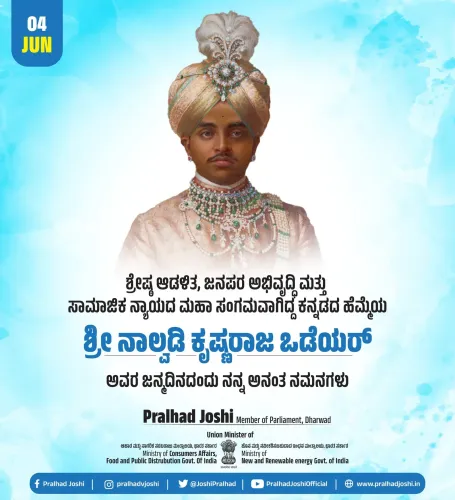
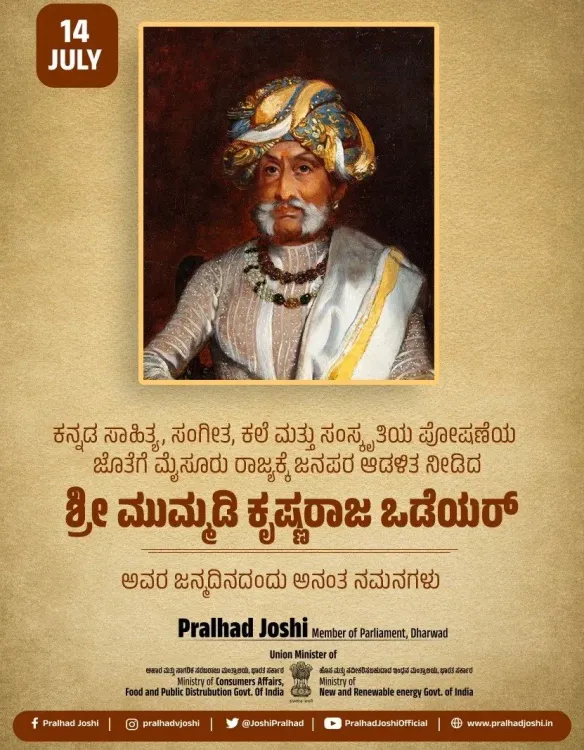
Union Consumer Affairs Minister Pralhad Joshi posted a tribute in Kannada on X on 14 July 2026 marking the birth anniversary of Mummadi Krishnaraja Wadiyar .
Mummadi Krishnaraja Wadiyar ruled the Kingdom of Mysore from 1799 to 1868 , patronising Kannada literature, classical music, and visual arts.
Joshi credited the ruler with providing 'people-friendly governance' and giving 'a new direction' to the development of Mysore city .
The tribute aligns with BJP 's broader cultural outreach strategy in Karnataka and southern India.
The post was accompanied by an image and the hashtag #MummadiKrishnarajaWadiyar .
Observers will watch for follow-through in heritage policy, Mysore Palace conservation funding, and upcoming Dasara references.
Union Consumer Affairs Minister Pralhad Joshi on Tuesday, 14 July 2026 paid tribute to Mummadi Krishnaraja Wadiyar, the 19th-century ruler of the Kingdom of Mysore, on the occasion of the monarch's birth anniversary, honouring his contributions to Kannada literature, music, art, culture, and public administration.
Context
Posting in Kannada on X, Minister Joshi offered what he described as 'ಗೌರವಪೂರ್ವಕ ನಮನಗಳು' ('respectful salutations') to the late ruler. He recalled that Mummadi Krishnaraja Wadiyar had provided 'people-friendly governance' (ಜನಪರ ಆಡಳಿತ) to the Mysore state and had given 'a new direction to the development works of Mysore city', calling him 'ever memorable.'
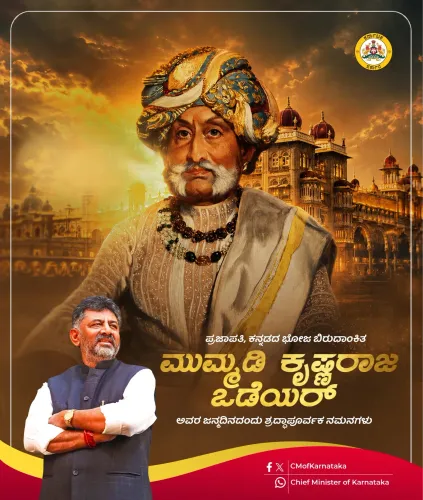
The post was accompanied by one image and carried the hashtag #MummadiKrishnarajaWadiyar, signalling an intent to amplify the commemoration on social media.
Policy Backdrop
Mummadi Krishnaraja Wadiyar ruled the Kingdom of Mysore from 1799 to 1868, a period during which the state became a significant centre of Kannada literary and classical music tradition. His reign is credited with nurturing visual arts and supporting administrative and infrastructural measures that shaped the character of Mysore city as it stands today.
Mysore, the historic capital of the Wadiyar-ruled princely state in present-day Karnataka, is widely regarded as one of India's best-preserved heritage cities, with many of its cultural institutions tracing their origins to this era of royal patronage.
Stakeholders and Impact
The tribute resonates with the Kannada-speaking cultural community and residents of Mysore, for whom Mummadi Krishnaraja Wadiyar remains a symbol of enlightened regional governance and cultural stewardship. BJP leaders from Karnataka have periodically issued such public tributes to pre-independence regional rulers as a way of engaging with local history and linguistic identity.
Analysts note that such statements form part of the party's broader outreach in southern states, where cultural patronage narratives carry significant political weight alongside national messaging.
What's Next
Observers will watch whether the tribute is followed by concrete policy references — such as Karnataka state budget allocations for heritage conservation, restoration projects linked to the Mysore Palace, or cultural institution funding — particularly as the annual Dasara celebrations in Mysore approach. The commemoration may also feature in upcoming state assembly sessions as part of wider discussions on preserving Karnataka's cultural legacy.
Point of View
Where pride in the Wadiyar dynasty remains deeply embedded. By posting in Kannada and invoking both governance and cultural patronage, the BJP leader connects the party to a pre-independence regional legacy that transcends routine political messaging. This pattern of honouring southern regional rulers has become a recurring tool in the BJP's effort to build affinity in states where the party faces competitive electoral terrain. The tribute's lasting significance will depend on whether it is accompanied by tangible policy action on heritage conservation or cultural institution funding.
NationPress
12 Oct 2026
Frequently Asked Questions
Who was Mummadi Krishnaraja Wadiyar?
Mummadi Krishnaraja Wadiyar was the ruler of the Kingdom of Mysore from 1799 to 1868, known for patronising Kannada literature, classical music, and visual arts, and for implementing administrative and infrastructural measures in Mysore.
Why did Pralhad Joshi pay tribute to Mummadi Krishnaraja Wadiyar?
Minister Pralhad Joshi paid tribute on the occasion of Mummadi Krishnaraja Wadiyar's birth anniversary, honouring his contributions to Kannada culture and people-friendly governance in the Mysore state.
What language did Pralhad Joshi use for the tribute post?
Minister Joshi posted the tribute in Kannada on X, the social media platform, reflecting his outreach to Karnataka's Kannada-speaking community.
What is Mummadi Krishnaraja Wadiyar's connection to Mysore city's development?
Mummadi Krishnaraja Wadiyar is credited with giving a new direction to development works in Mysore city during his reign in the 19th century, shaping it into a significant cultural and administrative centre.
Why do BJP leaders from Karnataka tribute pre-independence rulers?
BJP leaders from Karnataka periodically pay tribute to pre-independence regional rulers to engage with local history, Kannada linguistic identity, and cultural pride as part of the party's broader political outreach in southern India.