CM Samrat Choudhary vows to put Bihar's heritage on world map
Synopsis
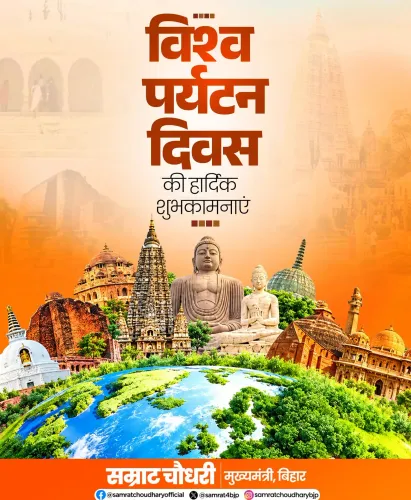
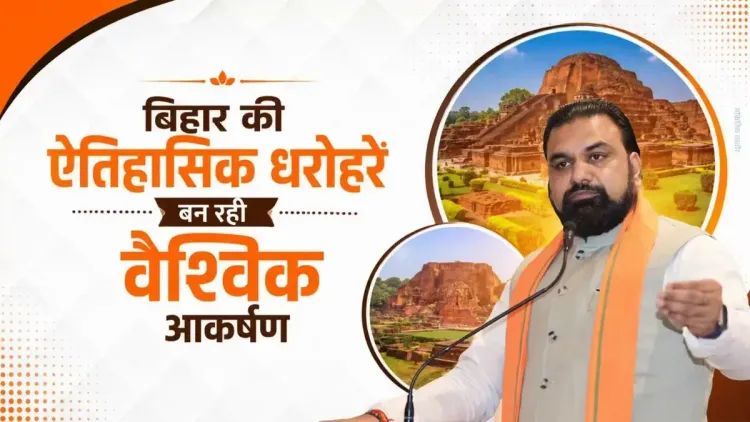
Bihar Chief Minister Samrat Choudhary on 14 July 2026 declared that promoting the legacies of Gautama Buddha, Mahavira, Nalanda, Vikramshila and Vaishali on the global stage is his government's resolve, framing heritage tourism as the path to a prosperous Bihar.
Key Takeaways
Bihar CM Samrat Choudhary posted on 14 July 2026 reaffirming his government's heritage tourism drive.
He named Gautama Buddha, Mahavira, Nalanda, Vikramshila and Vaishali as Bihar's key global cultural assets.
Nalanda is a UNESCO World Heritage Site and was a centre of Buddhist learning from the 5th century CE .
The central government's Swadesh Darshan Buddhist Circuit (launched 2014-15 ) already covers Bodh Gaya, Nalanda and Vaishali .
Bihar's heritage tourism push targets pilgrims and visitors from Southeast Asia and East Asia , amplifying India's regional soft power.
Infrastructure rollout at Vikramshila and Vaishali and potential international conclaves are the next milestones to watch.
Bihar Chief Minister Samrat Choudhary on Tuesday, 14 July 2026, reaffirmed his government's commitment to promoting the state's ancient cultural and spiritual legacy on the global stage, declaring that tourism will be the engine of a prosperous Bihar.
Posting in Hindi on X, the Chief Minister wrote: 'बिहार केवल एक राज्य नहीं, बल्कि विश्व को ज्ञान, लोकतंत्र और सभ्यता की अमूल्य विरासत देने वाली धरती है' — 'Bihar is not merely a state, but a land that has gifted the world an invaluable heritage of knowledge, democracy and civilisation.' He added that giving Bodh Gaya, Nalanda, Vikramshila and Vaishali a new identity on the world stage is the government's resolve, and that the campaign for a prosperous Bihar through tourism continues to move forward.
Context
Bihar occupies a singular place in world history. Gautama Buddha attained enlightenment at Bodh Gaya and delivered foundational teachings across the region, while Mahavira, the 24th Tirthankara of Jainism, was born near Vaishali — an ancient republican city-state that also witnessed the Buddha's last major sermon. The ancient university at Nalanda, a UNESCO World Heritage Site, was a global centre of Buddhist learning from the 5th century CE, drawing scholars from across Asia. Vikramshila, established in the 8th century CE by the Pala ruler Dharmapala, was renowned for tantric Buddhist studies before its destruction in the early 13th century.
Policy Backdrop
The Chief Minister's remarks align with a series of policy interventions at both the state and central level. The Swadesh Darshan scheme, launched in 2014-15, created a thematic Buddhist Circuit covering Bodh Gaya, Nalanda and Vaishali to develop tourism infrastructure at these sites. Separately, the Nalanda University Act (2010) revived the ancient seat of learning as an international postgraduate institution with partner countries from East Asia, lending modern institutional weight to the heritage narrative. Bihar's messaging fits a broader pattern among Indian states of linking heritage conservation with economic revival, particularly in historically rich but less industrialised regions.
Stakeholders and Impact
The primary beneficiaries of an expanded heritage tourism push are communities around Bodh Gaya, Nalanda, Vikramshila and Vaishali — sites that already attract Buddhist and Jain pilgrims from Southeast Asia, East Asia and beyond. A sustained campaign could generate employment in hospitality, transport and handicrafts, while also amplifying India's soft power toward nations with large Buddhist populations. The Bihar tourism sector stands to gain from improved infrastructure and international visibility if the government's resolve translates into funded projects.
What's Next
Observers will watch for the rollout of new tourism infrastructure at Vikramshila and Vaishali under state-central schemes, as well as any international Buddhist or Jain conclaves that Bihar may host. Chief Minister Choudhary's post signals that heritage tourism will remain a political and economic priority for the state government, with the campaign described as 'continuously moving forward.' How quickly on-ground investment follows the stated resolve will determine whether Bihar can convert its unmatched ancient legacy into a modern tourism economy.
Point of View
The messaging simultaneously appeals to Buddhist-majority nations in East and Southeast Asia and to Jain communities within India. The emphasis on tourism as the vehicle for prosperity is consistent with the BJP's broader strategy of using cultural heritage to drive economic narratives in states where industrial investment remains limited. Whether the rhetoric translates into measurable tourism revenue and infrastructure upgrades will be the real test of this stated resolve.
NationPress
12 Oct 2026
Frequently Asked Questions
What did Bihar CM Samrat Choudhary say about Bihar's heritage?
On 14 July 2026, CM Samrat Choudhary said Bihar is not merely a state but a land that gifted the world knowledge, democracy and civilisation, and that giving sites like Nalanda, Vikramshila and Vaishali a new global identity is his government's resolve.
Why is Nalanda important for Bihar tourism?
Nalanda is a UNESCO World Heritage Site and was one of the world's greatest centres of Buddhist learning from the 5th century CE, attracting scholars from across Asia. It is a key draw for Buddhist pilgrims and heritage tourists, especially from East and Southeast Asia.
What is the Swadesh Darshan Buddhist Circuit?
The Swadesh Darshan scheme, launched in 2014-15 by the central government, created a thematic Buddhist Circuit covering Bodh Gaya, Nalanda and Vaishali to develop tourism infrastructure at these historically significant Bihar sites.
Who was Mahavira and what is his connection to Bihar?
Mahavira was the 24th Tirthankara of Jainism, born near Vaishali in present-day Bihar. His association with the region makes Bihar a significant pilgrimage destination for Jains worldwide.
What is Vikramshila and why does Bihar want to promote it?
Vikramshila was an 8th-century Buddhist university in Bihar established by the Pala ruler Dharmapala, renowned for tantric studies. Bihar aims to develop it as a heritage tourism destination to complement Nalanda and attract international Buddhist visitors.