CM Samrat Choudhary Pitches Tourism as Bihar's Growth Engine
Synopsis
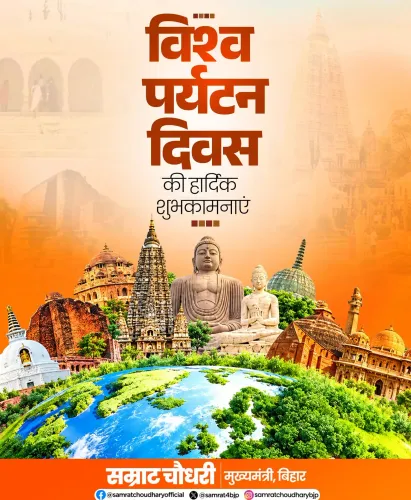
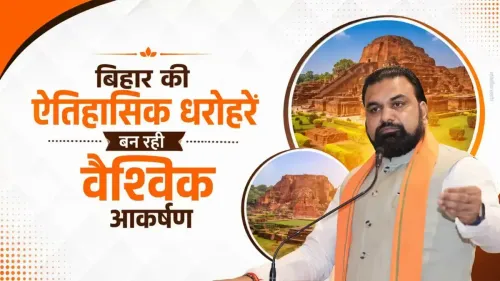
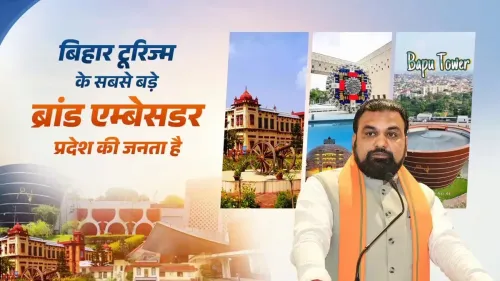
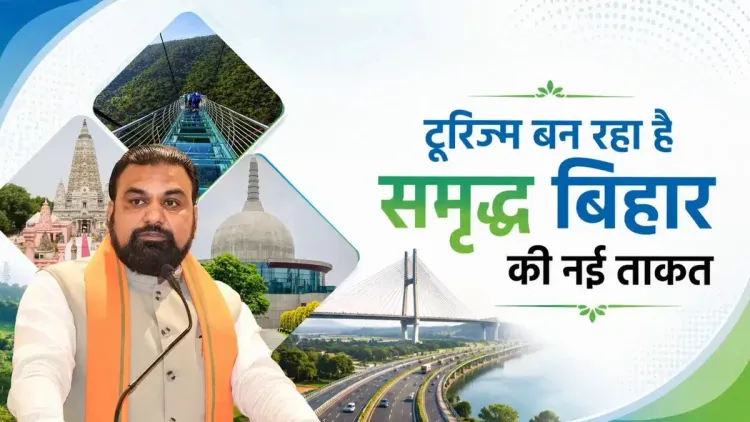
Bihar Chief Minister Samrat Choudhary has positioned tourism as the state's primary engine of prosperity, arguing that greater tourist footfall will drive investment, employment, and global recognition for Bihar's heritage sites including Bodh Gaya and Nalanda.
Key Takeaways
Bihar CM Samrat Choudhary publicly framed tourism as the 'greatest foundation of prosperity' for Bihar on 13 July 2026 .
He linked higher tourist arrivals directly to increased private investment and job creation within the state.
Bihar's key heritage sites — Bodh Gaya , Nalanda , and Rajgir — are the natural anchors for any tourism-led growth strategy.
The Central Government's Swadesh Darshan scheme , launched in 2014-15 , has already channelled infrastructure funding into Bihar's Buddhist tourism corridor.
Bihar's approach mirrors tourism-as-economy strategies successfully deployed in Rajasthan , Uttar Pradesh , and Madhya Pradesh .
Local youth and heritage-site businesses are the primary stakeholders who stand to gain from expanded tourist footfall.
Bihar Chief Minister Samrat Choudhary on Monday, 13 July 2026, declared tourism the single most powerful driver of prosperity for the state, calling for greater footfall to unlock investment, employment, and global recognition for Bihar's rich cultural heritage.
In a post on X, Choudhary wrote: 'Paryatan sirf ghoomne ka madhyam nahin, balki samridhi ka sabse bada aadhar hai' — 'Tourism is not merely a means of travel, but the greatest foundation of prosperity.' He added that every additional tourist arriving in Bihar would translate into more investment, more jobs, and wider global visibility for the state's heritage, calling this the direction of a 'new and prosperous Bihar.'
Context
Bihar is home to some of the subcontinent's most significant historical and spiritual sites — Bodh Gaya, where the Buddha attained enlightenment; Nalanda, site of the ancient university; and Rajgir, a pilgrimage destination for Buddhists, Jains, and Hindus alike. Despite this endowment, the state has historically lagged behind peers in converting heritage into sustained economic activity. Choudhary's statement signals a deliberate push to reframe tourism not as a cultural amenity but as a core economic strategy.
Policy Backdrop
The Central Government launched the Swadesh Darshan scheme in 2014-15 to develop thematic tourism circuits across India, with Bihar's Buddhist trail among the circuits earmarked for infrastructure development. Since the mid-2010s, joint Central-State funding has steadily upgraded connectivity, accommodation, and visitor facilities around Bihar's key religious and heritage corridors. Choudhary's messaging aligns with this longer policy arc, framing tourism investment as an extension of the BJP-led government's broader agenda of linking cultural identity with economic development.
Bihar's approach mirrors strategies already deployed in Rajasthan, Uttar Pradesh, and Madhya Pradesh, where state governments have successfully positioned historical assets as anchors for hospitality investment, local enterprise, and youth employment. For Bihar, which sends among the largest volumes of migrant labour to other states, tourism-led job creation carries particular political and economic weight.
Stakeholders and Impact
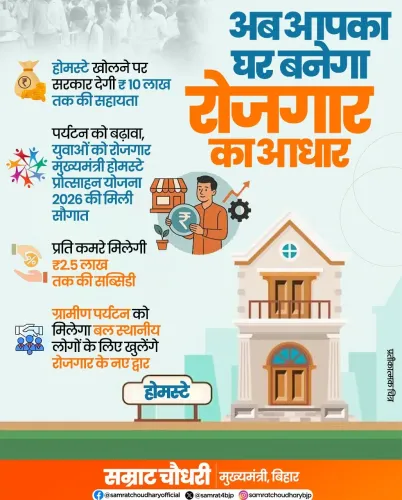
Local youth stand to benefit most directly if tourism expansion translates into hospitality, guiding, logistics, and handicraft jobs within the state — potentially reducing out-migration. Heritage site businesses — hotels, restaurants, transport operators, and artisan communities clustered around Bodh Gaya, Nalanda, and Rajgir — would see the most immediate uplift from increased domestic and international footfall. International Buddhist pilgrims from Japan, Sri Lanka, Thailand, and South Korea already form a significant share of Bihar's inbound visitors, a segment with high per-visitor spending potential.
Investors in hospitality and allied infrastructure are the other key constituency. Choudhary's explicit linkage of tourist volumes to investment signals that the state government is likely to use tourism metrics as a pitch to private capital in upcoming investor summits or budget announcements.
What's Next
Observers will watch for a formal state tourism policy revision or dedicated budget allocation that operationalises Choudhary's stated vision. Central scheme fund releases under Swadesh Darshan or successor programmes for Bihar's Buddhist and Hindu circuits remain a near-term trigger to watch. If the government follows through, concrete targets — tourist arrival numbers, investment commitments, and job creation benchmarks — will be the measure of whether the rhetoric translates into policy action.
Point of View
Much as it was in Uttar Pradesh around the Ayodhya and Kashi circuits. For a state that is a net exporter of migrant labour, framing tourism as a job-creation vehicle is politically astute: it promises local employment without requiring the heavy industrial investment Bihar has struggled to attract. The messaging also dovetails with the BJP's broader cultural-nationalism narrative, where heritage sites serve dual roles as spiritual landmarks and economic assets. The real test will come when the rhetoric is measured against budget allocations, investor commitments, and actual tourist arrival data.
NationPress
12 Oct 2026
Frequently Asked Questions
What did Bihar CM Samrat Choudhary say about tourism?
Bihar Chief Minister Samrat Choudhary stated that tourism is not merely a means of travel but the greatest foundation of prosperity, arguing that more tourists in Bihar will bring greater investment, employment opportunities, and global recognition for the state's heritage.
Which heritage sites make Bihar a tourism destination?
Bihar's most significant tourism sites include Bodh Gaya, where the Buddha attained enlightenment, the ancient Nalanda University ruins, and Rajgir, which holds religious importance for Buddhists, Jains, and Hindus.
What is the Swadesh Darshan scheme and how does it relate to Bihar?
Swadesh Darshan is a Central Government scheme launched in 2014-15 to develop thematic tourism circuits across India. Bihar's Buddhist trail is among the circuits that have received infrastructure funding under this programme.
How can tourism create jobs in Bihar?
Increased tourist footfall generates employment in hospitality, transport, guiding, food services, handicrafts, and allied sectors — areas where local youth can find work without migrating to other states.
Which other Indian states have used tourism as an economic engine?
Rajasthan, Uttar Pradesh, and Madhya Pradesh have all successfully positioned their historical and religious assets to attract private investment in hospitality and create local employment, a model Bihar is now seeking to replicate.