CM Samrat Choudhary Hails Modi Govt's Cultural Heritage Push
Synopsis
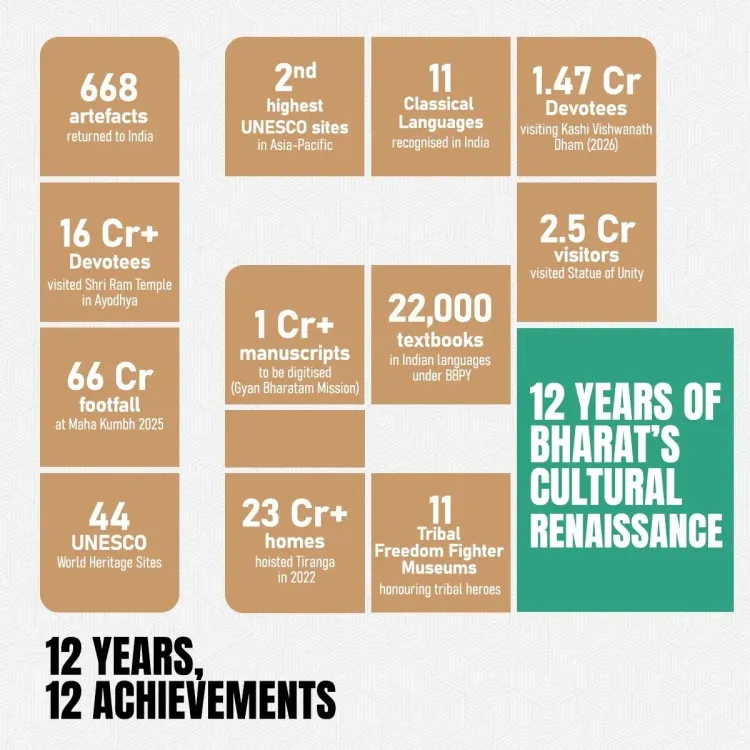
Bihar Chief Minister Samrat Choudhary on 18 June 2026 credited the Modi government with restoring India's sacred centres, preserving civilisational traditions, and earning global admiration — invoking flagship projects like the Kashi Vishwanath corridor and Ram Mandir as evidence of renewed national cultural pride.
Key Takeaways
Bihar Chief Minister Samrat Choudhary posted on 18 June 2026 praising the Modi government's cultural heritage agenda.
The post cited restoration of 'sacred centres' and 'civilisational traditions' as key achievements earning Bharat global admiration.
The PRASAD and Swadesh Darshan schemes, both launched in 2014–15 , form the policy backbone of the central government's heritage push.
The Kashi Vishwanath Dham corridor ( 2021 ) and Ram Mandir consecration ( January 2024 ) are the most visible flagship projects under this agenda.
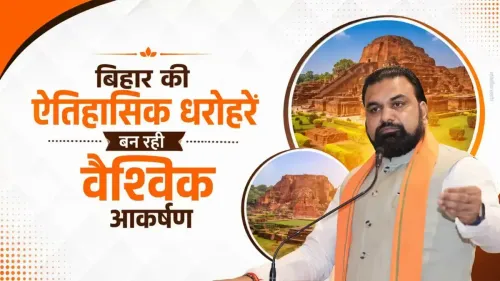
Bihar's own Buddhist heritage circuit — including Bodh Gaya , Nalanda , and Rajgir — stands to benefit from continued central and state investment in religious tourism.
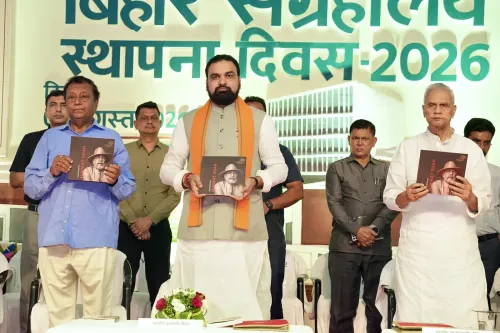
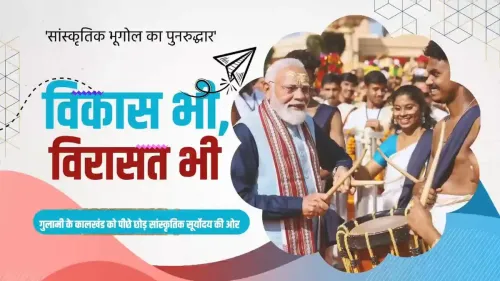
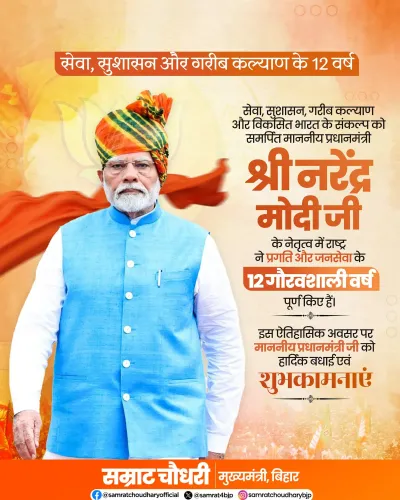
Bihar Chief Minister Samrat Choudhary on Thursday, 18 June 2026, praised the Narendra Modi-led central government for restoring India's sacred centres, preserving civilisational traditions, and earning global recognition for the country's cultural heritage. The post, shared on X, framed Bharat as a nation rooted in a glorious past and now commanding worldwide admiration.
Context
Choudhary's post declared that India today 'commands global admiration' and credited the Modi government with giving sacred centres 'renewed prominence, global recognition and the respect they deserve.' The statement reflects a broader political narrative within the BJP that frames the party's cultural initiatives as a civilisational correction — restoring prestige to sites and traditions that were, in the party's telling, neglected for decades.
The post comes amid an ongoing national conversation about heritage tourism and religious infrastructure, with several flagship projects completed or under way across multiple states. For a senior Bihar leader, invoking these themes also carries local resonance: the state is home to significant Buddhist and Hindu heritage circuits that have benefited from central tourism funding.
Policy Backdrop
The central government has pursued a systematic heritage agenda since 2014, anchored by two key schemes. The PRASAD (Pilgrimage Rejuvenation and Spiritual Augmentation Drive) scheme, launched in 2014–15, funds infrastructure upgradation at major pilgrimage centres across India. The Swadesh Darshan scheme, also introduced in 2014–15, develops theme-based tourist circuits that include heritage and spiritual destinations.
Two projects have become emblematic of this agenda. The Kashi Vishwanath Dham corridor in Varanasi was inaugurated in 2021, dramatically expanding access and facilities for pilgrims visiting one of Hinduism's holiest shrines. The Ram Mandir at Ayodhya was consecrated in January 2024 after years of construction, marking a politically and culturally significant milestone that the BJP has consistently highlighted as a defining achievement of the Modi era.
Together, these projects represent a multi-thousand-crore investment in religious and heritage infrastructure, with parallel initiatives in BJP-governed states amplifying the central government's efforts at the state level.
Stakeholders and Impact
The primary beneficiaries of this policy direction are pilgrims and the broader heritage tourism sector, which has seen a significant uptick in domestic footfall at restored and upgraded sites. State tourism departments — including Bihar's — have aligned their own budgets with central schemes to develop circuits covering Buddhist heritage sites such as Bodh Gaya, Nalanda, and Rajgir, which carry both domestic and international appeal.
For the BJP, these projects serve a dual purpose: delivering tangible infrastructure while reinforcing a cultural identity narrative ahead of electoral cycles. Choudhary's endorsement signals that state leadership views this agenda as politically resonant with Bihar's electorate, which spans diverse religious and caste communities with deep ties to pilgrimage traditions.
What's Next
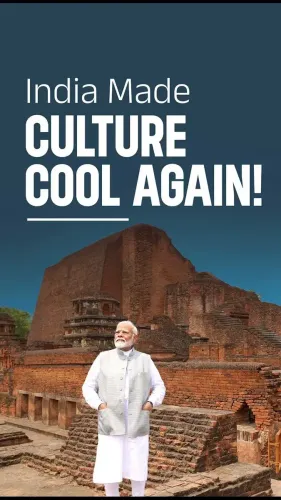
Attention will now turn to Bihar's state budget allocations for heritage and tourism in the coming fiscal cycle, where analysts will watch for specific project announcements that translate the central government's cultural agenda into state-level spending. The monsoon session of Parliament may also see discussion on the performance and expansion of the PRASAD and Swadesh Darshan schemes. As India continues to position itself as a global heritage destination, the intersection of cultural policy and diplomatic soft power is expected to remain a prominent theme in political communication from leaders across the ruling alliance.
Point of View
Particularly in the period between electoral cycles when identity-based messaging consolidates base sentiment. By framing heritage restoration as both a civilisational achievement and a source of 'global recognition,' the statement connects domestic religious infrastructure spending to India's soft-power aspirations — a linkage the Modi government has cultivated deliberately since 2014. For Bihar, a state with its own rich but underfunded heritage circuit, this alignment with the central agenda also carries practical political logic: it positions the state leadership as active participants in a nationally resonant project rather than passive recipients of central funds. The broader pattern suggests that cultural heritage will remain a durable political asset for the BJP well beyond any single electoral moment.
NationPress
18 Sept 2026
Frequently Asked Questions
What did Bihar CM Samrat Choudhary say about PM Modi's government?
On 18 June 2026, Choudhary posted on X that PM Modi's government has restored India's sacred centres, preserved cultural heritage and civilisational traditions, and given them global recognition — strengthening the pride of every Indian.
What is the PRASAD scheme in India?
PRASAD stands for Pilgrimage Rejuvenation and Spiritual Augmentation Drive. Launched in 2014–15, it funds infrastructure development and upgradation at major pilgrimage centres across India to improve facilities for pilgrims and boost religious tourism.
What is the Kashi Vishwanath Dham corridor?
The Kashi Vishwanath Dham corridor is a large-scale heritage and infrastructure project in Varanasi that was inaugurated in 2021. It expanded access routes and facilities around the Kashi Vishwanath temple, one of Hinduism's most sacred shrines.
When was the Ram Mandir in Ayodhya consecrated?
The Ram Mandir at Ayodhya was consecrated in January 2024 following the completion of its construction, marking a significant milestone in the BJP-led central government's cultural heritage agenda.
What heritage sites in Bihar benefit from central tourism schemes?
Bihar's Buddhist heritage circuit — including Bodh Gaya, Nalanda, and Rajgir — has been a focus of central schemes like Swadesh Darshan and PRASAD, which fund theme-based tourist circuits and pilgrimage infrastructure across the country.