CM Samrat Choudhary Hails 12 Years of Modi's Vikas-Virasat Vision
Synopsis
Bihar Chief Minister Samrat Choudhary on 18 June 2026 celebrated 12 years of PM Modi's leadership, hailing a twin legacy of modern infrastructure and cultural renaissance under the 'Vikas Bhi Virasat Bhi' banner.
Key Takeaways
Bihar CM Samrat Choudhary posted on 18 June 2026 marking 12 years of PM Narendra Modi 's governance.
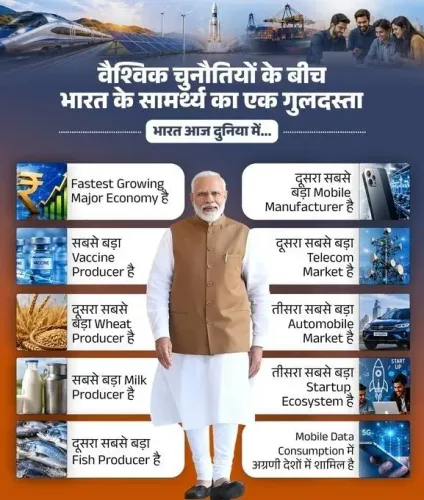
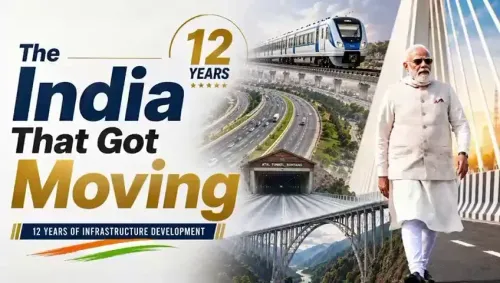
He highlighted two parallel achievements: modern infrastructure and digital growth alongside revival of temples, pilgrimage sites, and traditions.
The post used the hashtag #12YearsOfVikasBhiVirasatBhi , indicating a coordinated BJP digital campaign.
The 'Vikas aur Virasat' narrative has been a central BJP communication theme since 2014 , replicated across party-governed states including Bihar .
Bihar 's heritage sites — including Bodh Gaya , Nalanda , and Rajgir — make it a key state in the government's pilgrimage-tourism and cultural-revival agenda.
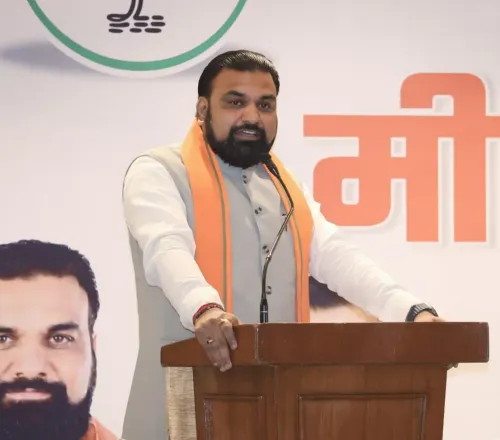
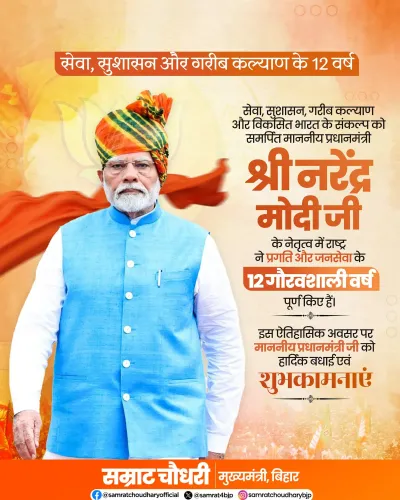
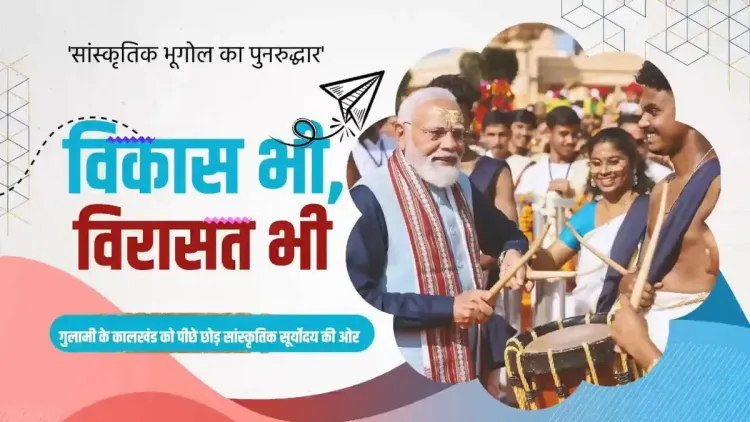
Bihar Chief Minister Samrat Choudhary on Thursday, 18 June 2026, took to X to mark 12 years of Prime Minister Narendra Modi's governance, celebrating what he described as an unprecedented convergence of modern development and civilisational heritage under the #12YearsOfVikasBhiVirasatBhi campaign.
Context
Posting in Hindi, CM Choudhary wrote: 'विरासत का गौरव, विकास का स्वर्णिम दौर' ('The pride of heritage, the golden era of development'). He framed the 12-year period as a confluence of ancient India's soul and modern India's progress, stating that India had not merely scaled new heights but had also established its civilisation, culture, and values on the world stage 'with a new self-confidence.'
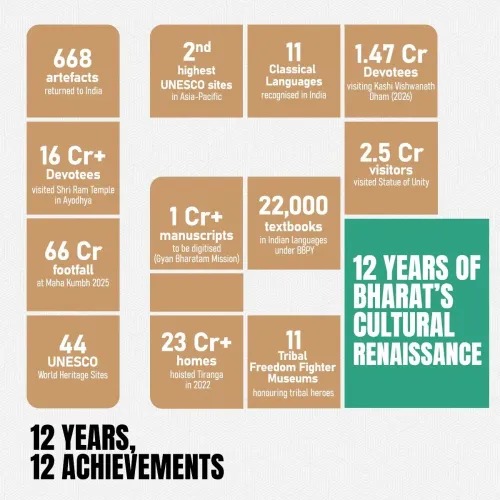
The post identifies two parallel tracks: expansion of modern infrastructure, the digital revolution, and self-reliance on one side; and an 'unprecedented renaissance' of temples, pilgrimage sites, traditions, and cultural consciousness on the other. Choudhary concluded: 'यह नए भारत की पहचान है, विकास भी है, विरासत भी' — 'This is the identity of new India: development as well as heritage.'
Policy Backdrop
Prime Minister Modi came to power in May 2014, and his administration has since pursued a dual-track agenda that pairs large-scale physical and digital infrastructure with the restoration and elevation of religious and cultural landmarks. Flagship projects such as the Kashi Vishwanath Corridor in Varanasi and the PRASAD (Pilgrimage Rejuvenation and Spiritual, Heritage Augmentation Drive) scheme are frequently cited as emblematic of this approach.
The 'Vikas aur Virasat' ('Development and Heritage') framing has become a recurring motif in BJP communication, replicated across party-governed states. Bihar, home to sites such as Bodh Gaya, Nalanda, and Rajgir, sits at the intersection of this narrative, with heritage-linked tourism circuits and infrastructure upgrades forming a visible part of state policy discourse.
Stakeholders and Impact
The message is directed at a broad constituency: urban voters invested in digital-economy growth, rural communities connected to religious traditions, and pilgrims who use state-upgraded tirthas. For Bihar specifically, the convergence of heritage tourism and infrastructure spending carries direct economic implications, given the state's dense concentration of Buddhist, Hindu, and Jain pilgrimage destinations.
The post also signals ideological solidarity between the state and central leadership, reinforcing CM Choudhary's positioning as a vocal advocate of the Modi government's agenda within the National Democratic Alliance.
What's Next
The #12YearsOfVikasBhiVirasatBhi hashtag suggests a coordinated party-wide digital campaign, with BJP leaders across states expected to amplify the 12-year milestone through similar messaging. Analysts will watch whether this communication push translates into fresh policy announcements — particularly heritage-tourism circuits and digital public infrastructure allocations — in upcoming state and central budget cycles.
For Bihar, the spotlight on cultural renaissance and development together could foreshadow new state-level schemes tying pilgrimage infrastructure to employment and local economic growth ahead of the next electoral cycle.
Point of View
The messaging simultaneously courts development-focused swing voters and the culturally conservative base. For Bihar — a state with deep religious geography and persistent development aspirations — this framing is especially resonant. The coordinated hashtag signals that this is not an isolated tribute but a party-wide effort to consolidate the Modi decade-plus as a defining epoch ahead of future electoral contests.
NationPress
19 Sept 2026
Frequently Asked Questions
Why is Bihar CM Samrat Choudhary praising PM Modi's 12 years?
CM Choudhary posted on 18 June 2026 to mark 12 years of PM Modi's governance, celebrating achievements in infrastructure, digital growth, and cultural heritage revival as part of the BJP's #12YearsOfVikasBhiVirasatBhi campaign.
What does 'Vikas Bhi Virasat Bhi' mean?
'Vikas Bhi Virasat Bhi' translates to 'Development as well as Heritage.' It is a BJP slogan describing the dual focus of PM Modi's governance: modern economic and infrastructure development alongside revival of India's temples, traditions, and cultural identity.
What heritage projects are associated with PM Modi's government?
Key projects include the Kashi Vishwanath Corridor in Varanasi and the PRASAD scheme for pilgrimage site development. Bihar's own sites such as Bodh Gaya, Nalanda, and Rajgir have also been part of heritage-linked tourism circuit planning.
What is Samrat Choudhary's role in Bihar politics?
Samrat Choudhary is the Chief Minister of Bihar and a senior BJP leader. He is a prominent voice for the Modi government's agenda within the National Democratic Alliance at the state level.
What is the significance of the #12YearsOfVikasBhiVirasatBhi hashtag?
The hashtag marks 12 years since PM Modi came to power in May 2014. Its coordinated use by BJP leaders across states signals a planned party-wide digital campaign to highlight the government's development and heritage legacy.