CM Samrat Choudhary Reviews Bihar Tourism, Orders Corridor Push
Synopsis
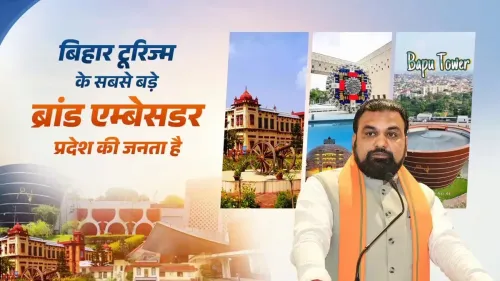
Bihar CM Samrat Choudhary chaired a Tourism Department review on June 14, issuing directives to complete temple corridors in Gaya, upgrade Rajgir and Nalanda, develop Pawapuri, promote PPP investment, and expand rural homestay schemes to make Bihar a world-class tourism destination.
Key Takeaways
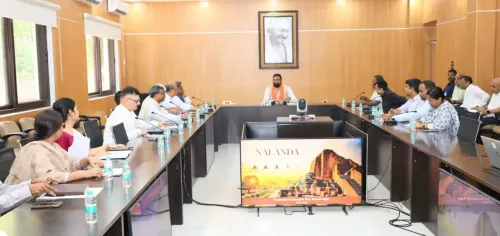
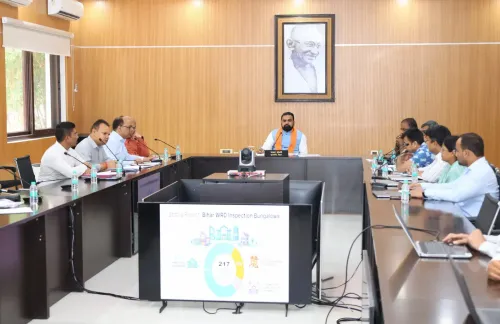
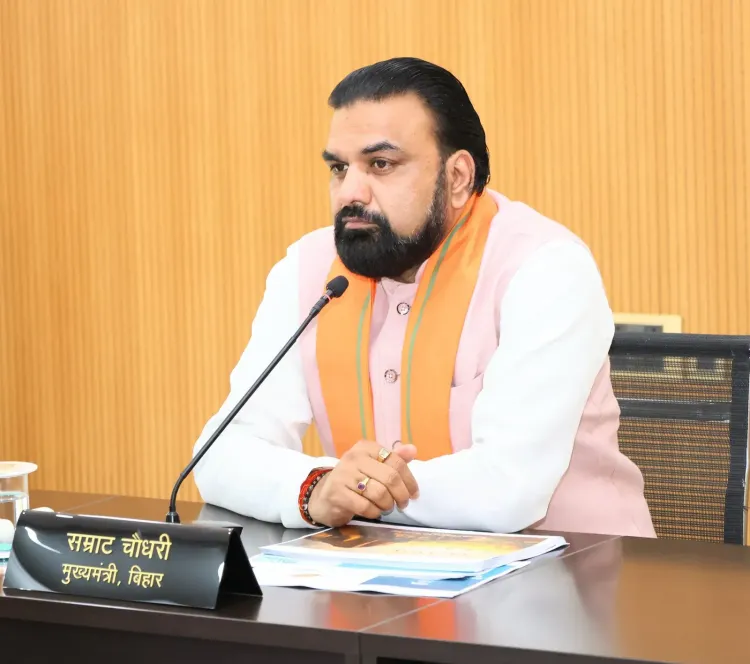
CM Samrat Choudhary chaired a Tourism Department review at Lok Sevak Avas, Patna on June 14, 2026 .
Officials were directed to expedite the Vishnupad Temple Corridor and Mahabodhi Temple Corridor projects in Gaya as world-class pilgrimage centres.
Rajgir is to be developed as a global spiritual, cultural, and education hub with upgraded modern facilities.
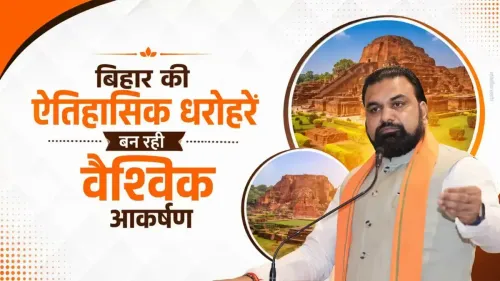
Nalanda , a UNESCO World Heritage Site, is to be further strengthened as a global centre of knowledge and heritage.
A special action plan was ordered for the holistic development of the Pawapuri temple complex.
The PPP model and Rural Tourism and Homestay scheme were highlighted as key tools for investment, job creation, and rural economic empowerment.
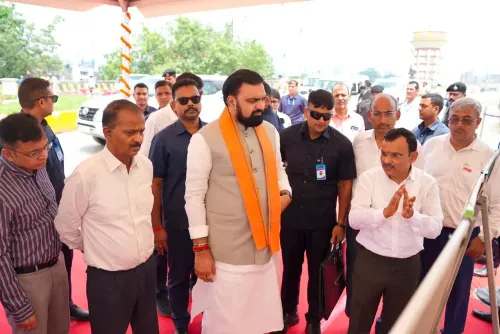
Bihar Chief Minister Samrat Choudhary chaired a high-level review meeting of the state Tourism Department at Lok Sevak Avas, Patna, on Sunday, June 14, 2026, directing officials to fast-track development of the state's key religious, historical, and cultural tourism sites and position Bihar as a world-class destination.
Context
Posting from the official residence in Patna, CM Choudhary outlined a set of directives covering six priority areas — from temple corridor projects in Gaya to rural homestay expansion across the state. The review underlines the Bihar government's intent to translate the state's deep heritage assets into measurable tourism and employment outcomes. In his words, the government is working 'with full commitment' (पूरी प्रतिबद्धता के साथ) to give Bihar's cultural and spiritual legacy a global identity.
Policy Backdrop
The meeting's centrepiece was a directive to complete the Vishnupad Temple Corridor and the Mahabodhi Temple Corridor in Gaya at the earliest and develop them as world-class pilgrimage and tourism centres. The Mahabodhi Temple in Bodh Gaya is a UNESCO World Heritage Site and one of the most visited Buddhist shrines globally, making its corridor a project of international significance. Both initiatives draw on the lineage of the central government's PRASAD scheme (launched 2014-15) for integrated pilgrimage development and the Swadesh Darshan scheme's Buddhist Circuit, which covers Gaya, Rajgir, and Nalanda.
Rajgir, the ancient Bihar town with deep Buddhist and Jain associations, was directed to be upgraded with modern tourism facilities and established as a global spiritual, cultural, and education hub. Nalanda — whose ancient university is a UNESCO World Heritage Site and whose modern successor was re-established by an Act of Parliament in 2010 — was directed to be further strengthened as a global centre of knowledge, culture, and heritage. The Jain pilgrimage town of Pawapuri, marking the site of Mahavira's nirvana, was directed to receive a dedicated special action plan for holistic development of its temple complex.
Stakeholders and Impact
The review meeting placed notable emphasis on the PPP (Public-Private Partnership) model as the vehicle for accelerating investment, infrastructure development, and job creation in the tourism sector — a standard policy tool increasingly adopted across Indian states for heritage and hospitality projects. Equally significant was the directive to expand the Rural Tourism and Homestay scheme widely, with the explicit aim of strengthening local culture, traditional hospitality, and the rural economy. These two directives together signal a twin-track approach: large-scale corridor infrastructure anchored by private capital, alongside grassroots economic participation by local communities.
The primary beneficiaries span a wide range: pilgrims and tourists visiting Buddhist, Hindu, and Jain sites; local communities in Gaya, Rajgir, Nalanda, and Pawapuri districts; tourism investors and hospitality operators; and rural households that could register as homestay providers. Bihar's tourism sector has historically under-punched relative to the density and antiquity of its heritage assets, and corridor-led development is seen as a corrective lever.
What's Next
The immediate watch-points are the release of project timelines and tender announcements for the Vishnupad and Mahabodhi corridor works, and the rollout of a special action plan for Pawapuri. Progress on PPP tie-ups and fresh homestay registrations in the identified districts will indicate how quickly the directives translate into ground-level activity. Bihar's ability to position itself alongside established pilgrimage corridors in other states will depend on the pace and quality of execution over the coming months.
Frequently Asked Questions
What is the Vishnupad Temple Corridor in Gaya?
The Vishnupad Temple Corridor is an infrastructure development project aimed at creating world-class facilities and public spaces around the ancient Vishnupad Temple in Gaya, Bihar, to enhance the pilgrimage and tourism experience.
What is the Mahabodhi Temple Corridor project?
The Mahabodhi Temple Corridor is a development initiative around the UNESCO-listed Mahabodhi Temple in Bodh Gaya, one of Buddhism's holiest sites, intended to upgrade visitor infrastructure and establish it as a premier global pilgrimage centre.
Why is Nalanda significant for Bihar tourism?
Nalanda is home to the ruins of one of the ancient world's greatest universities and is a UNESCO World Heritage Site. The modern Nalanda University was re-established by an Act of Parliament in 2010, reinforcing its identity as a global centre of knowledge and heritage.
What is Bihar's Rural Tourism and Homestay scheme?
Bihar's Rural Tourism and Homestay scheme aims to encourage local families to register their homes as accommodation for tourists, promoting traditional hospitality, local culture, and income generation in rural communities near heritage sites.
What is the PPP model being promoted in Bihar tourism?
The Public-Private Partnership (PPP) model in Bihar tourism involves collaboration between the state government and private investors to fund, build, and operate tourism infrastructure, with the goal of accelerating development and creating employment without relying solely on public funds.