CM Samrat Choudhary Reviews Bihar Water Resources Dept
Synopsis
Bihar CM Samrat Choudhary chaired a Water Resources Department review in Patna on 13 June 2026, directing officials to restore Pataliputra's heritage, develop J.P. Ganga Path as a tourism corridor, plant one lakh saplings, and explore PPP models for irrigation inspection buildings.
Key Takeaways
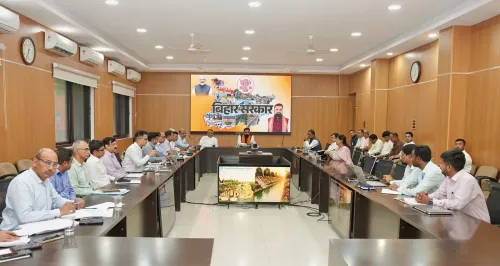
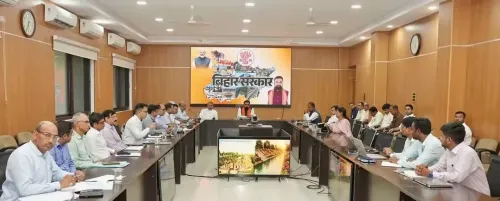
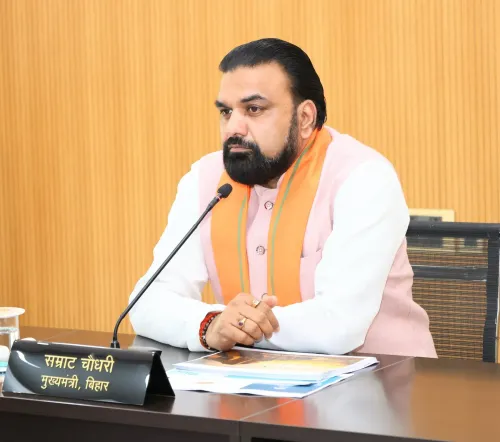
Bihar CM Samrat Choudhary held a review meeting of the Water Resources (Irrigation) Department at Patna on 13 June 2026 .
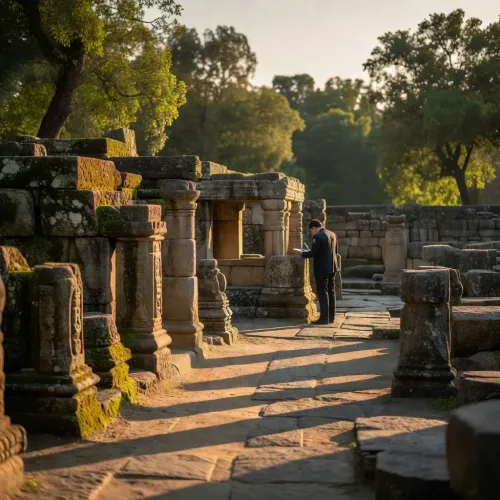
A special action plan is to be prepared for restoring the historical identity of Pataliputra , the ancient Mauryan capital.
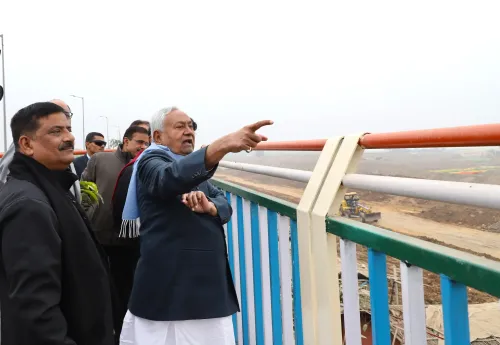
Ganga Path (Marine Drive) is to be developed as a major tourism attraction with a target of one lakh saplings planted within a fixed deadline.
The government will assess PPP and DBOM models for monetising Irrigation Department inspection buildings as modern guest houses.
A comprehensive development plan is ordered for the Kurji Ghat to Kali Ghat riverfront stretch in Patna.
Garden development along the riverfront is to be prioritised as a public attraction under the broader #NewBihar vision.
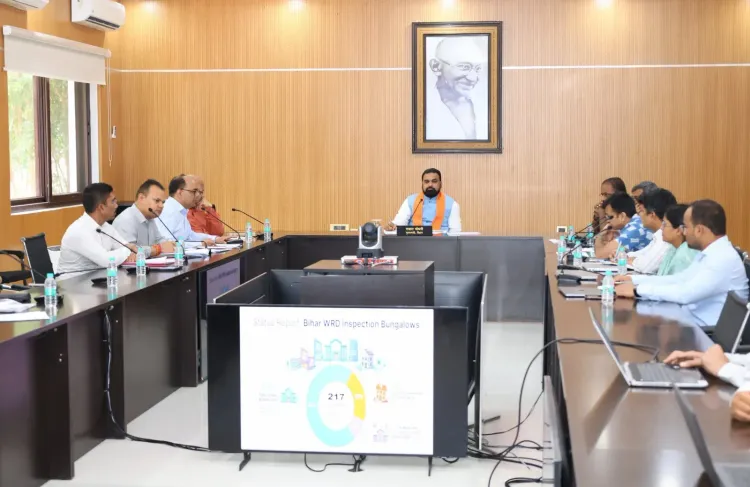
Bihar Chief Minister Samrat Choudhary chaired a review meeting of the Water Resources Department (Irrigation Department) at Sankalp Sabhagar, Lok Sevak Avas, Patna on Saturday, 13 June 2026, issuing a sweeping set of directives covering heritage revival, riverfront tourism, large-scale afforestation, and public-private partnerships for irrigation infrastructure.
Context
The meeting, held at the Chief Minister's official residence complex in Patna, focused on unlocking the dual potential of Bihar's water-side assets — both as functional irrigation infrastructure and as drivers of urban tourism. CM Choudhary directed officials to prepare a special action plan for restoring the historical identity of Pataliputra, the ancient Mauryan capital whose ruins lie beneath and around modern Patna.
He also ordered that the J.P. Ganga Path — Patna's riverfront promenade popularly known as Marine Drive — be developed as a major tourism attraction, and that a target of one lakh (1,00,000) saplings be planted along the corridor within a fixed deadline to promote green and environment-friendly development.
Policy Backdrop
The J.P. Ganga Path has been under phased construction since 2014 as part of Bihar's urban development push along the Ganga riverfront. The project draws conceptual inspiration from riverfront makeovers in cities such as Ahmedabad, aiming to transform industrial and neglected waterfronts into public amenity zones.
The Namami Gange programme, launched by the central government in 2014, has provided a broader funding and policy framework for riverfront infrastructure and pollution abatement along the Ganga in Bihar, giving state-level initiatives additional institutional backing.
The directive to assess PPP (Public-Private Partnership) and DBOM (Design-Build-Operate-Maintain) models for Irrigation Department inspection buildings reflects a wider national pattern of leveraging publicly owned land and structures for revenue-generating hospitality and tourism use, without divesting core water-management functions.
Stakeholders and Impact
Patna residents stand to benefit most directly from the proposed greening of J.P. Ganga Path and the comprehensive development plan for the Kurji Ghat to Kali Ghat riverfront stretch — two of the city's principal Ganga access points. The directive to develop inspection buildings into modern guest houses could expand budget and mid-range accommodation options in the region.
The tourism sector in Bihar, which has historically under-performed relative to the state's heritage potential, could see new demand if the Pataliputra heritage restoration plan translates into visitor-ready sites. The Irrigation Department itself faces an operational transformation, with officials now tasked with formulating policy for asset monetisation alongside their traditional flood-management and canal-maintenance roles.
Garden development works were also flagged as a priority, with instructions to position horticulture zones as prominent public attractions along the riverfront.
What's Next
The immediate deliverables from the meeting include detailed project reports for the Kurji Ghat–Kali Ghat development corridor and a formal policy document on converting inspection bungalows into guest houses under PPP and DBOM frameworks. Officials are expected to present timelines for the one-lakh plantation drive and the Pataliputra heritage action plan in follow-up departmental sessions.
Analysts and urban planners will watch whether Bihar translates these directives into tendered contracts within the current budget cycle — a step that would signal the state's seriousness in repositioning its Ganga riverfront as a nationally competitive tourism and heritage destination.
Point of View
Folding it into Bihar's broader urban tourism and heritage agenda. Anchoring the push around Pataliputra's Mauryan legacy is a politically resonant move that aligns with the BJP's wider cultural-heritage narrative at the national level. The PPP and DBOM directives for inspection bungalows mirror asset-monetisation strategies that have gained traction across several BJP-governed states, suggesting a coordinated template rather than an isolated local initiative. Whether the directives convert into tendered projects will be the true test of implementation intent.
NationPress
27 Oct 2026
Frequently Asked Questions
What decisions were taken at Bihar CM Samrat Choudhary's Water Resources Department review meeting?
CM Samrat Choudhary directed officials to prepare a heritage restoration plan for Pataliputra, develop J.P. Ganga Path as a tourism hub, plant one lakh saplings along the riverfront, explore PPP and DBOM models for irrigation inspection buildings, and draw up a development plan for the Kurji Ghat to Kali Ghat stretch.
What is J.P. Ganga Path in Patna?
J.P. Ganga Path, popularly called Marine Drive, is a riverfront promenade along the Ganga in Patna that has been developed in phases since 2014 as part of Bihar's urban development plans.
What is the Pataliputra heritage restoration plan Bihar is planning?
The Bihar government has been directed to prepare a special action plan to restore the historical identity of Pataliputra — the ancient Mauryan capital whose archaeological remains are associated with modern Patna — as a tourism and cultural heritage destination.
What are PPP and DBOM models in the context of Bihar's irrigation buildings?
PPP (Public-Private Partnership) and DBOM (Design-Build-Operate-Maintain) are frameworks under which private entities co-invest in or operate public assets. Bihar plans to assess their use for converting Irrigation Department inspection bungalows into modern guest houses.
Which ghats are included in Bihar's Ganga riverfront development plan?
The Bihar government has ordered a comprehensive development plan for the Ganga riverfront stretch from Kurji Ghat to Kali Ghat in Patna.