CM Samrat Choudhary leads tree plantation on World Environment Day

Synopsis
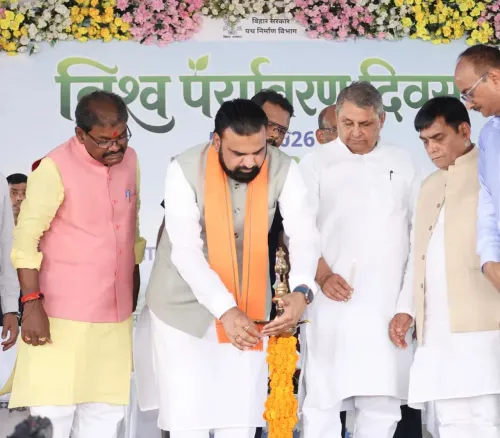
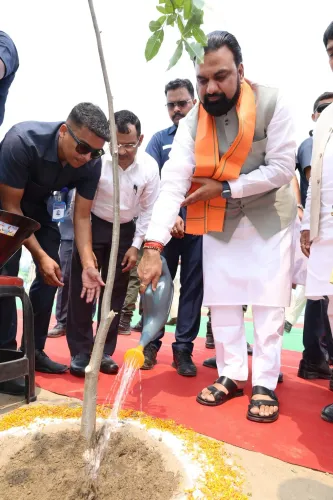
Bihar Chief Minister Samrat Choudhary led a live-streamed tree plantation programme at J.P. Ganga Path in Patna on World Environment Day, 5 June 2026, continuing Bihar's tradition of riverfront afforestation drives aligned with national green cover targets.
Key Takeaways
Bihar Chief Minister Samrat Choudhary participated in a tree plantation drive at J.P.
Ganga Path, Patna on 5 June 2026 .
The event marked World Environment Day , observed annually on 5 June since it was established by the UN General Assembly in 1972 .
Ganga Path is a riverside promenade along the Ganges in Patna, named after Jayaprakash Narayan .
The programme was broadcast live on social media, giving the initiative broad public visibility.
The drive aligns with national afforestation goals under frameworks such as the National Mission for a Green India .
Follow-up focus will be on sapling survival reporting and potential expansion to other Ganga basin districts.
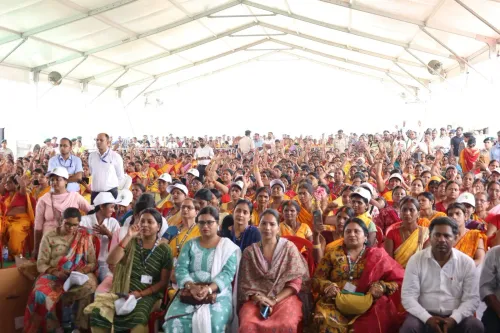
Bihar Chief Minister Samrat Choudhary joined a tree plantation drive at J.P. Ganga Path in Patna on 5 June 2026, marking World Environment Day with a public afforestation programme along the Ganges riverfront.
Context
Choudhary shared a live broadcast of the event on social media, captioning it: 'Vishwa Paryavaran Divas ke avsar par J.P. Ganga Path par paudhaaropan karyakram' ['Tree plantation programme at J.P. Ganga Path on the occasion of World Environment Day']. The programme was streamed live, signalling an intent to give the initiative wide public visibility.
World Environment Day is observed every year on 5 June, a date established by the United Nations General Assembly in 1972 to promote global environmental awareness and action. India has participated in the observance since its inception, with state governments organising plantation drives across the country.
Policy Backdrop
J.P. Ganga Path is a riverside promenade developed along the Ganges in Patna, named after independence-era leader Jayaprakash Narayan. The stretch has emerged as a flagship urban infrastructure project in Bihar, combining public recreation space with riverfront development.
Indian states routinely select high-visibility public spaces such as riverfront promenades for plantation drives on World Environment Day, aligning local action with national targets for expanding forest and tree cover. These efforts broadly support frameworks such as the National Mission for a Green India, which coordinates federal and state afforestation goals as part of India's climate adaptation commitments.
Bihar state governments have periodically launched afforestation campaigns along the Ganga riverfront as part of broader river conservation and urban greening efforts, a pattern that today's event continues.
Stakeholders and Impact
Patna residents and urban local bodies are the primary stakeholders of such riverfront greening initiatives. Plantation drives at publicly accessible locations like J.P. Ganga Path serve a dual purpose: adding green cover to an urban environment and encouraging civic participation in environmental stewardship.
For the BJP-led state government, the event also carries a symbolic dimension — demonstrating executive commitment to environmental issues at a moment of heightened global attention on climate and ecology. Bihar, with its dense population and significant dependence on the Ganga basin's ecology, stands to benefit from sustained riverfront greening.
What's Next
Attention will now turn to whether today's plantation drive is followed up with state government reporting on sapling survival rates, a metric that distinguishes durable environmental impact from ceremonial activity. Observers will also watch for any expansion of the programme to other Ganga basin districts in the coming months, which would indicate a more systematic afforestation push rather than a one-day observance.
If the initiative feeds into a broader Bihar riverfront greening plan, it could set a template for other riparian states seeking to combine urban infrastructure development with measurable environmental outcomes.
Point of View
Projecting an image of an environmentally engaged administration. The live broadcast format suggests the government is as invested in the optics of participation as in the planting itself, a pattern common to ruling parties seeking to associate their leadership with globally resonant causes. The real test, as with most such drives, will be sapling survival data and whether the event anchors a sustained afforestation policy rather than a single-day spectacle. Placed in the wider arc of India's federal climate commitments, it also reflects the pressure on state governments to demonstrate tangible local action against national green cover targets.
NationPress
20 Oct 2026
Frequently Asked Questions
Why did Bihar CM Samrat Choudhary hold a tree plantation event on 5 June 2026?
5 June is World Environment Day , an annual global observance established by the United Nations in 1972 . Bihar Chief Minister Samrat Choudhary organised the plantation drive at J.P. Ganga Path to mark the occasion and highlight the state government's commitment to environmental action.
What is J.P. Ganga Path in Patna?
J.P. Ganga Path is a riverside promenade developed along the Ganges in Patna, Bihar . It is named after independence-era leader Jayaprakash Narayan and serves as a major public infrastructure and recreation space in the state capital.
What is World Environment Day and when is it observed?
World Environment Day is observed every year on 5 June . It was established by the United Nations General Assembly in 1972 to promote global awareness and action on environmental issues. India participates annually through nationwide plantation and conservation drives.
How does Bihar's plantation drive connect to national environmental goals?
State-level afforestation drives on World Environment Day contribute to India's national targets for expanding forest and tree cover, supported by frameworks such as the National Mission for a Green India . Riverfront locations like J.P. Ganga Path are frequently chosen because they combine public visibility with urban greening impact.
What should we watch for after Bihar's World Environment Day plantation drive?
Key indicators will include state government reporting on sapling survival rates and whether the drive is expanded to other Ganga basin districts. These follow-up steps would distinguish a sustained environmental programme from a ceremonial one-day event.