CM Karnataka Pays Tribute to Krishnaraja Wodeyar III
Synopsis
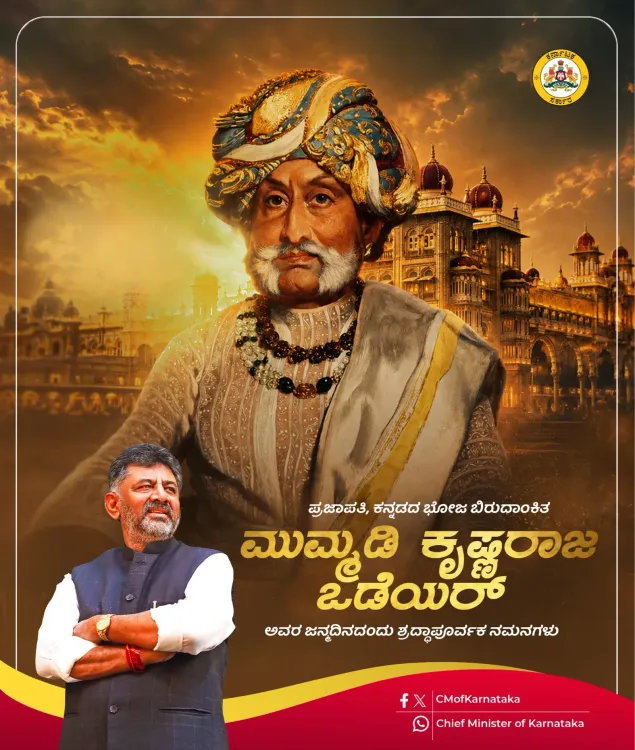
The Chief Minister's Office of Karnataka marked the birth anniversary of Mysore ruler Krishnaraja Wodeyar III on 14 July 2026, honouring his contributions to Kannada literature, classical arts, and cultural patronage during his reign from 1799 to 1868.
Key Takeaways
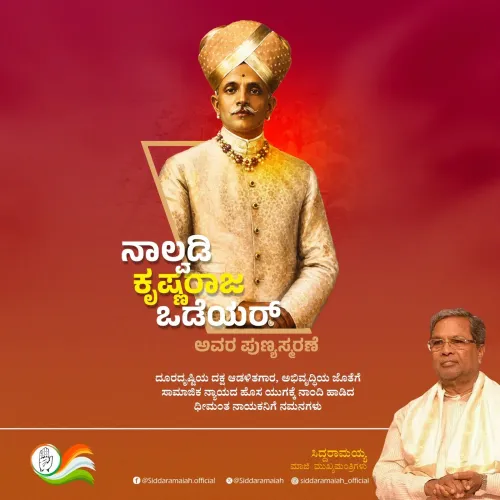
The Chief Minister's Office of Karnataka paid tribute to Krishnaraja Wodeyar III on his birth anniversary on 14 July 2026 .
Krishnaraja Wodeyar III ruled the Kingdom of Mysore from 1799 to 1868 and was a noted patron of Kannada literature, Carnatic music, and visual arts.
The CMO described his reign as 'written in golden letters in the history of Mysore' and praised his unparalleled contributions to Kannada literature.
Karnataka governments across administrations have consistently issued public tributes to Wodeyar rulers as part of broader promotion of the state's pre-independence cultural identity.
The anniversary may prompt cultural observances at Mysore Palace and related heritage sites across Karnataka.
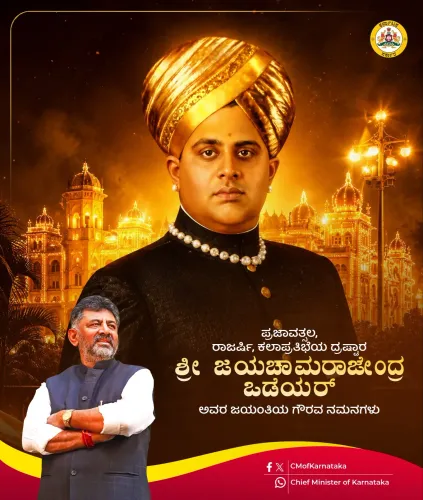
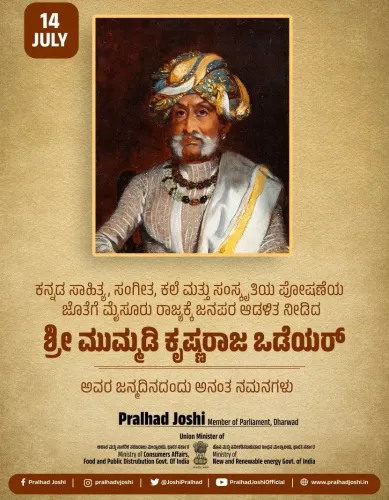
The Chief Minister's Office of Karnataka on Tuesday, 14 July 2026, paid homage to Mummadi Krishnaraja Wodeyar — the celebrated ruler of the Kingdom of Mysore — on the occasion of his birth anniversary, honouring his enduring legacy in Kannada literature, art, and cultural heritage.
The post, shared in Kannada, offered anantananta namangalu (boundless salutations) to the ruler, describing his reign as one 'written in golden letters in the history of Mysore.' The office praised him as a protector of the literary, artistic, and cultural traditions of the Mysore kingdom and a ruler devoted to the welfare of his people.
Context
Krishnaraja Wodeyar III (1794–1868) ruled the Kingdom of Mysore from 1799 to 1868, a period that coincided with significant British administrative influence following the direct assumption of Mysore's administration by the colonial government in 1831. Despite the political constraints of indirect rule, the Wodeyar court remained a vibrant centre of cultural production. Krishnaraja Wodeyar III was himself a practising poet and musician, contributing original works in Kannada and Sanskrit. His reign is widely regarded by Kannada literary scholars as a high-water mark for royal patronage of the arts. He encouraged classical Carnatic music, visual arts, and the composition of Kannada literature at a time when such traditions faced the pressures of colonial modernity.Policy Backdrop
The Karnataka government's practice of publicly commemorating Wodeyar rulers reflects a long-standing state policy of recognising the cultural achievements of pre-independence regional history. Successive administrations have used such occasions to reinforce the identity of the Kannada-speaking people and to highlight the princely era's contribution to what became the linguistically reorganised state of Karnataka in 1956. These tributes also serve as occasions to draw attention to the preservation of manuscripts, artworks, and architectural heritage associated with the Wodeyar court — much of it housed at and around the iconic Mysore Palace, one of India's most visited heritage monuments.Stakeholders and Impact
The anniversary resonates most directly with Kannada literary scholars, historians, and cultural institutions based in Mysore and across Karnataka. Organisations dedicated to Kannada language promotion often use such commemorations to spotlight classical works composed or patronised during the Wodeyar era. For the broader public, the tribute reinforces the state government's engagement with Karnataka's pre-independence cultural identity — a theme that cuts across political lines and enjoys wide popular resonance in the region. Heritage tourism stakeholders in Mysore also benefit from renewed attention to the Wodeyar legacy.What's Next
The birth anniversary of Krishnaraja Wodeyar III typically prompts observances at heritage sites in Mysore, including the palace complex. Cultural institutions and Kannada literary bodies may organise programmes to mark the occasion. Observers will watch for any state government announcements regarding the preservation of manuscripts or artworks linked to the Wodeyar court, which would translate the ceremonial tribute into concrete policy action.Point of View
The government signals continuity with a golden-age narrative that enjoys broad popular appeal across the Kannada-speaking electorate. The tribute also implicitly frames the state as a custodian of heritage, a positioning that can precede concrete announcements on manuscript preservation or heritage funding. It is worth watching whether this anniversary generates any policy follow-through beyond ceremonial acknowledgement.
NationPress
12 Oct 2026
Frequently Asked Questions
Who was Krishnaraja Wodeyar III?
Krishnaraja Wodeyar III (1794–1868) was the ruler of the Kingdom of Mysore from 1799 to 1868, celebrated for his patronage of Kannada literature, Carnatic classical music, and visual arts.
Why did the Karnataka CMO pay tribute to Krishnaraja Wodeyar?
The Chief Minister's Office of Karnataka marked his birth anniversary on 14 July 2026, honouring his contributions to the cultural and literary heritage of Mysore.
What is Krishnaraja Wodeyar III known for?
He is known for being a prolific patron and practitioner of the arts, having contributed original works in Kannada and Sanskrit and encouraged classical music and literature at the Mysore court.
What is the significance of the Mysore Wodeyar rulers in Karnataka's history?
The Wodeyar rulers are regarded as key figures in Karnataka's cultural history, having maintained a vibrant court tradition of Kannada literature and arts during the period of British indirect rule.
Will there be any events to mark Krishnaraja Wodeyar's birth anniversary in Mysore?
Cultural institutions and Kannada literary bodies typically organise observances at heritage sites such as Mysore Palace on the occasion; official state-sponsored events may also be held.