South Korea foreign outflows hit $30.72bn in June despite KOSPI rally
Synopsis
Foreign investors have now sold South Korean assets for five straight months, with net outflows swelling to $30.72 billion in June alone — even as the local market rallied. AI infrastructure jitters and portfolio rebalancing are driving the exodus, and a fresh KOSPI plunge of over 2% on Tuesday signals the pressure is far from over.
Key Takeaways
Foreign investors were net sellers of South Korean assets for the fifth consecutive month in June 2025 , offloading a net $30.72 billion .
Equity outflows totalled $32.37 billion in June, partially offset by $1.65 billion in net bond purchases.
The Bank of Korea cited AI infrastructure concerns and portfolio rebalancing as the primary drivers of widening outflows.
South Korea's phased entry into the WGBI from April supported bond market inflows.
The KOSPI fell 2.04% on Tuesday, a day after a 9% plunge, weighed by semiconductor losses and a US-Iran standoff.
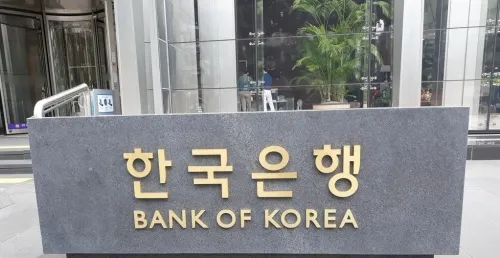
Foreign investors remained net sellers of South Korean assets for the fifth consecutive month in June 2025, offloading a net $30.72 billion worth of local stocks and bonds, according to data released by the Bank of Korea (BOK) on Tuesday, 14 July. The persistent selling came even as a tech-driven rally lifted the domestic stock market during the period.
Breakdown of Capital Flows
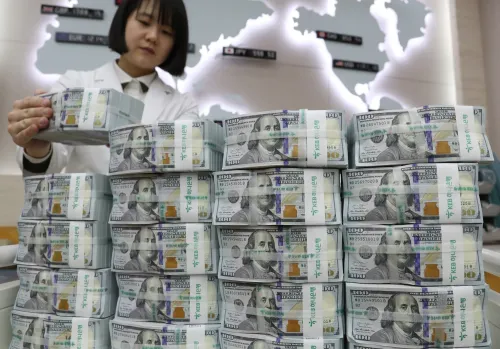
Drilling into the figures, offshore investors sold a net $32.37 billion worth of Korean equities in June, while simultaneously purchasing a net $1.65 billion in bonds. The overall net outflow of $30.72 billion marks a widening from the $26.15 billion in net sales recorded in May, extending a streak of net selling that has persisted since February.
Why Foreign Investors Kept Selling
The BOK attributed the widening net outflows to two key factors. First, investor sentiment weakened amid mounting concerns over excessive capital deployment into artificial intelligence (AI) infrastructure globally. Second, foreign portfolio managers accelerated selling as part of routine portfolio rebalancing during the market rally — a pattern where gains are locked in and exposure trimmed. Notably, this is the fifth straight month of net foreign selling, suggesting the outflows reflect a structural repositioning rather than a one-off event.
Bond Market Sees Inflows Amid WGBI Entry
Against the broader selling trend, the Korean bond market attracted net inflows, cushioned by South Korea's phased inclusion in the World Government Bond Index (WGBI), a major sovereign debt benchmark operated by FTSE Russell. The country began its eight-month phased entry into the index in April. The WGBI tracks sovereign debt from more than 20 major economies, including the United States, Japan, and China, and index inclusion typically triggers passive fund inflows from global bond managers.
KOSPI Under Fresh Pressure
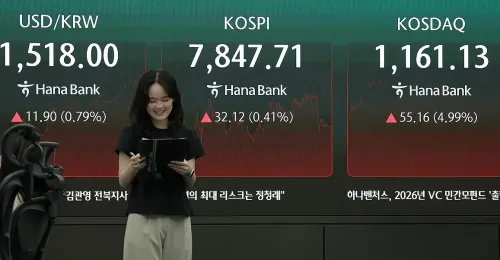
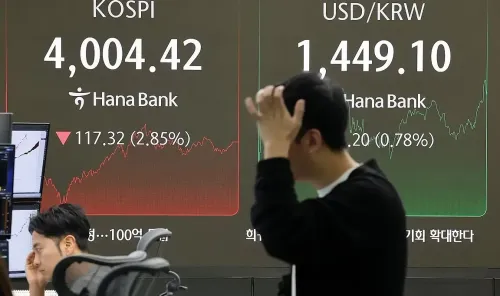
Markets in Seoul extended losses on Tuesday morning, with the benchmark Korea Composite Stock Price Index (KOSPI) trading down 139.03 points, or 2.04%, at 6,667.90 as of 11:20 am local time. The decline followed a steep 9% plunge in the previous session driven by a broad sell-off in technology stocks. Semiconductor counters and other heavyweight names led the fresh losses.
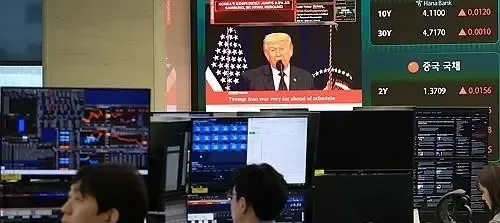
Sentiment was further pressured by a US-Iran standoff over the Strait of Hormuz and an overnight slump in the US-listed shares of SK Hynix. On Wall Street, the Dow Jones Industrial Average fell 0.26% overnight, while the tech-heavy Nasdaq Composite dropped 1.55%, adding to the risk-off mood.
What to Watch
With AI sector uncertainty and geopolitical risk both weighing on sentiment, market participants will closely track further developments in the Middle East and any guidance from major US technology firms on AI spending. South Korea's ongoing WGBI integration could continue to provide a partial offset for bond markets, but equity outflows may persist if global risk appetite remains subdued.
Point of View
And the market rally that coincided with the outflows makes it more telling, not less. When foreign investors sell into strength, it signals deliberate repositioning rather than panic, which is harder to reverse. The AI infrastructure concern flagged by the BOK deserves scrutiny: global markets are beginning to price in the possibility that AI capex has run ahead of monetisation, and South Korea's semiconductor-heavy index is a direct proxy for that bet. The WGBI inclusion provides a structural floor for bonds, but equity sentiment will remain hostage to US tech earnings and Middle East risk until there is greater clarity on both fronts.
NationPress
14 Jul 2026
Frequently Asked Questions
Why are foreign investors selling South Korean assets?
The Bank of Korea cited two main reasons: weakening investor sentiment due to concerns over excessive investment in AI infrastructure, and portfolio rebalancing by foreign funds during the local market rally. South Korea has seen net foreign selling every month since February 2025.
How large were the foreign outflows from South Korea in June 2025?
Foreign investors sold a net $30.72 billion worth of South Korean stocks and bonds in June, up from $26.15 billion in net sales in May. Equity outflows alone stood at $32.37 billion, partially offset by $1.65 billion in net bond purchases.
What is the WGBI and why does it matter for South Korea?
The World Government Bond Index (WGBI) is a major sovereign debt benchmark operated by FTSE Russell, tracking bonds from more than 20 economies including the US, Japan, and China. South Korea began a phased eight-month entry into the index in April 2025, which has attracted passive bond fund inflows and partially cushioned overall capital outflows.
Why did the KOSPI fall sharply on 14 July 2025?
The KOSPI dropped 2.04% on Tuesday, extending a 9% plunge from the previous session. The decline was driven by semiconductor and technology stock losses, a US-Iran standoff over the Strait of Hormuz, an overnight slide in SK Hynix's US-listed shares, and a 1.55% fall in the Nasdaq Composite.
What could reverse the trend of foreign selling in South Korean equities?
A stabilisation in global AI sector sentiment, de-escalation of Middle East tensions, and positive guidance from major technology companies on AI spending could improve risk appetite. The WGBI inclusion continues to support bond inflows, but a sustained equity recovery would likely require a broader improvement in global investor confidence.